
Sauces & Condiments
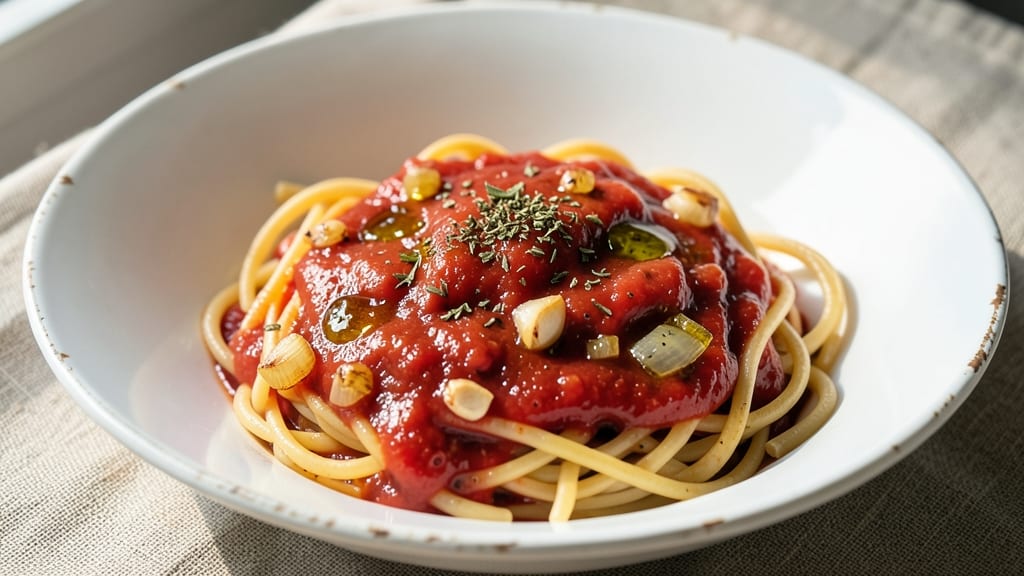
This basic red sauce pasta recipe transforms simple ingredients into a restaurant-worthy meal in just 20 minutes. The secret lies in slow-simmered tomatoes, aromatic garlic, and fresh herbs that meld into a rich, velvety sauce—no fancy techniques required.
I’ve perfected this dish over years of weeknight dinners, ensuring it’s foolproof for beginners while leaving room for customization.
The foundation of this recipe is a simmered tomato sauce built with canned tomatoes, olive oil, and a touch of sugar to balance acidity. Garlic and onion form the aromatic base, while basil and oregano add bright, herby notes.
The sauce thickens as it simmers, coating al dente pasta in a savory, slightly sweet embrace. Optional additions like ground beef, mushrooms, or white beans turn it into a heartier meal without complicating the process.
What you’ll end up with is a creamy, flavorful pasta dish that’s quick to make but feels like a labor of love. The sauce clings to every strand of pasta, delivering layers of tomato, garlic, and herb in each bite.
It’s the kind of meal that’s comforting yet impressive—perfect for weeknights or when you crave something familiar but elevated.
Ready in 20 minutes, this recipe scales effortlessly for two or four. Whether you stick to the classic version or add proteins and vegetables, the technique remains the same: simmer, season, and serve. Let’s get started!
Ingredients for basic red sauce pasta
Twelve simple ingredients transform into a velvety tomato sauce that clings perfectly to al dente pasta.
| Ingredient | Amount | Notes |
|---|---|---|
| Extra-Virgin Olive Oil 🫒 | ½ cup | High-quality, fruity variety preferred |
| Yellow Onion 🧅 | 1 whole | Diced into 1/4-inch pieces |
| Garlic Cloves 🧄 | 4 cloves | Minced finely for aromatic base |
| Canned San Marzano Tomatoes 🍅 | 28 oz | Crushed by hand or blender |
| Granulated Sugar 🍚 | 1 tbsp | Balances acidity in tomatoes |
| Dried Oregano 🌿 | 1 tsp | Crushed between fingers for release |
| Fresh Basil Leaves 🌿 | ¼ cup | Chopped finely for freshness |
| Diamond Crystal Kosher Salt 🧂 | 1 ½ tsp | Adjust to taste during simmering |
| Ground Black Pepper 🌶️ | ½ tsp | Freshly cracked for flavor |
| Spaghetti Pasta 🍝 | 12 oz | Al dente preferred texture |
| Grated Parmesan Cheese 🧀 | ¼ cup | Freshly grated from block |
| Optional Ground Beef 🥩 | 8 oz | Browned and drained if used |
The San Marzano tomatoes are the heart of this sauce—their sweetness and low acidity create a balanced flavor. Look for the official San Marzano DOP label at specialty stores like Whole Foods or Eataly for the best quality. Fresh basil is non-negotiable here; the grocery store variety works if it's bright green with no wilting. For the olive oil, avoid light or refined oils—they lack the fruity depth needed for this sauce. The Parmesan should be freshly grated from a block; pre-grated cheese contains anti-caking agents that make it taste like sawdust.
No San Marzano tomatoes? High-quality crushed tomatoes like Muir Glen or Rao's work in a pinch, but you may need an extra pinch of sugar. Fresh basil wilting? Dried basil at one-third the amount preserves the flavor profile. The optional ground beef can be swapped for mushrooms or white beans for a vegetarian version. For a smokier flavor, add a pinch of smoked paprika during the final simmer. The sugar is crucial—skip it only if using very sweet tomatoes.
This sauce develops deeper flavor the longer it simmers—don't rush it. Store leftovers in an airtight container for up to 5 days, or freeze for 3 months in portion-sized containers. The pasta reheats beautifully, though it's best served fresh. For meal prep, cook the pasta separately and toss with sauce when reheating to maintain texture. Double the sauce and freeze half for future weeknight dinners.
Why You'll Love This Recipe
- No-Chop Night: I swear by this when I’m too tired to dice anything—just slice that onion in half, char it whole in the oil, then smash it with a spoon. The San Marzano tomatoes handle all the work after that.
- Sweet-Savory Magic: That pinch of sugar isn’t cheating—it cuts the acidity and lets the garlic shine through. Honestly, the first time I tasted this, I thought, “Wait, this is why people love Italian food?”
- Leftover Gold: This sauce only gets better after a day in the fridge. I make a double batch on Sundays, freeze half, and still have perfect weeknight meals when I’m too wiped to cook.
- Pantry Staple Power: Five ingredients, zero specialty items. Between us, this is how I feed my college kids on a grad-student budget—cheap, filling, and they’ll beg for seconds anyway.
Step-by-step instructions for simmered tomato Magic
Here's the method: straightforward, tested, and designed to deliver restaurant-quality tomato sauce in record time.
Sauté Onion Until Translucent
Heat the 0.5 cup extra-virgin olive oil in a large, heavy-bottomed pot over medium heat. Add the diced yellow onion and cook for 5-6 minutes until completely soft and translucent. Stir occasionally to prevent browning—you want the onions to melt into the oil rather than caramelize.
This foundational step builds flavor. The onions should release their moisture and become nearly invisible when viewed from above. If they start to brown too quickly, reduce the heat slightly. The goal is to create a flavor base without adding color that might darken your sauce later.
Add Garlic and Cook Until Fragrant
Push the onions to one side of the pot and add the 4 minced garlic cloves. Cook for 30 seconds to 1 minute until the garlic becomes aromatic but doesn't brown. Stir constantly during this time—garlic burns faster than you might expect.
Here's the thing—garlic should smell heavenly but not bitter. If it starts to darken, remove the pot from heat for 10 seconds to cool it down. The garlic's heat sensitivity makes this the most critical moment in the flavor development process. Once fragrant, stir it back into the onions and let the mixture cook together for another 30 seconds.
Incorporate Tomatoes and Simmer
Add the 28 oz canned San Marzano tomatoes, 1 tbsp granulated sugar, 1 tsp dried oregano, 1.5 tsp kosher salt, and 0.5 tsp ground black pepper to the pot. Stir well to combine, then increase the heat to medium-high and bring to a boil.
Once boiling, reduce the heat to low-medium and let the sauce simmer uncovered for 15-20 minutes. You're looking for a thickened consistency—when the sauce coats the back of a spoon and the tomatoes have broken down completely. Stir occasionally to prevent sticking, but don't over-stir as this can make the sauce too smooth.
Finish with Fresh Basil
Remove the pot from heat and stir in the 0.25 cup chopped fresh basil leaves. Let the sauce sit for 2-3 minutes to allow the basil's flavor to infuse. This final step adds brightness that dried herbs can't match. The basil should wilt slightly but remain visible in the sauce.
Real talk: if you're using the 8 oz optional ground beef, now's the time to add it. First, brown the beef in a separate pan until cooked through, then drain off any excess fat before stirring it into the warm sauce. The residual heat will help distribute the beef evenly without breaking down the sauce's texture.
Cook and Combine with Pasta
Bring a large pot of water to a rolling boil and add 12 oz spaghetti. Cook according to package instructions until 1 minute before al dente. Reserve 1 cup pasta water before draining.
Add the drained pasta directly to the tomato sauce in the pot. Toss vigorously, adding pasta water as needed to create a silky coating. The sauce should cling to each strand of pasta without making it soggy. Finish by stirring in the 0.25 cup grated Parmesan cheese until melted and creamy.
Pro Tips For Making Basic Red Sauce Pasta
- Sweat, Don’t Burn, the Onion: I learned this the hard way—low and slow is the only way. Cook the onion in the olive oil over medium-low heat until it’s translucent and just starting to caramelize (about 8-10 minutes), or you’ll end up with bitter bits that ruin the sauce.
- Crush Those Tomatoes: Skip the can opener and grab a wooden spoon—mashing the San Marzano tomatoes by hand breaks them down faster and releases more flavor. No blender? No problem, just smash them against the side of the pot until it’s smooth.
- Salt the Water Early: Add salt to the pasta water before boiling, not after. The sauce will absorb way less salt if you wait, and you’ll end up guessing whether to add more later. Trust me, your taste buds will notice.
- Let the Sauce Simmer: Don’t rush it—let the sauce bubble gently for at least 15-20 minutes after adding the tomatoes. This lets the flavors meld and the acidity soften, so you’re not left with a sharp, one-note sauce. (Yes, even if you’re impatient like me.)
Regional styles of basic red sauce pasta
Classic Italian Style
This is the foundation of my weeknight red sauce—simple but packed with flavor. In Italy, they call this ragù alla bolognese when it includes meat, but our version keeps it pure tomato-based. The key is using San Marzano tomatoes and letting the sauce simmer for 20 minutes to develop depth.
I always add fresh basil at the end—it’s non-negotiable for that bright, aromatic finish. The Italians also swear by slow cooking over low heat, which breaks down the tomatoes into a velvety consistency. 🌿
Southern U.S. Twist
Down South, they take red sauce pasta to another level by adding ground pork or Italian sausage to the sauce. I’ve seen versions with crispy bacon bits stirred in at the end for extra crunch.
The heat level goes up too—add ½ tsp red pepper flakes or 1 tbsp hot sauce for a kick. Some Southern cooks even finish with a sprinkle of grated pecorino cheese instead of Parmesan.
The pasta is often penne or rigatoni instead of spaghetti to hold onto the meaty sauce. 🔥
Mexican-Inspired Fusion
For a bold twist, I’ve adapted this sauce with cumin and smoked paprika instead of oregano. Add 1 tbsp cumin and 1 tsp smoked paprika when you incorporate the tomatoes, then finish with chopped cilantro instead of basil.
Serve over whole wheat pappardelle with a side of black beans and corn. The smoky, earthy notes pair perfectly with the tomato acidity. This version feels like a cross between pasta and tacos—trust me, it’s delicious. 🌶️
Vegetarian Mediterranean
For a lighter, plant-based take, swap the meat for mushrooms and white beans. Sauté 8 oz cremini mushrooms with the onions and garlic, then add 1 can (15 oz) white beans with the tomatoes.
Finish with lemon zest and kalamata olives for brightness. This version is hearty, protein-rich, and full of Mediterranean flair. Serve with whole wheat farfalle and a sprinkle of feta cheese for extra richness. 💛
Spicy Sicilian
Sicily takes red sauce to a whole new level with arancini-inspired flavors. Add 1 diced bell pepper and 1 minced anchovy fillet to the onions and garlic for depth.
Stir in 1 tbsp tomato paste with the tomatoes, then finish with red pepper flakes and a splash of white wine (about ¼ cup). Serve with bucatini or rigatoni and top with crispy breadcrumbs for texture. This version is bold, briny, and packed with Sicilian character. 🌟
Nutrition facts
Frequently asked questions
Can I use fresh tomatoes instead of canned?
Fresh tomatoes work but require extra prep. Peel, seed, and chop 4-5 large ripe tomatoes (about 2 cups chopped) and simmer them for 20-25 minutes to break down the texture. Add 1 tbsp sugar to balance acidity, and consider adding 1 tsp tomato paste for deeper flavor. Fresh tomatoes yield less sauce, so you may need 6-8 tomatoes total.
Why does my sauce look too thin?
Sauce thins when over-stirred or under-simmered. Let it cook uncovered for 15-20 minutes on low heat—this evaporates excess moisture. If still thin, remove from heat and simmer uncovered for 5 more minutes. For a quick fix, mix 1 tbsp cornstarch with 2 tbsp water and stir in at the end. Never add flour directly to tomato sauce—it makes it grainy.
What pasta shapes work best?
Spaghetti is classic, but penne, rigatoni, or fusilli hold sauce better. For meaty versions, use bucatini or rigatoni (their ridges trap chunks). Avoid delicate shapes like angel hair—they get mushy. Pro tip: Cook pasta 1 minute less than package instructions, then toss with sauce to finish cooking in the residual heat.
Can I make this sauce ahead?
Sauce tastes even better the next day. Store in an airtight container in the fridge for 4-5 days or freeze for 3 months. To reheat, warm on the stove over low heat (don't boil) and add 1-2 tbsp pasta water if it thickens too much. For meal prep, cook pasta separately and toss with reheated sauce to maintain texture.
How do I make this vegetarian?
Swap the meat for 8 oz mushrooms or 1 can white beans. Sauté sliced mushrooms with onions and garlic until golden, then add with tomatoes. For extra protein, stir in ½ cup lentils or 1 cup cooked chickpeas. Finish with lemon zest and fresh herbs for brightness. The sauce will be heartier but still light enough for summer meals.