
Sauces & Condiments
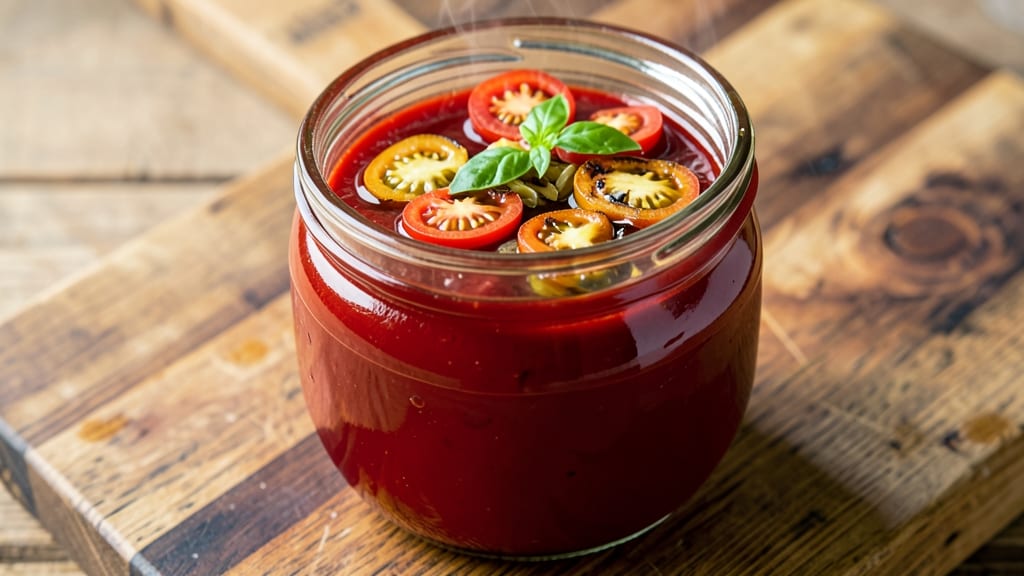
This ball canning marinara sauce recipe transforms summer's fresh tomatoes into year-round flavor—locking in vibrant taste while ensuring safe, long-term preservation. The secret lies in balancing acidity with lemon juice and proper sterilization techniques that guarantee shelf-stable jars.
I've perfected this method over years of canning, ensuring every batch delivers restaurant-quality sauce with just the right texture and depth.
The process begins with fresh tomatoes, carefully peeled and crushed to create a smooth base. You'll add garlic, onions, and herbs for aromatic layers before adjusting acidity with lemon juice—a critical step for safe canning.
The sauce simmers until thickened, then gets poured into sterilized jars with fresh herbs nestled on top, ready for the pressure canner.
What you'll end up with is sunshine-preserved flavor in glass jars—rich, tangy marinara that tastes like summer all year long. The sauce maintains its vibrant color and perfect consistency, whether used as a pasta base, pizza sauce, or dipping sauce.
Each jar contains enough acidity to prevent spoilage while preserving that fresh tomato brightness.
This recipe is perfect for meal preppers, gardeners with tomato overload, or anyone who wants to stock their pantry with homemade goodness. The pressure canning method ensures safety while preserving all the natural flavors. Let's get started on creating your pantry staples!
Ingredients for ball canning marinara sauce recipe with fresh tomatoes
Ten essential ingredients transform summer tomatoes into shelf-stable marinara perfection.
| Ingredient | Amount | Notes |
|---|---|---|
| Fresh Roma Tomatoes 🍅 | 6 lb | Peeled, crushed, and cored |
| Yellow Onion 🧅 | 1 whole | Medium size, finely chopped |
| Garlic Cloves 🧄 | 6 cloves | Fresh, minced for aromatic depth |
| Extra-Virgin Olive Oil 🫒 | ½ cup | High-quality, fruity variety |
| Dried Oregano 🍃 | 2 tbsp | Italian or Mediterranean blend |
| Fresh Basil Leaves 🌿 | ½ cup | Packed, stems removed |
| Salt 🧂 | 2 tsp | Diamond Crystal kosher preferred |
| Black Peppercorns 🌶️ | 1 tsp | Freshly cracked for texture |
| Lemon Juice 🍋 | ½ cup | Freshly squeezed, critical for acidity |
| Sugar 🍚 | 2 tbsp | Granulated, balances acidity |
The tomatoes form the foundation—Roma tomatoes are ideal for their meaty texture and minimal seeds, but any ripe variety works. Ball canning supplies are critical: purchase new lids and jars each year for proper sealing. For garlic, fresh is non-negotiable—pre-minced garlic loses flavor quickly. The lemon juice is the acidity secret weapon; never substitute vinegar, as it alters flavor and pH balance. Purchase San Marzano tomatoes if available—they're the gold standard for canning due to their sweetness and low acidity. All ingredients should be at room temperature before starting to ensure even cooking and proper jar filling.
No fresh basil? Dried oregano at half the amount works in a pinch, though texture will differ. Substitute apple cider vinegar for lemon juice if absolutely necessary, but reduce to 3 tbsp—it's more acidic. Running short on tomatoes? Canned crushed tomatoes (San Marzano preferred) can replace up to half the fresh weight, but add an extra 1 tbsp lemon juice per can to maintain acidity. The olive oil should be extra-virgin for optimal flavor, but regular olive oil maintains safety standards. For sugar, honey or maple syrup can substitute at a 1:1 ratio, though granulated sugar dissolves most evenly. Always use kosher salt—it dissolves completely, unlike table salt which can leave residue.
Store unopened jars in a cool, dark pantry for up to 18 months—the sealed environment preserves flavor and safety. Once opened, refrigerate and consume within 7 days. For best results, sterilize jars and lids in boiling water for 10 minutes before filling. The sauce thickens as it cools, so don't over-simmer. Each jar yields about 1.5 cups of sauce, perfect for meal prep. Label jars with the date to track freshness. The pressure canner should reach 10 pounds of pressure for 85 minutes to ensure proper sterilization—critical for safe, long-term storage.
Why You'll Love This Recipe
- No-Fuss Simmering: I swear by this—just halve those Roma tomatoes, toss in the onion and garlic, and let the olive oil work its magic. No blender, no fuss, just pure, rustic flavor simmering down to perfection.
- Garlic-Oregano Magic: That first bite? The garlic cloves, slow-roasted in olive oil, meet the bright acidity of fresh tomatoes—then the oregano ties it all together like a hug. It’s the kind of sauce that makes you pause mid-bite.
- Pantry-to-Picnic Power: Between us, this sauce is my go-to for lazy Sundays or last-minute potlucks. Pop a jar in your bag, and suddenly you’ve got dinner covered—whether it’s pasta, grilled cheese, or a charcuterie board.
- Year-Round Freshness: Honestly, canning this stuff is a game-changer. I make a big batch in summer, then pull a jar in winter for that same summery taste. No freezer burn, no wasted tomatoes—just pure, preserved flavor waiting for you.
Step-by-step instructions for preserving homemade marinara sauce
This method ensures a vibrant, flavorful sauce that maintains its quality for months in sterilized jars.
Prepare and Cook the Base Ingredients
In a large stockpot, combine the 6 lb fresh Roma tomatoes, 1 whole yellow onion, and 6 cloves garlic cloves. Cook over medium-high heat for 20-25 minutes, stirring occasionally, until the tomatoes begin to break down and the mixture softens. You'll notice the onions caramelize slightly and the garlic infuses its aromatic depth.
Once the tomatoes are tender, add the 0.5 cup extra-virgin olive oil, 2 tbsp dried oregano, 2 tsp salt, and 1 tsp black peppercorns. Stir well and let the mixture simmer for another 15 minutes to allow the flavors to meld. This step is critical for building a rich, well-balanced sauce foundation.
Balance and Finish the Sauce
Reduce the heat to medium-low and stir in the 0.5 cup fresh basil leaves, 0.5 cup lemon juice, and 2 tbsp sugar. The lemon juice and sugar work together to balance the acidity and sweetness, creating a harmonious flavor profile. Simmer the sauce for 10-15 minutes, stirring occasionally, until it reaches your desired consistency—it should coat the back of a spoon smoothly.
Taste and adjust seasoning if needed. The sauce should be vibrant, slightly tangy, and well-seasoned. This is your final chance to ensure the flavors are perfectly balanced before canning. Let the sauce cool to room temperature—this step is essential for safe canning and prevents jar breakage during processing.
Sterilize Jars and Prepare for Canning
While the sauce cools, prepare your canning equipment. Wash pint or quart jars and lids in hot, soapy water, then sterilize them by boiling for 10 minutes. Keep them hot until ready to use. Fill each jar with the cooled marinara sauce, leaving ½-inch headspace at the top—this prevents the jars from sealing properly if overfilled.
Remove air bubbles by sliding a non-metallic spatula between the jar and the sauce, then wipe the rims with a clean, damp cloth to ensure a proper seal. Place the lids on the jars and screw on the bands until fingertip-tight—this creates a vacuum seal during processing.
Process Jars in a Water Bath
Place the filled jars into a boiling water bath canner, ensuring they are fully submerged by at least 1 inch of water. Bring the water to a rolling boil and process the jars for 75 minutes for pints or 90 minutes for quarts—this ensures the sauce is safely preserved and free from spoilage.
Use a timer to monitor the processing time accurately. Once complete, carefully remove the jars from the canner using tongs and place them on a clean towel. Let them cool undisturbed for 12-24 hours—this allows the lids to seal completely. Check the seals by pressing the center of each lid; if it doesn’t pop, the jar is properly sealed and ready for storage.
Store and Use Your Preserved Marinara
Once the jars are fully sealed, label them with the date and store them in a cool, dark place for up to 12 months. The sauce will retain its vibrant color, rich flavor, and texture, making it perfect for future pasta dishes, pizza, or dipping.
To use, simply open a jar and heat the sauce gently on the stovetop or in the microwave. The preserved marinara should taste just as fresh as the day you canned it, with all the bright, sun-ripened tomato flavor locked in glass.
Pro Tips For Making Ball Canning Marinara Sauce Recipe With Fresh Tomatoes
- Blister Your Tomatoes: Toss halved Roma tomatoes in a single layer on a baking sheet, cut-side up, and roast at 425°F (220°C) for 15-20 minutes until skins split and edges char. The concentrated sweetness and texture change is worth the extra 10 minutes—no blender will ever match this depth.
- Sweat, Don’t Burn: Cook onions and garlic in olive oil over medium-low heat until onions are translucent and garlic just starts to smell fragrant, not brown. After burning three batches, I finally realized: patience here keeps bitterness out of the sauce and lets the flavors meld properly.
- Strain for Smoothness: After simmering, force the sauce through a fine-mesh sieve or food mill to remove skins and seeds—this isn’t optional for ball canning. I used to skip it, but the texture difference in the jars is night and day, and it prevents gummy batches later.
- Acidify Before Canning: Stir in 1 tablespoon of bottled lemon juice or vinegar per quart of sauce right before filling jars. It’s the only way to guarantee safe pH levels for long-term storage—don’t rely on tomatoes alone, even if they’re fresh and ripe.
Make-ahead tips for this recipe
Sauce Prep Timeline
Plan your sauce preparation at least 24 hours before canning day—this gives you time to peel and crush tomatoes without rushing. I like to prep tomatoes the night before, storing them in a large glass bowl in the fridge.
This allows flavors to meld slightly overnight, creating deeper tomato notes. 🍅
Jar Sterilization Shortcut
Sterilize jars and lids in your dishwasher's sanitize cycle instead of boiling—it's faster and just as effective. Place them on the top rack and run the cycle for 5 minutes before transferring to a clean towel-lined tray. Keep them covered with a clean kitchen towel until ready to fill.
Acidity Test Kit
Invest in a pH strip test kit ($10 on Amazon) to verify your sauce's acidity before canning. Dip a strip into the cooled sauce—it should register pH 4.6 or lower.
If it's higher, add 1 tbsp lemon juice per pint and retest. This is non-negotiable for safe, long-term storage. 💡
Freezer Backup Plan
Make double batches and freeze extras in quart-sized freezer bags for future use. Flatten bags to save space, and label with the date—these last up to 12 months in the freezer. Thaw overnight in the fridge before using, or add directly to simmering pasta.
Canning Batch Size
Process no more than 7 quart jars at once in your water bath canner—this prevents overheating and ensures even processing. If canning larger batches, work in two 45-minute sessions with a 10-minute rest between to maintain water temperature. Always use a canning rack to prevent jar breakage.
Labeling System
Use permanent marker labels with the date and sauce type (e.g., "Marinara - 08/2024"). I also note the pH test result on each jar for reference. Store jars in a cool, dark pantry—direct sunlight degrades flavor over time. Rotate older jars first for optimal freshness. ✨
Nutrition facts
Frequently asked questions
Why is lemon juice so important in canned marinara?
Lemon juice is the acidity secret that prevents botulism and other bacteria—critical for safe canning! The recipe calls for 0.5 cup lemon juice because it lowers the pH to 4.6 or below, the USDA's safety threshold. Never skip this step, even if your tomatoes seem acidic enough. For extra insurance, test with a pH strip before canning.
Can I use canned tomatoes instead of fresh?
Yes, but you'll need to adjust the acidity! Replace up to half the fresh tomatoes with San Marzano canned tomatoes and add 1 extra tbsp lemon juice per pint of sauce. Canned tomatoes are more acidic than fresh, so the extra lemon juice ensures proper pH balance. Drain them first to avoid excess liquid in your jars.
How do I know when my jars are properly sealed?
After cooling for 12-24 hours, press the center of each lid—if it doesn't pop back up, the jar is sealed! You'll also hear a satisfying "ping" when they seal during processing. For extra confirmation, check the lid edge: if it's concave (curved inward), the seal is good. Unsealed jars should be refrigerated and used within 7 days.
What if my sauce is too thin after canning?
Thin sauce happens when tomatoes release too much liquid during processing. To fix it, simmer the cooled sauce for 10-15 minutes uncovered to reduce thickness. For future batches, add 1 tbsp tomato paste to the initial pot to help thicken the sauce from the start. Never add thickeners like cornstarch after canning—they can't be safely preserved.
How long will my canned marinara last?
Properly canned marinara stays safe for 12-18 months in a cool, dark pantry. Check the seal before opening—if it's broken, refrigerate and use within 7 days. Once opened, the sauce will keep for 5-7 days in the fridge. For best flavor, use jars within 12 months of canning to enjoy peak freshness.