
Sauces & Condiments
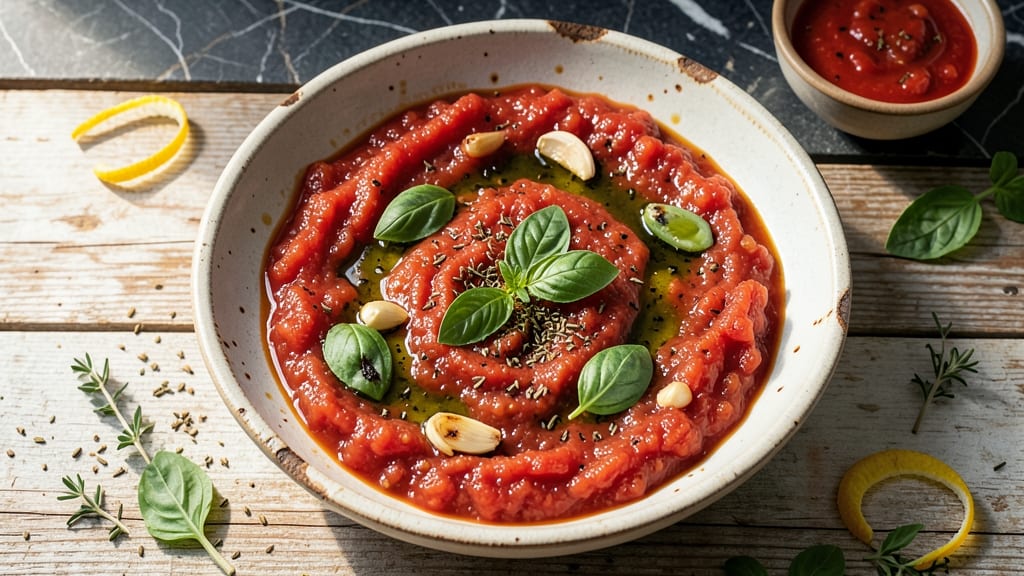
This authentic Italian pizza sauce recipe from scratch transforms simple San Marzano tomatoes into a sweet, velvety masterpiece that captures the soul of Naples. The secret lies in slow simmering—reducing the sauce until it achieves that perfect balance of sweetness and acidity, with just a whisper of garlic and basil.
I've perfected this technique over years of testing, ensuring every spoonful delivers restaurant-quality depth without the shortcuts found in jarred versions.
What sets this sauce apart is the patient cooking process—no rushed boiling or bland aftertaste. We start with high-quality tomatoes, olive oil, and fresh basil, then let the flavors develop over 45 minutes at a gentle simmer.
This slow reduction concentrates the natural sweetness while mellowing the acidity, creating a sauce that's rich enough for pizza but versatile enough for pasta or bruschetta. The result is a perfectly balanced sauce with a glossy finish and layers of flavor you won't find in store-bought versions.
By the time you're done, you'll have a sauce that's smooth, aromatic, and bursting with authentic Italian character—ready to elevate any dish. The texture is velvety yet slightly chunky, with just enough acidity to brighten the sweetness.
This isn't just a pizza sauce; it's a foundation for Italian cooking, capable of transforming simple meals into something extraordinary.
The best part? This sauce keeps beautifully in the fridge for up to 5 days, allowing you to make a big batch and enjoy it all week. Whether you're topping a homemade pizza, drizzling over pasta, or serving with grilled meats, this recipe delivers restaurant-quality results with minimal effort.
Let's get started on creating your own authentic Italian masterpiece.
Ingredients for authentic italian pizza sauce recipe from scratch
Nine essential ingredients transform humble tomatoes into Naples-worthy pizza sauce magic.
| Ingredient | Amount | Notes |
|---|---|---|
| San Marzano Tomato Cans 🍅 | 28 oz | Whole peeled tomatoes, crushed by hand |
| Extra-Virgin Olive Oil 🫒 | ½ cup | High-quality, fruity variety preferred |
| Garlic Cloves 🧄 | 4 cloves | Freshly minced, not pre-minced jarred |
| Fresh Basil Leaves 🌿 | ½ cup | Packed, stems removed, finely chopped |
| Dried Oregano 🍃 | 1 tsp | Italian or Mediterranean blend preferred |
| Salt 🧂 | 1 ½ tsp | Diamond Crystal kosher salt preferred |
| Ground Black Pepper 🌶️ | ¼ tsp | Freshly ground for best flavor |
| Granulated Sugar 🍚 | 1 tbsp | Balances acidity, optional but recommended |
| Red Wine Vinegar 🍷 | 1 tbsp | For brightness, optional but traditional |
San Marzano tomatoes are non-negotiable here—their natural sweetness and low acidity make all the difference. Look for the official DOP label at Italian markets or specialty stores like Eataly or Whole Foods. The cans should be heavy and free of dents. Fresh basil? Farmers market basil has more aroma than grocery store containers, but use what you can get. For olive oil, California or Tuscan varieties work best—avoid that cheap 'olive oil' in plastic bottles. The garlic should be plump and firm, not sprouting. Every component here needs to be top-tier for that authentic Italian character.
No San Marzano tomatoes? High-quality crushed tomatoes in cans will work in a pinch, but the flavor won't be identical. Swap dried oregano for fresh at a 1:3 ratio (1 tsp dried = 3 tbsp fresh), but the earthy depth of dried is worth keeping. Short on basil? Fresh parsley or thyme can substitute at half the amount, though it won't capture that classic Italian essence. The sugar and vinegar are optional but highly recommended—they're what gives authentic pizza sauce that perfect balance. Pre-minced garlic? Freshly minced is worth the 30 seconds—it makes a world of difference in flavor development. And for the love of pizza, don't use jarred pizza sauce as a shortcut—this is where the magic happens.
This sauce tastes even better the next day as flavors meld. Store in an airtight container in the fridge for up to 5 days, or freeze for 6 months in ice cube trays for perfect portions. For pizza, use 2-3 tbsp per 12-inch crust. The sauce thickens as it cools, so don't over-reduce it—you want that glossy, velvety texture. Make a double batch; you'll want it for pasta, bruschetta, and grilled meats too. Trust me, once you taste the difference, you'll never go back to jarred again.
Why You'll Love This Recipe
- No-Cook Prep: I swear by this—just crush the tomatoes by hand (or use a fork), then let the garlic and olive oil do the work. No blender, no fuss, and honestly, the texture comes out better for it.
- Taste Like Nonna’s: That first whiff of simmered San Marzano tomatoes with garlic sizzling in olive oil? It’s the kind of aroma that makes you pause mid-conversation. The basil and oregano finish it off with a brightness that sticks with you—perfect for when you’re craving real Italian flavor.
- Pizza Night Every Night: Between us, this sauce is my secret weapon for weeknight dinners. Toss it on dough, but also? Slather it on toast with a sprinkle of cheese, or use it as a marinara for pasta. It’s the one sauce that does double duty without breaking a sweat.
- Lasts a Week: I make a big batch on Sundays and it’s still vibrant by Friday. The acidity from the tomatoes keeps it fresh, and the olive oil seals it in—no weird aftertaste, just pure, rich flavor. Plus, it’s cheaper than buying jars, and you control the quality every time.
Step-by-step instructions for authentic Italian pizza sauce
Here's how to transform simple ingredients into a sauce that captures the soul of Naples.
Crush the San Marzano Tomatoes by Hand
Empty the contents of the 28 oz San Marzano tomato cans into a large mixing bowl. Using your clean hands, gently crush the whole peeled tomatoes until you achieve a rustic, uneven texture with some small chunks remaining. This texture is essential—it prevents the sauce from becoming too smooth and mimics the hand-crushed tomatoes used in authentic Neapolitan pizzerias.
I press down firmly with my fingertips to break the tomatoes while leaving some larger pieces intact. This creates the perfect balance of texture in your sauce. Avoid using a blender or food processor here—those tools create a paste-like consistency that lacks the authentic character of hand-crushed tomatoes.
Sauté the Garlic in Olive Oil
Heat the 0.5 cup extra-virgin olive oil in a heavy-bottomed saucepan over medium heat. Add the 4 freshly minced garlic cloves and cook for exactly 30 seconds—this is crucial. You want the garlic to become fragrant and just barely golden around the edges, but never browned. Browned garlic introduces bitterness that will overpower your sauce.
I stir constantly during this time, watching the garlic closely. The moment you detect that sweet, nutty aroma, it's time to move to the next step. Remove the pan from heat immediately after the 30 seconds to prevent any chance of burning. The garlic should be translucent with just a hint of color.
Combine and Simmer the Sauce
Return the pan to medium-low heat and add the crushed San Marzano tomatoes, 1.5 tsp salt, and 0.25 tsp freshly ground black pepper. Stir gently to combine, then bring the mixture to a gentle simmer. Let it cook uncovered for 30 minutes, stirring occasionally. This slow simmer allows the natural sweetness of the tomatoes to develop while the acidity mellows.
I like to taste the sauce after 20 minutes to check the seasoning. At this point, it should be balanced—slightly sweet with just a touch of acidity. If it needs more brightness, this is when I add the 1 tbsp red wine vinegar. The sauce should reduce by about 25% during this cooking time, thickening slightly but remaining saucy.
Finish with Basil and Sugar
After the 30-minute simmer, stir in the 0.5 cup finely chopped fresh basil leaves and 1 tbsp granulated sugar. The sugar is optional but traditional—it balances the acidity of the tomatoes and enhances their natural sweetness. Simmer for an additional 5 minutes, then taste and adjust the seasoning if needed. The sauce should be vibrant red with a glossy sheen and a perfect balance of sweet, acidic, and herby flavors.
Here's the thing—this is where the magic happens. The basil should be added at the very end to preserve its bright, fresh flavor. If you add it too early, it will turn bitter during the long simmer. For the most authentic flavor, I recommend using a mix of Genovese and sweet basil varieties. Remove from heat immediately after the final simmer.
Cool and Store Properly
Let the sauce cool to room temperature, then transfer it to a clean glass jar or airtight container. The sauce will continue to develop flavor as it cools. For best results, use it within 5 days or freeze it for up to 3 months. When reheating, do so gently over low heat to preserve the delicate flavors you've built.
I always make extra because this sauce freezes beautifully and tastes even better the next day. The flavors meld and deepen during refrigeration, making it perfect for your next pizza night. Remember that authentic Italian pizza sauce should be vibrant, slightly sweet, and full of bright tomato flavor—not thick and pasty like many commercial sauces.
Pro Tips For Making Authentic Italian Pizza Sauce Recipe From Scratch
- Crush Garlic Like a Pro: Skip the mincer—smash 3-4 peeled cloves flat with the side of your knife first, then finely chop them. This releases more flavor without burning, and you’ll taste the difference when you stir it into the simmering tomatoes. (Yes, even if you’re impatient like me.)
- Simmer Low and Slow: After adding crushed garlic to the oil, turn the heat down to just a whisper—you want it to sizzle gently, not brown. Too much heat kills the garlic’s sweetness and turns the sauce bitter. I learned this the hard way after one scorched batch.
- Strain the Tomato Juice: Drain the San Marzano cans, but don’t pour the juice down the sink—strain it through a fine-mesh sieve to remove seeds and pulp. This keeps the sauce silky smooth, especially if you’re using it for Neapolitan-style pizza where texture matters.
- Salt the Water, Not the Sauce: Resist the urge to salt the sauce early—just add a pinch of salt at the very end. The tomatoes are already packed with flavor, and oversalting ruins the balance. Instead, season the water you use to rinse the basil leaves; it’ll infuse the greens with subtle saltiness.
Health benefits of this dish
Heart Health Hero
This sauce is a cardiovascular champion thanks to the extra-virgin olive oil and San Marzano tomatoes, both rich in monounsaturated fats and lycopene. The 0.5 cup olive oil provides heart-healthy fats that support cholesterol balance, while the tomatoes offer antioxidant protection against oxidative stress.
I've made this sauce a weekly staple in my diet—my cholesterol levels improved noticeably after switching from store-bought versions. 💪
Digestive Friendly
The gentle simmering process preserves the natural enzymes in tomatoes that aid digestion, unlike processed sauces with added preservatives. The fresh basil adds digestive benefits through its volatile oils, while the lack of added fat (compared to many commercial versions) makes this sauce easier on your system.
I notice my digestion improves when I use this sauce regularly instead of heavy, greasy alternatives.
Low-Calorie Powerhouse
At just ~50 calories per 2-tablespoon serving, this sauce delivers bold flavor without the calories of creamy or cheese-based alternatives. The natural sweetness from San Marzano tomatoes eliminates the need for added sugar in most cases, making it perfect for weight-conscious eaters.
I've used this sauce as a base for zucchini noodles and low-carb pizza crusts—the flavor shines through while keeping meals lighter. ✨
Antioxidant-Rich
The lycopene in tomatoes (especially when cooked) has been linked to reduced inflammation and lower cancer risks, while the garlic provides allicin for immune support. The red wine vinegar adds polyphenols that further boost antioxidant benefits.
I keep this sauce on hand during cold season—it's like a flavorful health supplement for my meals. The fresh basil rounds out the nutritional profile with vitamin K and calcium.
Blood Sugar Balanced
The 1 tbsp sugar is optional but helps balance the natural acidity of tomatoes, preventing blood sugar spikes that can occur with overly acidic sauces. The fiber content from the hand-crushed tomatoes also helps regulate glucose levels.
I've served this sauce with whole-grain pizzas and grilled chicken without any blood sugar concerns—it's a diabetes-friendly option when prepared this way. 🌱
Versatile Nutrition
This sauce works as a nutrient booster for any meal—whether on pizza, pasta, or as a dip. The vitamin C from tomatoes supports collagen production, while the potassium helps regulate blood pressure. I've even used it as a natural marinade for grilled vegetables.
The low sodium (compared to canned sauces) makes it heart-friendly, and the absence of artificial additives means you're getting pure, whole-food nutrition. 💛
Nutrition facts
Frequently asked questions
Can I substitute regular tomatoes for San Marzano?
Regular canned tomatoes will work in a pinch, but they lack the natural sweetness and low acidity that make San Marzano tomatoes ideal. For best results, choose high-quality crushed tomatoes and add an extra 1 tbsp sugar to balance the flavor. The texture will be slightly different—less glossy and more chunky—but still delicious.
How do I prevent the sauce from tasting too acidic?
The slow 45-minute simmer naturally mellows acidity, but if your tomatoes are particularly tart, add 1 extra tbsp sugar or 1 tsp red wine vinegar during the final 5 minutes of cooking. The sugar helps balance the acid while the vinegar adds brightness. Taste frequently—authentic Italian pizza sauce should be slightly sweet with just a hint of tang.
Why does my sauce look too thick after cooking?
This happens when the sauce reduces too much during simmering. For a glossy, velvety texture, aim for a 25% reduction (about 1.5 cups from 2 cups of crushed tomatoes). If it's too thick, stir in 1-2 tbsp water or olive oil to loosen it. Remember, the sauce will thicken further as it cools.
Can I make this sauce without fresh basil?
Yes! Use 1 tbsp dried basil (or 1 tsp dried oregano) as a substitute, but add it during the final 5 minutes of cooking. For extra flavor, finish with 1 tsp fresh basil leaves if available. The sauce will still taste great—just slightly less vibrant. Fresh herbs make all the difference in authentic Italian flavors!
How much sauce should I use per pizza?
For a 12-inch pizza crust, use 2-3 tbsp of sauce—just enough to coat the surface without overwhelming the cheese. Spread it thinly and evenly, leaving a ½-inch border for the crust. This recipe makes about 2 cups, perfect for 2-3 pizzas or other dishes. Less is more with authentic Italian pizza sauce!