
Sauces & Condiments
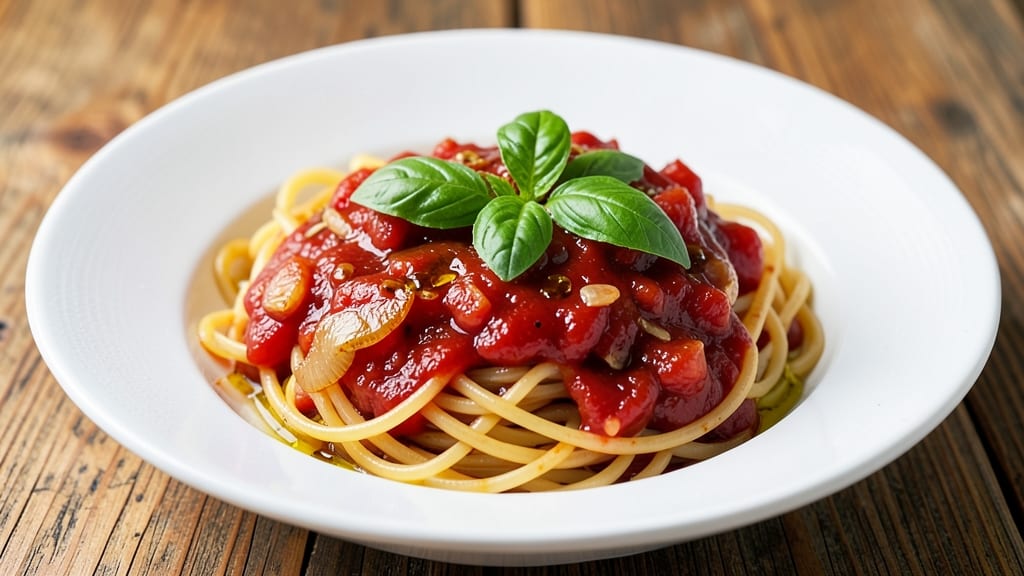
This basic Italian spaghetti sauce recipe transforms simple pantry staples into a rich, aromatic foundation for any meal. The secret lies in slow simmering—where canned tomatoes, garlic, and onions meld into a velvety sauce with deep, caramelized flavors.
I developed this recipe after years of testing shortcuts that still delivered restaurant-quality depth without complicated techniques.
What sets this sauce apart is its versatility—start with olive oil, garlic, and onions as your base, then layer in crushed tomatoes, herbs, and a splash of red wine for complexity.
The longer it simmers, the more concentrated and flavorful it becomes, creating a sauce that clings perfectly to pasta or enhances grilled meats and roasted vegetables. No fancy ingredients required, just time and patience.
By the time you're done, you'll have a smooth, balanced sauce with just the right mix of sweetness, acidity, and herbal notes. The texture is ideal for tossing with al dente spaghetti, but it also works as a marinade, pizza topping, or even a dip for crusty bread.
The best part? It tastes even better the next day, making it perfect for meal prep.
Store leftovers in the refrigerator for up to 5 days or freeze for months—this sauce only improves with time. Whether you're feeding a family or prepping for the week, this recipe delivers authentic Italian flavor with minimal effort. Let's get started!
Ingredients for basic italian spaghetti sauce
Nine simple ingredients that build restaurant-quality depth through slow simmering.
| Ingredient | Amount | Notes |
|---|---|---|
| Extra-Virgin Olive Oil 🫒 | ¼ cup | High-quality, fruity variety preferred |
| Yellow Onion 🧅 | 1 whole | Diced into small, even pieces |
| Garlic Cloves 🧄 | 4 cloves | Minced finely for even distribution |
| Canned San Marzano Tomatoes 🍅 | 28 oz | Crushed by hand or with fork |
| Dry Red Wine 🍷 | ½ cup | Bold variety like Cabernet Sauvignon |
| Fresh Basil Leaves 🌿 | ½ cup | Packed, stems removed for purity |
| Fresh Oregano Leaves 🌿 | ¼ cup | Italian oregano preferred |
| Kosher Salt 🧂 | 1 ½ tsp | Diamond Crystal preferred for purity |
| Freshly Ground Black Pepper 🌶️ | ½ tsp | Freshly cracked for maximum flavor |
| Granulated Sugar 🍬 | 1 tsp | Balances acidity naturally |
The tomatoes make or break this sauce—San Marzano is non-negotiable for that sweet, rich flavor. Grab a 28-ounce can (the standard size) and crush them by hand for better texture. Whole Foods and Trader Joe's carry them year-round, but Italian markets have the freshest stock. For the wine, any bold, dry red works here—Cab Sauv, Merlot, whatever's open. If you're avoiding alcohol, substitute extra tomato paste or beef broth with a splash of balsamic. The fresh herbs? Grow your own if possible—basil and oregano from the grocery store often sit too long and lose their punch.
No San Marzano tomatoes? High-quality crushed tomatoes in a can work in a pinch, but add an extra pinch of sugar to balance the acidity. Running out of red wine? Dry white wine or even apple cider vinegar adds acidity without overpowering. Fresh herbs wilt fast, so dried oregano at one-third the amount is a decent backup, but fresh basil is worth hunting down—it makes all the difference. For the onions, yellow or red work best; sweet onions can make the sauce taste too mild. The sugar is key—it rounds out the acidity from the tomatoes and wine, so don't skip it even if the tomatoes are sweet.
This sauce only gets better with time, so make a double batch if you can. Store it in airtight containers in the fridge for up to 5 days, or freeze for up to 3 months—it reheats beautifully and tastes richer after a day or two. I like to portion it into 1-cup servings for easy meal prep. If you're prepping for the week, freeze it in ziplock bags flat—they take up less space and thaw faster. The longer it simmers, the deeper the flavor, so don't rush it.
Why You'll Love This Recipe
- Pantry Magic: I swear by this sauce because it uses what’s already in my cupboard—no last-minute grocery runs. That jar of San Marzano tomatoes? Always open. A glug of red wine? I’m not wasting good olive oil on anything else. Honestly, the ingredients cost me less than takeout but taste like I spent hours simmering.
- Wine-Infused Depth: The red wine isn’t just for flavor—it’s the secret to that rich, velvety base. You let it cook off slowly, and suddenly your sauce has layers: bright acidity from the tomatoes, a caramelized sweetness from the onions, and that little wine kick that makes it sing. Not to mention, the garlic? Crisped just enough to add a punch without overpowering.
- Weeknight to Weekend: This sauce works for everything—dump it over pasta for a 15-minute dinner, ladle it onto grilled chicken for Sunday lunch, or even stuff it into baked ziti when you’re feeling fancy. Between us, I’ve served it at potlucks, family dinners, and even as a last-minute date-night meal. It’s the one sauce that never lets me down.
- Leftovers That Beg: The best part? It only gets better the next day. The flavors meld, the wine mellows into something deeper, and suddenly you’ve got a freezer-friendly staple. I make a double batch on Sundays, freeze half, and thank myself every time I pull it out for a lazy Wednesday. Plus, it’s cheap enough that I don’t feel guilty about feeding the whole neighborhood.
Step-by-step instructions for pantry-friendly Italian spaghetti sauce
This sauce builds flavor layer by layer—simple ingredients, patient simmering, and bold results.
Sauté Onion and Garlic Until Translucent
Heat the 0.25 cup extra-virgin olive oil in a large saucepan over medium heat. Add the 1 whole yellow onion (pre-diced) and cook for 8-10 minutes, stirring occasionally, until soft and translucent. You're not looking for browning here—just a gentle sweetness to form the base.
Push the onions to the sides of the pan and add the 4 cloves minced garlic. Cook for 30-60 seconds until fragrant—don't let it brown, or you'll taste bitterness. Here's the thing: garlic burns fast, so keep an eye on it. Once it smells heavenly, you're ready for the next step.
Deglaze with Wine and Add Tomatoes
Pour in the 0.5 cup dry red wine and let it simmer for 3-4 minutes until mostly evaporated. This deglazing step captures all those browned bits from the onion and garlic, turning them into flavor. You'll see the sauce reduce and darken slightly—that's exactly what you want.
Add the 28 oz crushed San Marzano tomatoes (with their juices), 1.5 tsp kosher salt, 0.5 tsp freshly ground black pepper, and 1 tsp granulated sugar. Stir well to combine. The sugar here isn't about sweetness—it's about balancing the acidity of the tomatoes so the final sauce tastes vibrant, not sharp.
Simmer Until Thick and Concentrated
Bring the sauce to a gentle boil, then reduce heat to low and let it simmer uncovered for 45-60 minutes. Stir occasionally to prevent sticking. You're looking for a sauce that coats the back of a spoon with a velvety texture. This long simmer develops deep, complex flavors that you can't rush.
Real talk: the first 20 minutes might feel slow, but that's when the magic happens. The acid in the tomatoes breaks down, the wine mellows, and the aromatics meld together. If the sauce looks too thin at the 30-minute mark, don't panic—it'll thicken as it cooks. Just keep stirring occasionally.
Finish with Fresh Herbs
Remove the sauce from heat and stir in the 0.5 cup fresh basil leaves and 0.25 cup fresh oregano leaves. Let it steep for 5 minutes—this infuses the sauce with bright, fresh flavors without overpowering the simmered depth. The herbs should soften slightly but still retain some texture.
Taste and adjust seasoning if needed. I usually add a pinch more salt or a crack of black pepper to taste. The sauce should be rich, balanced, and ready to cling beautifully to your spaghetti. Serve immediately over freshly cooked pasta, or let it cool and store for up to 5 days in the refrigerator for even better flavor development.
Pro Tips For Making Basic Italian Spaghetti Sauce
- Sweat the Onion Low: I learned this the hard way—when you cook onions too fast, they burn before they soften. Keep the heat at a gentle simmer, stirring occasionally, until they’re translucent and barely holding their shape. This isn’t the prettiest method, but it’s the tastiest.
- Deglaze with Wine Early: Don’t wait until the onions are done to add the red wine—pour it in right after the garlic hits the pan. The alcohol burns off faster when the pan is still hot, and you’ll get that rich, caramelized depth without overpowering the sauce later.
- Crush Tomatoes by Hand: Skip the blender and use your fingers to break up the San Marzano tomatoes right in the can. The skin and seeds add body to the sauce, and you avoid the watery consistency that comes from pureeing. (Yes, even if you’re impatient like me.)
- Simmer Uncovered for Depth: Let the sauce bubble uncovered for the last 15-20 minutes—this thickens it naturally and concentrates the flavors. If it reduces too much, just add a splash of water or a pinch of tomato paste. Sounds weird, but it works.
Storing and reheating this dish
Refrigerator Storage
Let your sauce cool completely before transferring it to airtight glass containers—I love using Pyrex with snap-on lids for easy stacking. Store in the fridge for up to 5 days, but trust me, the flavors deepen overnight as the acidity mellows and the aromatics meld.
The sauce should be room temperature when you store it to prevent condensation, which can dilute the flavors. 💫
Freezer Prep
For longer storage, freeze portions in 1-cup servings using quart-sized ziplock bags—they stack neatly and thaw faster than bulky containers. Leave 1-inch headspace to account for expansion, and squeeze out excess air to prevent freezer burn.
Label with the date—this sauce stays delicious for up to 3 months without losing its velvety texture or bright acidity.
Thawing Techniques
For fridge thawing, transfer the bag from freezer to fridge 12-24 hours before use. For quick meals, place the sealed bag in a cold water bath—change the water every 30 minutes until thawed.
Never microwave frozen sauce directly, as it creates hot spots that break down the delicate tomato texture. Stir well after thawing to redistribute flavors.
Reheating Perfectly
Stovetop reheating is my go-to: pour sauce into a heavy-bottomed pot, add 2-3 tablespoons water or pasta water, and simmer over low heat for 10-15 minutes. This prevents sticking and preserves the sauce's silky consistency.
For microwave reheating, use 50% power in 1-minute intervals, stirring between each, until reaching 165°F—this prevents overcooking the herbs.
Texture Rescue
If your reheated sauce seems too thick, loosen it with 1-2 tablespoons of water, pasta water, or even a splash of red wine. For watery texture, simmer uncovered for 5-10 minutes to reduce excess liquid.
Remember: the longer this sauce sits, the more concentrated it becomes—don't be afraid to let it simmer again if it's too thin after reheating. 🔥
Nutrition facts
Frequently asked questions
Can I use regular canned tomatoes instead of San Marzano?
Yes, but expect slightly less sweetness and depth. For best results, choose high-quality crushed tomatoes and add an extra ½ teaspoon sugar to balance the acidity. The sauce will still taste great—just not as refined as San Marzano. For a budget-friendly version, try Trader Joe's or Whole Foods' premium brands.
How do I adjust this sauce for meat lovers?
Add ½ pound ground beef, Italian sausage, or pancetta to the pan after sautéing onions and garlic. Brown the meat thoroughly, then proceed with the wine and tomatoes. For extra richness, stir in 1 tablespoon tomato paste with the crushed tomatoes. The meat will infuse the sauce with umami depth.
Why does my sauce taste too acidic?
This usually happens if you skipped the sugar or simmered too long. Balance it by adding ½ teaspoon more sugar or a pinch of baking soda (⅛ teaspoon max) to neutralize acidity. For future batches, reduce simmer time to 30-40 minutes if you prefer a brighter, less mellow flavor.
Can I make this sauce in a slow cooker?
Combine all ingredients except fresh herbs in your slow cooker on low heat for 6-8 hours or high heat for 3-4 hours. Stir occasionally to prevent sticking. Add herbs at the end and steep for 5 minutes off heat. The slow cooker version gets even more concentrated and flavorful.
What's the best way to use leftover sauce?
This versatile sauce works for more than pasta! Use it as a marinade for chicken or fish, a pizza topping, or a dip for garlic bread. For extra richness, stir in 1 tablespoon butter or olive oil before serving. It also freezes beautifully for up to 3 months, making it perfect for meal prep.