
Sauces & Condiments
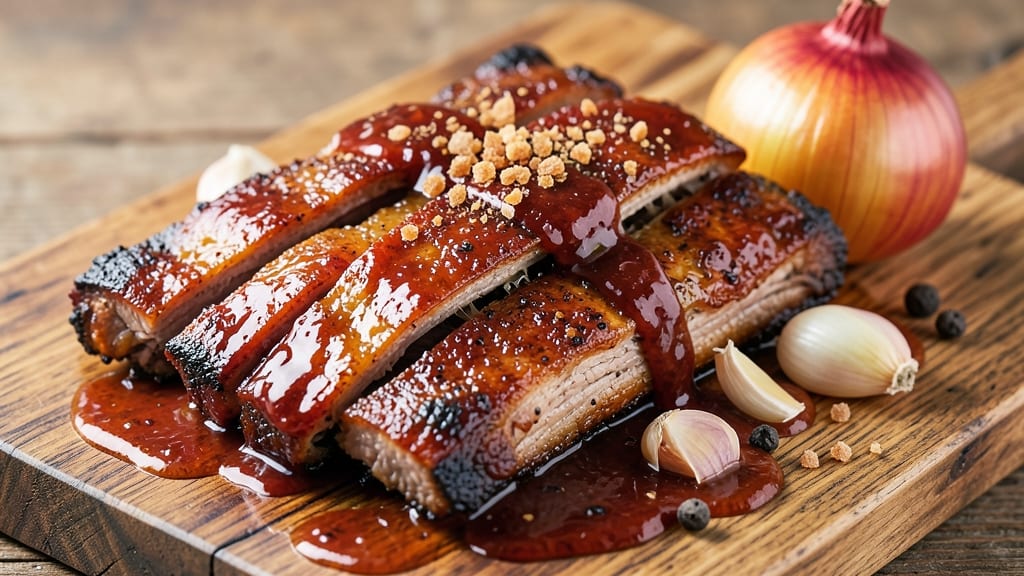
This barbecue sauce ribs recipe transforms tough cuts into melt-in-your-mouth perfection using just your oven and a few key techniques. The secret lies in low-and-slow cooking paired with a tangy-sweet glaze that caramelizes into a sticky, flavorful crust—no smoker required.
I perfected this method after years of experimenting with different temperatures and sauce applications, and it consistently delivers restaurant-quality results at home.
The process begins with a simple dry rub that tenderizes the meat while building deep flavor, followed by a 3-hour bake at 275°F that ensures fall-apart tenderness.
What sets this recipe apart is the sauce application technique: brushing on a thin layer early and then finishing with a thick glaze during the last 30 minutes of cooking. This creates that coveted sticky exterior without overwhelming the meat's natural richness.
By the time you pull those ribs from the oven, you'll have meat that practically falls off the bone with every bite, coated in a glossy, caramelized sauce that's both sweet and tangy.
The slow cooking breaks down connective tissue, transforming tough cuts into something so tender it's almost sinful. This is the kind of meal that turns weeknight dinners into special occasions.
Serve with classic sides like coleslaw, cornbread, or roasted potatoes to complete the experience. The leftovers reheat beautifully too, making this an ideal recipe for meal prep or feeding a crowd. Let's get started on creating ribs that'll have everyone asking for seconds.
Ingredients for barbecue sauce ribs recipe oven
Six ingredients transform tough ribs into tender, caramelized perfection without a smoker.
| Ingredient | Amount | Notes |
|---|---|---|
| Pork Baby Back Ribs 🍖 | 4 lb | Bone-in, meaty ends preferred |
| Yellow Onion 🧅 | 1 whole | Large, sliced into 1/4-inch strips |
| Garlic Cloves 🧄 | 6 cloves | Fresh, minced for dry rub |
| Brown Sugar 🍬 | ½ cup | Packed, light or dark variety |
| Smoked Paprika 🌶️ | 2 tbsp | For deep smoky flavor |
| Ground Black Pepper 🌶️ | 1 ½ tsp | Freshly cracked for intensity |
| Kosher Salt 🧂 | 1 ½ tbsp | Diamond Crystal preferred |
| Apple Cider Vinegar 🍎 | ¼ cup | For tangy depth in sauce |
| Tomato Paste 🍅 | ½ cup | High-quality, no sugar added |
| Honey 🍯 | ½ cup | Wildflower preferred |
| Worcestershire Sauce 🍶 | 2 tbsp | Vegan version if needed |
| Chipotle Peppers in Adobo 🌶️ | 2 tbsp | Minced for subtle heat |
| Unsalted Butter 🧈 | 2 tbsp | Cold, for basting |
| Fresh Thyme Leaves 🌿 | ½ tsp | Dried works at 1/3 amount |
The ribs are the foundation—look for baby back cuts with thick meaty ends at Costco or your local butcher. Hearty, meaty bones ensure maximum flavor, and the ends stay juicy when cooked low-and-slow. If your ribs have a thin membrane on the bone side, peel it off for better sauce adhesion. For the dry rub, Penzeys smoked paprika delivers the deepest flavor, but any quality brand works. The key is balancing sweetness and smokiness—brown sugar caramelizes beautifully during the long bake, while the paprika ensures that smoky backbone. Fresh thyme adds aromatic depth, but dried is fine if you're short on time.
No Worcestershire sauce? Substitute with 1 tbsp soy sauce plus 1 tsp liquid smoke—it mimics that umami punch. Chipotle peppers in adobo can be swapped for 1 tbsp cayenne plus 1 tsp smoked paprika if you prefer more heat. For a sweeter glaze, increase honey to 2/3 cup and reduce apple cider vinegar to 1/4 cup. The tomato paste is non-negotiable—it thickens the sauce and adds body. If you're using a squeeze tube, Trader Joe's brand is perfect—no waste, and it lasts for months. For the butter basting, European-style unsalted butter like Plugrá melts beautifully without overpowering the sauce.
Prep the ribs the night before—pat them dry and apply the dry rub generously, then refrigerate uncovered for at least 4 hours (overnight is ideal). The sauce can be made 2 days ahead and stored in the fridge; reheat gently before using. Leftovers reheat best at 300°F for 15 minutes with a splash of water to keep them moist. These ribs freeze beautifully too—wrap tightly and store for up to 3 months. The sauce thickens as it cools, so thin with a splash of water if needed before reheating.
Why You'll Love This Recipe
- Here’s what sold me: these ribs taste even better the next day. The sauce clings tighter, the meat gets more tender, and suddenly you’ve got lunch sorted. I’ve reheated them three times and never gotten tired of them.
- One-Pan Magic: I swear by this recipe because it’s all in one tray—no messy saucepans or extra bowls. Just ribs, onions, and that sticky-sweet barbecue glaze caramelizing together while you scroll through your phone (or, okay, nap).
- Sweet-Smoky Bomb: That brown sugar and smoked paprika combo? It’s like a flavor hug. The ribs get this perfect balance of tangy, smoky, and just enough sweetness—no cloying syrup here, just deep, satisfying taste in every bite.
- Weeknight Hero: Between us, this is my go-to when I need something impressive but zero stress. Toss the ribs in the oven, let them slow-roast while I prep sides, and boom—dinner’s ready. (Yes, even on a Tuesday night.)
Step-by-step instructions for oven-baked barbecue ribs
Here's how to transform tough ribs into melt-in-your-mouth perfection with a sticky glaze.
Prepare the Ribs for Maximum Flavor and Tenderization
Remove the pork baby back ribs from the packaging and pat them dry completely with paper towels. This step is crucial—moisture prevents the rub from adhering properly and creates steam instead of crispy bark. Use your fingers to separate the ribs slightly at the membrane between each bone, being careful not to tear the meat.
In a small bowl, combine the 0.5 cup brown sugar, 2 tbsp smoked paprika, 1.5 tsp ground black pepper, 1.5 tbsp kosher salt, 6 cloves minced garlic cloves, and 0.5 tsp fresh thyme leaves. Mix thoroughly until the sugar and spices form a fine, even coating. Generously apply this dry rub to both sides of the ribs, pressing it into the meat so it sticks. This creates a flavorful crust that will caramelize beautifully during cooking.
Build the Barbecue Sauce with Balanced Flavors
In a saucepan over medium heat, combine the 0.5 cup tomato paste, 0.5 cup honey, 0.25 cup apple cider vinegar, 2 tbsp Worcestershire sauce, and 2 tbsp minced chipotle peppers in adobo. Stir continuously for 5-7 minutes until the mixture thickens slightly and the raw tomato paste flavor disappears. This sauce should be smooth and glossy—if it's too thick, add 1-2 tablespoons of water to reach a pourable consistency.
The vinegar adds tang, the honey balances sweetness, and the chipotle provides subtle heat. Taste as you go—adjust seasoning with additional salt or pepper if needed. Remove from heat and let it cool slightly while you prepare the oven.
Bake the Ribs Low and Slow for Tender Results
Preheat your oven to 275°F with a rack positioned in the lower third. Place the seasoned ribs on a foil-lined baking sheet, bone-side down. This position allows the meat to cook evenly and prevents the bones from burning. Bake uncovered for 2 hours, then flip the ribs bone-side up and continue baking for another 1 hour. The meat should be fork-tender at this stage, with the internal temperature reaching 195-200°F when measured in the thickest part of the meat.
Here's the thing—patience is key. The low temperature breaks down collagen in the connective tissue, transforming tough meat into something silky. If the ribs brown too quickly, tent them loosely with foil to prevent over-browning while maintaining moisture.
Glaze and Finish for Sticky Perfection
Remove the ribs from the oven and increase the temperature to 375°F. Brush the cooled barbecue sauce generously over each rib, making sure to coat all surfaces evenly. Place the ribs back in the oven and bake for 10-15 minutes until the sauce caramelizes into a glossy glaze. During the last 2 minutes, add the 2 tbsp cold unsalted butter to the baking sheet and tilt the pan to baste the ribs with the melted butter, creating an extra layer of richness.
The sauce should bubble and darken to a deep amber color. This final step creates that signature sticky glaze that clings to every bite. Watch closely—overcooking can burn the sauce, so remove them as soon as they're glossy and caramelized.
Rest and Serve for Maximum Juiciness
Transfer the ribs to a cutting board and let them rest for 10-15 minutes before serving. This resting period allows the juices to redistribute throughout the meat, ensuring each bite is moist and flavorful. To serve, cut the ribs between each bone and arrange them on a platter. Drizzle any remaining sauce from the baking sheet over the top for extra flavor.
The finished ribs should have a deep mahogany glaze, tender meat that falls apart easily, and a perfect balance of sweet, smoky, and tangy flavors. Serve with classic barbecue sides like coleslaw or cornbread to complete the meal.
Pro Tips For Making Barbecue Sauce Ribs Recipe Oven
- Trim the Fat First: Baby back ribs have a thin fat cap—don’t skip peeling it off before seasoning. I learned this the hard way: leaving it on makes the sauce cling unevenly and burns faster. Use kitchen shears for speed, but go slow near the bone to avoid slicing into the meat.
- Caramelize Onions Low and Slow: Brown sugar burns fast, but onions take forever to sweeten. Start them in a cold pan with 2 tablespoons oil—no rush—then add garlic only in the last 2 minutes. Overcooked onions turn bitter, and you’ll taste it in every bite of sauce.
- Wrap Tight at 225°F: The oven’s sweet spot for ribs is 225°F, but foil’s the real MVP. Crimp it shut with your hands (yes, get messy) to trap steam—this keeps the meat tender instead of drying out. I used to poke holes for "ventilation," but the ribs stayed juicier when sealed tight.
- Sauce Last 10 Minutes Only: Smoked paprika and brown sugar caramelize fast under heat. Brush sauce on ribs only in the final 10 minutes of cooking—otherwise, it’ll turn to syrup and stick like glue. Save a little sauce to drizzle at the end for shine.
Troubleshooting this recipe
Ribs Too Dry?
If your ribs end up dry, you likely cooked them too hot or didn't rest them properly. The key is maintaining that 275°F temperature—any higher and the meat will dry out before the collagen breaks down.
I've found that 195-200°F internal temperature is perfect for tender ribs. Always rest them for 10-15 minutes before cutting, or juices will escape when you serve. 💡
Sauce Not Sticking?
A common issue is sauce sliding off instead of clinging. This happens when the ribs aren't properly dried before applying the rub. Pat them completely dry with paper towels, then let them sit uncovered in the fridge for 30 minutes before baking.
For extra adhesion, brush a thin layer of egg white (whisked) over the ribs before applying the sauce—it creates a natural glue. 🧂
Uneven Cooking?
If some ribs cook faster than others, it's usually because of uneven heat distribution. Rotate your baking sheet halfway through cooking, and consider using two racks—place one in the lower third and one in the middle.
For extra insurance, I wrap the ribs loosely in aluminum foil during the first 2 hours of cooking, then remove it for the final hour to let the sauce caramelize. 🔥
Burnt Sauce?
Watch the sauce like a hawk during the final 10-15 minutes at 375°F. If it darkens too quickly, remove the ribs and let them rest while you finish the sauce on the stovetop.
For a smoother glaze, reduce the honey slightly (try 1/3 cup) and increase the vinegar to 1/3 cup—this balances sweetness and prevents burning. 🍯
Ribs Still Tough?
Tough ribs usually mean the cooking time wasn't long enough. Extend the bake to 3-4 hours at 275°F, flipping them halfway. For an extra tenderizing boost, I sometimes add 1 tbsp apple cider vinegar to the dry rub—it helps break down fibers.
If you're short on time, try the braise method: cook the ribs at 325°F in a covered pan with 1 cup chicken broth for 2.5 hours. 🍲
Nutrition facts
Frequently asked questions
Can I use store-bought barbecue sauce instead of making my own?
For convenience, use a high-quality sauce like Sweet Baby Ray's or Stubb's Original. Look for one with at least 15% tomato content and minimal additives. Thin it slightly with water if needed—store-bought sauces tend to be thicker than homemade. Just reduce the final glaze time to 8-10 minutes at 375°F to prevent burning.
How do I know when the ribs are fully cooked?
Use the fork test: Gently insert a fork into the thickest part of the meat. If it slides in with minimal resistance and the meat falls apart easily, they're done. The internal temperature should read 195-200°F. The bones should also feel tender when squeezed lightly—no more resistance should remain.
Can I make this recipe in a slow cooker instead?
Yes! Transfer the seasoned ribs to a slow cooker and cook on low for 6-8 hours or high for 4-5 hours. In the last 30 minutes, increase heat to high and add the sauce, then finish with butter basting. The texture will be slightly more tender than oven-baked, but equally flavorful.
What's the best way to reheat leftover ribs?
Reheat in a 300°F oven for 15 minutes with a splash of water or apple cider vinegar to keep them moist. For stovetop, simmer in a saucepan with 2 tbsp sauce and 1 tbsp butter for 5-7 minutes. Avoid microwaving—it makes ribs rubbery. Store leftovers in an airtight container for up to 4 days.
How do I adjust this recipe for spicier ribs?
For extra heat, add 1 tbsp cayenne pepper to the dry rub or 1 extra chipotle pepper to the sauce. For smoky heat, increase smoked paprika to 3 tbsp and add 1/2 tsp liquid smoke to the sauce. Start with small increases—you can always add more, but you can't take it out!