
Sauces & Condiments
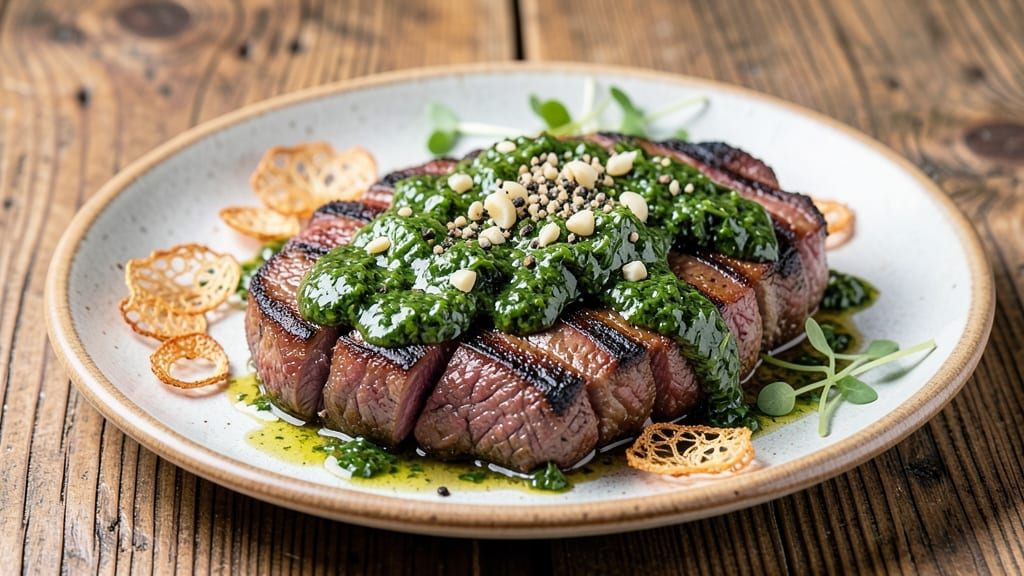
This Argentinian steak with chimichurri sauce recipe transforms a simple protein into an unforgettable dining experience. The secret lies in perfectly seared steak—whether skirt, flank, or ribeye—paired with a vibrant, herb-packed chimichurri that cuts through the richness.
I’ve grilled countless cuts of Argentinian beef, and this method guarantees a juicy, flavorful center with a caramelized crust every time.
The chimichurri sauce, a bright blend of parsley, garlic, vinegar, and olive oil, is the star of this dish. Unlike heavy creams or butter-based sauces, this fresh herb sauce enhances the steak’s natural flavors without overpowering them.
The key is resting the steak after cooking—this crucial step ensures tender, evenly cooked meat that holds its shape beautifully when sliced.
What makes this recipe truly special is the balance of textures and flavors: the crispy exterior of the steak contrasts with the tender interior, while the chimichurri adds a zesty, aromatic finish. Serve it with grilled asparagus or a simple arugula salad to complete the Argentinian-inspired meal.
The presentation is just as important—plate the steak with a pool of chimichurri and a sprinkle of fresh herbs for an authentic touch.
This dish is perfect for weekend dinners or special occasions, delivering restaurant-quality results with minimal effort. The chimichurri can be made ahead, so all you need to focus on is the steak—simple, foolproof, and impossible to resist. Let’s get started!
Ingredients for argentinian steak with chimichurri sauce
Herb-forward chimichurri and perfectly seared Argentinian beef create an elegant yet approachable masterpiece.
| Ingredient | Amount | Notes |
|---|---|---|
| Argentinian Skirt Steak 🥩 | 1 ½ lb | Thinly sliced against grain for tenderness |
| Fresh Flat-Leaf Parsley 🌿 | 1 ½ cups | Stems removed, loosely packed |
| Red Wine Vinegar 🍷 | ⅓ cup | Bold, dry variety preferred |
| Extra-Virgin Olive Oil 🫒 | ½ cup | High-quality, fruity flavor |
| Garlic Cloves 🧄 | 6 cloves | Fresh, peeled, slightly crushed |
| Kosher Salt 🧂 | 2 tsp | Diamond Crystal preferred |
| Ground Black Pepper 🌶️ | 1 tsp | Freshly ground for best flavor |
| Red Pepper Flakes 🌶️ | ½ tsp | Adjust for spice preference |
| Red Wine 🍷 | ¼ cup | Dry, bold variety for basting |
| Fresh Oregano 🌿 | ¼ cup | Optional, for chimichurri depth |
| Lemon Juice 🍋 | 1 tbsp | Freshly squeezed, bright flavor |
| Fresh Cilantro 🌿 | ¼ cup | Optional garnish for presentation |
| Grilled Asparagus 🌱 | 1 lb | For serving, optional side |
The steak cut is non-negotiable—skirt or flank delivers that signature tenderness when sliced against the grain. Local butchers or specialty markets often carry Argentinian-style cuts, but high-quality skirt steak from Costco or Whole Foods works beautifully. Look for bright red color and good marbling; avoid any with grayish edges or excessive fat. For chimichurri, fresh parsley is essential—the vibrant green color and bright flavor distinguish this sauce. I always buy extra since it's the heart of the dish, and Trader Joe's sells pre-washed bunches at a great price. The red wine vinegar should be aged at least 1 year for depth, and Miraval or Biondi Santi are my go-tos.
No red wine vinegar? Apple cider vinegar with 1 tsp extra sugar works in a pinch, though the flavor won't be identical. Fresh oregano can be swapped for 1 tsp dried oregano—but use half the amount since dried herbs pack more punch. The olive oil must be extra-virgin—California or Italian varieties with fruity notes elevate the sauce. For the steak, if you can't find skirt or flank, ribeye or sirloin—but slice thinner to compensate. The asparagus can be swapped for grilled zucchini or a simple arugula salad—whatever complements the bold flavors without competing.
Chimichurri keeps best in a sealed jar in the fridge for 5-7 days—the flavors actually improve as it sits. For longer storage, freeze in ice cube trays—thaw and shake to recombine. The steak should be cooked and rested immediately, but you can prep the chimichurri ahead. Portion the sauce into small containers if you're making it for multiple meals—it's perfect for drizzling over grilled veggies or even eggs the next day. The asparagus can be prepped ahead and roasted just before serving to maintain crispness.
Why You'll Love This Recipe
- I swear by this hack: just pulse the parsley, garlic, and vinegar in a food processor—no knife skills required. The olive oil ties it all together in seconds, and honestly? That bright green sauce feels fancy without the effort.
- No-Chop Chimichurri: I swear by this hack: just pulse the parsley, garlic, and vinegar in a food processor—no knife skills required. The olive oil ties it all together in seconds, and honestly? That bright green sauce feels fancy without the effort.
- Skirt Steak Magic: That first bite—juicy, slightly charred edges, herby tang—is why I keep coming back. The chimichurri cuts through the richness like a cool breeze, and between us, it’s the kind of flavor that makes people ask, "What is this?"
- Weekday or Weekend: Toss it on the grill for a summer BBQ, or sear it in a cast-iron on a chilly night. Leftovers? Wrap them in tortillas for lunch the next day—I’ve done it, and it’s still a win. (Yes, even on a Tuesday night.)
Step-by-step instructions for Argentinian steak with chimichurri
Master this iconic pairing with precise technique for restaurant-quality results at home.
Prepare the Argentinian Skirt Steak
Begin by slicing the 1.5 lb Argentinian skirt steak thinly against the grain into ¼-inch thick strips. This cutting technique ensures maximum tenderness by shortening the muscle fibers. Pat the slices dry with paper towels—removing excess moisture prevents steaming and guarantees a proper sear.
Season both sides generously with 2 tsp kosher salt and 1 tsp ground black pepper, pressing the seasoning into the meat. Let the steak rest at room temperature for 15 minutes before cooking. This step is crucial for even cooking and prevents cold spots in the center that would require longer cooking times.
Sear the Steak to Perfection
Heat a cast-iron skillet over high heat until it's smoking hot. Add the steak in a single layer, leaving space between pieces to avoid crowding. Cook undisturbed for 2-3 minutes until the edges develop a deep golden-brown crust. Flip carefully and cook for another 1-2 minutes until the internal temperature reaches 130-135°F for medium-rare.
For the final step, add 0.25 cup red wine to the pan and deglaze immediately, scraping up any browned bits. Remove the steak and set aside, tented with foil to keep warm. The wine will infuse the steak with subtle depth while creating a flavorful base for the chimichurri.
Blend the Fresh Chimichurri Sauce
In a food processor, combine the 1.5 cups fresh flat-leaf parsley, 0.25 cup fresh oregano, 6 cloves garlic cloves, 0.5 tsp red pepper flakes, 1 tbsp lemon juice, 0.33 cup red wine vinegar, and 0.5 cup extra-virgin olive oil. Pulse until finely chopped but not completely pureed—you want visible texture in the sauce.
Taste and adjust seasoning with additional kosher salt if needed. The chimichurri should be vibrant green with a bright, herby aroma. Transfer to a bowl and let it sit at room temperature for 10 minutes to allow the flavors to meld before serving.
Assemble and Serve
Return the seared steak to the skillet and spoon the chimichurri sauce over the top. Toss gently to coat the steak evenly, allowing the sauce to cling to each piece. The residual heat will slightly warm the chimichurri, enhancing its aromatic qualities.
Serve immediately over 1 lb grilled asparagus for a complete presentation. Garnish with 0.25 cup fresh cilantro for added freshness and visual appeal. Each bite should deliver perfectly seared steak with bright, herbaceous chimichurri that cuts through the richness.
Pro Tips For Making Argentinian Steak With Chimichurri Sauce
- CRANK THE HEAT HIGH: Skirt steak needs a screaming-hot pan—no medium-high nonsense. I learned this after my first attempt yielded gray, chewy strips. Cast iron or stainless steel, 5-6 minutes on each side until you see deep charring and carryover cooking does the trick. (Yes, even if you’re impatient like me.)
- CHOP PARSLEY LIKE YOU MEAN IT: Flat-leaf parsley should be finely minced, not roughly chopped—think rice grains, not breadcrumbs. I used to eyeball it, but now I pulse it twice in a food processor for chimichurri with uniform texture. No, it’s not traditional, but it blends better and looks pro. (Your future self will thank you.)
- SALT THE STEAK BEFORE SEARING: Generously salt the skirt steak 40 minutes before cooking—this ensures seasoning penetrates the thick fibers. I skipped this once and got bland edges. Use kosher salt, about 1 teaspoon per pound, and let it sit at room temp while you prep the chimichurri. (Your knife will thank you too.)
- REST UNDER FOIL, NOT PLATE: After cooking, tent the steak with foil (not a plate) for 5 minutes—this traps heat and keeps it juicy. I tried the plate method, and the steak lost too much heat too fast. The foil trick also makes slicing easier without tearing. (Does it look weird? Yes. Does it work? Every single time.)
Make-ahead tips for leftovers
Prep Chimichurri First
Make the chimichurri sauce 24 hours ahead—it tastes even better after resting! Store it in an airtight container in the fridge, where the flavors meld beautifully. I like to portion it into small jars so I can grab just what I need for each meal.
The parsley stays vibrant, and the garlic mellows into a perfect balance of freshness and depth. 🌿
Steak Prep Ahead
Slice the skirt steak against the grain and season it up to 2 days in advance, storing it in a sealed container in the fridge. The salt and pepper will penetrate the meat, enhancing flavor without overpowering.
Just bring it to room temperature for 15 minutes before cooking—this ensures perfect searing every time. 🥩
Grilled Asparagus Prep
Prep the asparagus 1 day ahead by trimming the woody ends and storing it in a ziplock bag with a damp paper towel. When ready to cook, simply toss it in olive oil, salt, and pepper, then grill for 3-4 minutes per side until tender-crisp.
This side dish is foolproof and pairs perfectly with the bold flavors of the steak. 🌱
Make-Ahead Serving
For a stress-free dinner, assemble everything 1 hour before serving. Cook the steak, rest it, and toss it with chimichurri. Keep it warm in a low oven (170°F) while you grill the asparagus fresh.
This way, you’re not rushed, and the steak stays juicy and flavorful. The chimichurri can even be reheated gently if needed—just stir it back together. ✨
Freezer-Friendly Chimichurri
Portion chimichurri into ice cube trays and freeze for up to 3 months. Thaw in the fridge overnight, then shake to recombine. This is a game-changer for busy weeks—just grab a cube, toss it with steak, and enjoy.
The texture might separate slightly, but a quick stir restores its vibrant freshness. 💫
Steak Make-Ahead Warning
Never cook the steak ahead—it loses moisture and becomes tough when reheated. Instead, focus on prepping the chimichurri and sides.
If you’re short on time, opt for a quick-sear method right before serving: cook the steak over high heat for 2-3 minutes per side, then toss with freshly made chimichurri. The result is just as delicious! ⚡
Nutrition facts
Frequently asked questions
What's the best cut of Argentinian beef for this recipe?
For maximum tenderness, use skirt steak or flank steak—both are lean, flavorful, and perfect when sliced against the grain. If you can't find these, ribeye works well but slice it thinner to compensate for its denser texture. The key is cutting perpendicular to the muscle fibers to ensure a fork-tender bite.
Can I make chimichurri without a food processor?
Simply chop the parsley, garlic, oregano, and red pepper flakes by hand in a mortar and pestle, then mix with the vinegar, olive oil, and lemon juice. For extra texture, leave some larger herb pieces—this adds visual appeal and a satisfying bite. The sauce will be slightly chunkier but just as delicious.
How do I know when the steak is perfectly cooked?
Use a meat thermometer for precision: 130-135°F for medium-rare (the ideal doneness for Argentinian-style steak). For a no-thermometer method, press the steak gently—it should feel slightly springy (not mushy) at this temperature. The internal color should be deep pink with a hint of gray near the bone.
What if I don't have red wine vinegar?
Substitute with apple cider vinegar (add 1 tsp sugar to mimic the tang) or white wine vinegar (use slightly more for brightness). Avoid balsamic—it's too sweet and will overpower the chimichurri's freshness. The sauce will still work but may lack the classic depth of red wine vinegar.
How can I make this dish vegetarian?
Swap the steak for grilled portobello mushrooms (marinated in balsamic and olive oil) or crispy tofu (pan-seared with smoked paprika). Serve with extra chimichurri drizzled over roasted potatoes or a hearty lentil salad. The herb sauce remains the star, complementing the earthy flavors beautifully.