
Sauces & Condiments
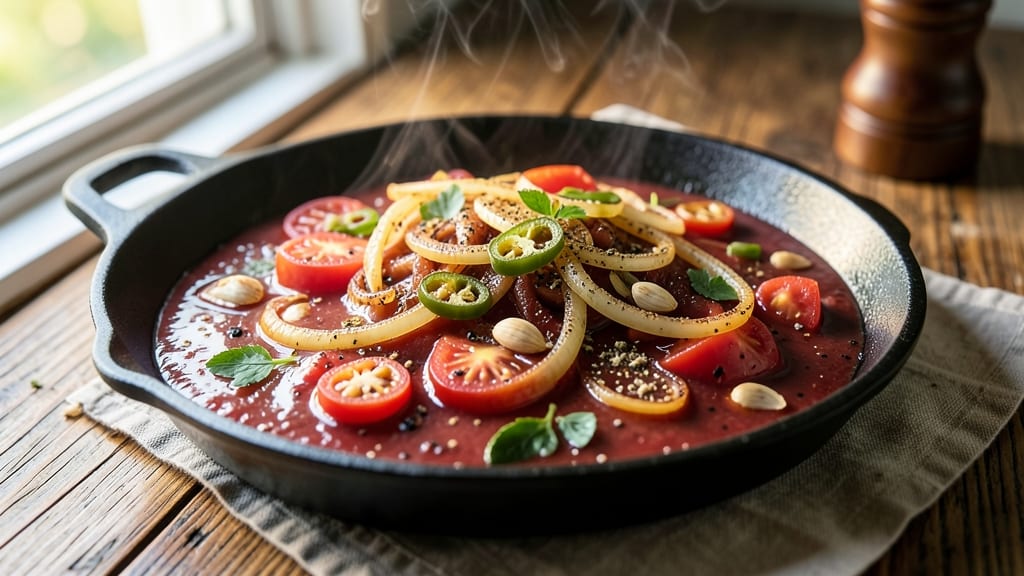
This enchilada sauce recipe with fresh tomatoes transforms simple garden ingredients into a smoky, velvety sauce that elevates every dish it touches. The secret lies in roasting tomatoes and charring chiles—both techniques that deepen flavor without complex steps.
I’ve perfected this method over years of testing, ensuring it delivers restaurant-quality results in just 20 minutes of active time.
What sets this sauce apart is its balance of smokiness and brightness, achieved through a blend of roasted tomatoes, garlic, and warm spices like cumin and oregano.
Whether you roast the tomatoes in a skillet or char them directly over a flame, the result is a rich, caramelized base that forms the heart of the sauce. The onions and chiles add layers of depth, while fresh cilantro brightens the finish.
The sauce’s versatility makes it a kitchen staple—use it for enchiladas, tacos, or even as a dip for tortilla chips. The texture is smooth yet substantial, clinging perfectly to proteins and vegetables without overpowering them.
By the time you taste the first spoonful, you’ll understand why this sauce becomes a go-to for weeknight dinners and special occasions alike.
For those short on time, blending raw tomatoes works too, though roasting unlocks deeper flavor. The key is simmering until the sauce thickens just enough to coat the back of a spoon, ensuring every bite is cohesive and satisfying. Let’s make this sauce—the foundation of countless delicious meals.
Ingredients for enchilada sauce recipe fresh tomatoes
Garden-fresh tomatoes and smoky chiles create this velvety sauce—simple ingredients, restaurant-quality results.
| Ingredient | Amount | Notes |
|---|---|---|
| Fresh Tomatoes 🍅 | 2 ½ lb | Roma or vine-ripened, halved |
| Yellow Onion 🧅 | 1 whole | Medium size, chopped |
| Jalapeño Pepper 🌶️ | 2 whole | Seeds removed for mild heat |
| Garlic Cloves 🧄 | 6 cloves | Peeled, roughly chopped |
| Ground Cumin 🌿 | 1 tbsp | Toasted for deeper aroma |
| Dried Oregano 🍃 | 1 tbsp | Mexican oregano preferred |
| Extra-Virgin Olive Oil 🫒 | ¼ cup | High-quality, fruity |
| Fresh Cilantro 🌿 | ¼ cup | Stems removed, chopped |
| Lime Juice 🍋 | 1 tbsp | Freshly squeezed |
| Salt 🧂 | 1 tsp | Diamond Crystal preferred |
| Black Pepper 🌶️ | ½ tsp | Freshly ground |
The tomatoes are the star—Roma or vine-ripened pack the most flavor. Local farmers markets often have the best selection, but grocery store tomatoes work too if they're ripe. For extra smokiness, char the tomatoes directly over a gas flame or under a broiler. The onions and jalapeños should be freshly chopped—pre-minced jarred peppers add bitterness. Toast the cumin seeds in a dry skillet for 30 seconds before grinding to deepen their aroma, though pre-ground works in a pinch. Mexican oregano has a distinct, earthy flavor—if you can't find it, regular oregano works but lacks that authentic depth.
No fresh tomatoes? Canned San Marzano tomatoes are the next best thing—just crush them by hand for better texture. Swap jalapeños for serrano or poblano peppers if you prefer more heat or a sweeter profile. The lime juice is non-negotiable for brightness, but if you're out, a splash of lemon juice or apple cider vinegar keeps things tangy. For extra richness, stir in 1 tablespoon of tomato paste at the end. And if you're worried about cilantro's soapy taste, use flat-leaf parsley instead—it's a perfect substitute that won't polarize your dinner guests.
This sauce tastes even better the next day as flavors meld. Store it in a clean glass jar in the fridge for up to 5 days, or freeze portions in ice cube trays for 3 months. I always double the batch—one for immediate use, one to freeze. The sauce thickens as it cools, so if it's too thick after chilling, simply add a splash of water or broth. For serving, drizzle with a little more olive oil and extra cilantro—trust me, it makes all the difference.
Why You'll Love This Recipe
- Uses what you’ve got: a few tomatoes from the garden, an onion sitting in the crisper, and spices you already own. No fancy ingredients, no food going bad—just pure, flexible flavor that costs next to nothing. (Yes, even on a Tuesday night.)
- No Chopping Nightmares: I swear by this—just rough-chop the tomatoes and onion, no dicing required. The jalapeño? Toss it in whole, seeds and all, then pull it out later if you’re feeling shy. We’re talking 10 minutes of actual work, not a food prep marathon.
- Smoky-Sweet Magic: That cumin and garlic simmering in the raw tomato juice? It transforms into something ridiculously good—deep, earthy, with just enough heat to linger. Honestly, the first time I tasted it, I immediately texted my mom: "You’re gonna want this recipe."
- Weeknight to Party Fix: Same sauce, endless uses. Tacos on Tuesday, enchiladas for guests, or even a quick skillet of eggs on Sunday. Freeze half the batch—because let’s be real, you’ll make it again before the first bowl is empty.
Step-by-step instructions for smoky tomato enchilada sauce
Transform fresh garden tomatoes into a rich, smoky sauce in just 20 minutes—no canned shortcuts here.
Char the Vegetables for Deep Flavor
Heat a large skillet over medium-high heat and add the 2.5 lb fresh tomatoes (halved), 1 whole yellow onion (chopped), and 2 whole jalapeño peppers (seeds removed). Let them cook undisturbed for 8-10 minutes until the cut sides develop deep char marks and the onions soften. Real talk: this charring step is non-negotiable—it unlocks the sauce's smoky depth.
Flip the tomatoes and onions occasionally to ensure even browning. You're looking for golden-black char on the tomato skins and slightly caramelized edges on the onions. The jalapeños should soften but not burn—remove them when they're pliable. Transfer everything to a cutting board and let cool for 5 minutes before processing.
Build the Sauce Base with Aromatics
In the same skillet (no need to clean it—those caramelized bits are flavor gold), add the 0.25 cup extra-virgin olive oil and reduce heat to medium. Add the 6 cloves garlic cloves (roughly chopped) and cook for 30 seconds until fragrant—don't let them brown or they'll turn bitter. Immediately add the 1 tbsp ground cumin and 1 tbsp dried oregano, stirring for 10 seconds to toast the spices.
Here's the thing—if you toast the spices too long, they'll lose their bright flavor. You're just waking up their aroma, not cooking them. Keep the heat moderate and stir constantly. Once the spices are fragrant, add the charred vegetables to the skillet and stir to combine.
Simmer and Season for Balanced Flavor
Pour in 1 cup water (enough to just cover the bottom of the skillet) and bring to a gentle simmer. Reduce heat to low and let it cook uncovered for 12-15 minutes until the sauce thickens slightly and the flavors meld. You'll see the sauce reduce and develop a glossy sheen—this is when it starts coming together.
Season with the 1 tsp salt and 0.5 tsp black pepper, then stir in the 1 tbsp lime juice and 0.25 cup fresh cilantro (stems removed, chopped). The lime brightens the sauce while the cilantro adds freshness. Taste and adjust seasoning—you might need a touch more salt or lime depending on your tomatoes. For extra smokiness, crack the lid open slightly during the last 5 minutes of cooking.
Blend to Silky Perfection
Transfer the sauce to a blender or food processor in batches (don't overfill—leave room for expansion). Blend until completely smooth, scraping down the sides as needed. The sauce should be velvety with no visible texture. If it's too thick after blending, thin with 1-2 tablespoons water at a time until it reaches a pourable consistency—it should coat the back of a spoon but still flow easily.
Return the blended sauce to the skillet and simmer gently for 3-5 minutes to mellow any raw flavors from the blending process. This final step ensures your sauce is perfectly balanced—smoky from the char, bright from the lime, and rich from the tomatoes. Serve warm over your favorite enchiladas or use it as a base for other Mexican-inspired dishes.
Pro Tips For Making Enchilada Sauce Recipe Fresh Tomatoes
- CHAR THE ONIONS FIRST: I used to toss everything in raw, and the sauce always tasted raw—literally. Sauté the onions until they’re deep golden brown (about 8-10 minutes on medium), then pull them out and set aside. That caramelized depth carries the whole dish, especially when you toss them back in later.
- ROAST THE TOMATOES: Skip the blender shortcut—roast the tomatoes whole first. Halve them, seed them, and roast at 400°F (200°C) for 20-25 minutes until their skins blister and collapse. The concentrated sweetness and smoky edge make the sauce richer than any raw tomato puree ever could.
- TOAST THE CUMIN DRY: Don’t just sprinkle it in. Heat your dry cumin in a separate skillet over low heat for 30 seconds until it smells toasty and nutty—like fresh coffee grounds. Then stir it into the onions or sauce at the end. That quick toast makes the earthy flavor pop instead of just sitting there like a spice.
- STRAIN THE JALAPEÑO SEEDS: I know, you want heat—but the seeds and membranes pack bitterness that ruins the smoothness. Mince the jalapeño flesh without the seeds, then strain the sauce through a fine-mesh sieve after cooking. The result? Clean, bright chile flavor without that lingering sharpness. (Yes, even if you’re brave enough to keep the seeds.)
Essential equipment for enchilada sauce recipe fresh tomatoes
Skillet Essentials
A 10-inch cast-iron skillet like the Lodge Pre-Seasoned is my go-to for charring tomatoes and onions—the heavy base distributes heat evenly and retains smoky flavors.
For a lighter option, a stainless steel skillet (like All-Clad Stainless) works well too, though it requires slightly higher heat to achieve the same char. Avoid nonstick pans—they won’t develop the caramelized crust that’s key to this sauce’s depth. 🔥
Blending Tools
For blending, I recommend a high-speed blender like the Vitamix 5200 or Ninja BN601—these handle hot liquids and fibrous ingredients effortlessly. If you’re working in batches, a food processor (like Cuisinart DLC-8MBC) will work, but you’ll need to scrape down the sides more frequently.
For ultra-smooth results, strain the blended sauce through a fine-mesh sieve to remove any lingering skin or seeds. 💫
Heat Control Tools
An instant-read thermometer (like Thermoworks Thermapen) helps monitor skillet heat—aim for medium-high (375°F) for charring and medium-low (300°F) for simmering.
A wooden spoon with a long handle prevents burns when stirring hot spices, while a heat-resistant spatula ensures you don’t lose any of those precious caramelized bits stuck to the pan. 🌡️
Storage Containers
Store leftover sauce in glass jars with airtight lids (like Ball Mason jars) for fridge storage, or silicone ice cube trays for freezer portions—this makes it easy to thaw exactly what you need.
For long-term freezer storage, use quart-sized freezer bags (like Stasher bags) and squeeze out excess air to prevent freezer burn. Label everything with the date—this sauce tastes best within 5 days refrigerated or 3 months frozen. ❄️
Nutrition facts
Frequently asked questions
Can I use raw tomatoes instead of roasted ones?
Yes, but roasting creates deeper flavor! For raw tomatoes, simply blend them with the other ingredients after cooking the aromatics. You'll lose some smokiness, but the sauce will still be delicious. Just add 1 tablespoon tomato paste to compensate for the missing charred depth.
How do I adjust the heat level?
Remove jalapeño seeds for mild heat, or keep them for medium spice. For extra kick, add ½ teaspoon cayenne pepper or 1 chopped serrano pepper during blending. If you prefer no heat, substitute with bell peppers instead.
What if my sauce is too thick or too thin?
Thin with 1-2 tablespoons water or broth if too thick, or simmer uncovered for 5-10 minutes to reduce if too thin. The ideal consistency coats the back of a spoon but still flows smoothly—adjust gradually to avoid ruining the balance.
Can I make this sauce in a slow cooker?
Char the tomatoes and onions first, then transfer everything to the slow cooker with 2 cups water. Cook on low for 4-5 hours, stirring occasionally. The slow cooking enhances the smoky flavors beautifully—just blend at the end for smoothness.
How long can I store this sauce?
Store in an airtight container in the fridge for up to 5 days, or freeze in portions for 3 months. Thaw overnight in the fridge—never microwave. The sauce actually improves overnight as flavors meld!