
Sauces & Condiments
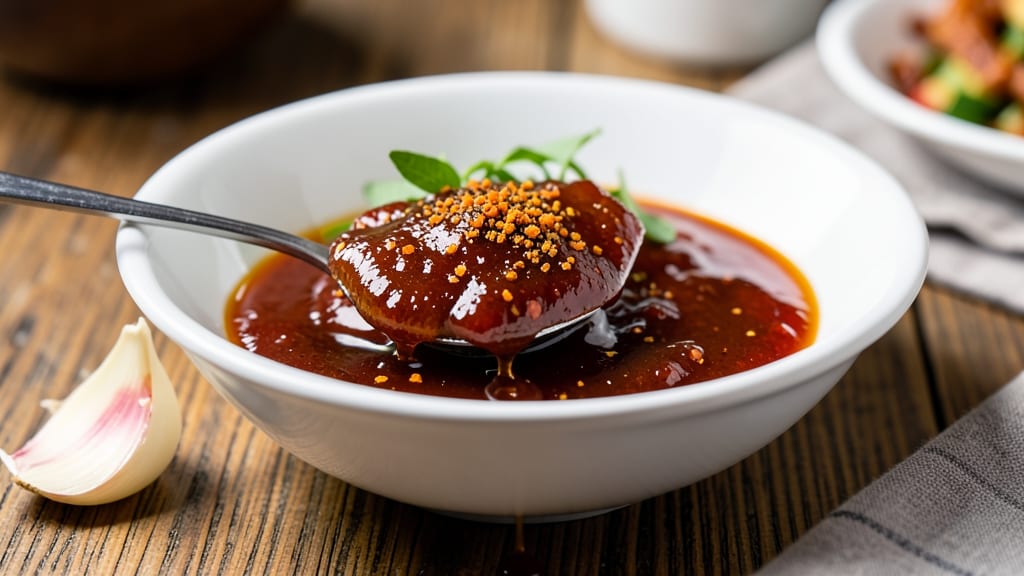
This Bibigo BBQ sauce recipe delivers the same sweet, smoky depth that makes Korean BBQ so addictive—now you can recreate it at home with just 10 minutes of prep and 30 minutes of simmering. The secret lies in balancing molasses for richness, apple cider vinegar for tang, and a touch of smoked paprika for that signature depth. I developed this version after craving that perfect glaze for bulgogi but couldn’t find the right store-bought match.
The sauce starts with a simple base of tomato paste and vinegar, which forms the backbone of the flavor. As it simmers, the molasses caramelizes slightly, adding that signature sweetness without overpowering the smoky notes.
A blend of garlic, ginger, and gochugaru (Korean chili flakes) ensures every spoonful carries authentic umami and heat. The result? A glossy, sticky glaze that’s perfect for marinating, grilling, or drizzling over anything from ribs to tofu.
What makes this recipe stand out is its versatility—use it as a marinade for 30 minutes before grilling, or simmer it into a thick glaze for 15 minutes to coat meats and vegetables.
The sauce keeps well in the fridge for up to 2 weeks, so you’ll always have that restaurant-quality flavor on hand. Whether you’re cooking for a crowd or treating yourself to a weeknight meal, this sauce elevates everything it touches.
For extra depth, let it reduce longer for a thicker consistency, or thin it with a splash of water if you prefer a lighter drizzle. Pair it with grilled meats, stir-fries, or even as a dip for fries. Here’s how to make it—your taste buds will thank you.
Ingredients for bibigo bbq sauce
Sweet, smoky, and packed with umami—this sauce nails Bibigo's signature depth with just 12 ingredients.
| Ingredient | Amount | Notes |
|---|---|---|
| Tomato Paste 🍅 | ½ cup | High-quality, unsweetened |
| Molasses 🍯 | ⅓ cup | Unsulphured preferred |
| Apple Cider Vinegar 🍎 | ¼ cup | Raw, unfiltered preferred |
| Gochugaru 🌶️ | 2 tbsp | Korean chili flakes, not cayenne |
| Smoked Paprika 🌶️ | 1 tbsp | For authentic smokiness |
| Garlic Cloves 🧄 | 4 cloves | Fresh, minced fine |
| Fresh Ginger 🌿 | 1 tbsp | Finely grated, peeled |
| Soy Sauce 🥄 | ¼ cup | Light or all-purpose |
| Brown Sugar 🍚 | ¼ cup | Packed light |
| Sesame Oil 🫒 | 1 tbsp | Toasted, for aroma |
| Water 💧 | ¼ cup | For thinning if needed |
| Salt 🧂 | 1 tsp | Kosher or sea salt |
The molasses and gochugaru are non-negotiable for that authentic Bibigo flavor. Gochugaru has a fruity, mild heat—don't substitute with cayenne, which is way hotter. For molasses, unsulphured is best (found in baking aisles or specialty stores). If you can't find gochugaru, Korean grocery stores like H Mart or online shops like Maesil Food will have it. The tomato paste should be thick and smooth—none of that watery canned stuff. Fresh ginger and garlic make all the difference, but if you're short on time, powdered ginger at half the amount works in a pinch.
No sesame oil? Toasted sesame seeds at 1 tsp will give you that nutty aroma, though it won't be as rich. Short on brown sugar? White sugar works 1:1, but it won't caramelize as nicely. The apple cider vinegar adds tang—if you only have white vinegar, use half the amount since it's stronger. For extra depth, toast the gochugaru in a dry pan for 30 seconds before adding to the sauce. The soy sauce can be swapped for coconut aminos if you're avoiding soy, but it'll taste slightly different. And if you're making this for a crowd, double the batch—it disappears fast!
This sauce gets better as it sits—let it cool completely before storing. Keeps in the fridge for 2 weeks (or up to 6 months frozen in airtight containers). For extra shine, add a splash of water before serving. I always make a double batch—one for immediate use and one to freeze. The frozen portion thaws quickly in the microwave, making it perfect for last-minute grilling. If it thickens too much, just stir in a little water. Trust me, you'll want leftovers!
Why You'll Love This Recipe
- Pantry Magic: I swear by this sauce because it uses stuff I already have—no special trips to the store. That molasses and apple cider vinegar combo? Deep, smoky-sweet magic without a single fancy ingredient.
- Korean BBQ Soul: The gochugaru gives it that signature heat, while the smoked paprika adds this warmth—like a hug in sauce form. Slather it on grilled chicken or toss it with fries, and I’m already craving round two.
- Game for Any Meal: Between us, this sauce is my lazy Sunday brunch MVP, my weeknight dinner shortcut, and my go-to for potlucks. It’s the one thing that makes even a simple burger feel like a celebration.
- Lasts Like a Champ: I make a double batch every time because it keeps for weeks in the fridge. That means less stress, more flavor, and zero wasted money—plus, my freezer’s always stocked for spontaneous takeout nights.
Step-by-step instructions for bibigo BBQ sauce
Here's how to craft this rich, sweet-smoky sauce that elevates everything from grilled meats to roasted veggies.
Build the Flavor Base
In a medium saucepan, combine the 0.5 cup tomato paste with the 0.33 cup molasses and 0.25 cup apple cider vinegar. Stir over medium heat until the mixture begins to bubble gently—this should take about 3-4 minutes. You'll notice the tomato paste dissolving completely and the mixture darkening slightly, which is exactly what we want for that deep, caramelized flavor.
While this comes to a simmer, add the 1 tbsp smoked paprika and 2 tbsp gochugaru. Stir constantly for 1 minute to bloom the spices and prevent burning. The paprika will add smokiness while the gochugaru brings that signature Korean heat. Keep the heat at medium-low—we're not rushing this step. The spices need time to infuse fully into the base.
Add Aromatics and Sweetness
Lower the heat to low and stir in the 4 cloves minced garlic, 1 tbsp grated fresh ginger, 0.25 cup soy sauce, and 0.25 cup brown sugar. Let the mixture simmer gently for 5-6 minutes, stirring occasionally. You'll smell the garlic softening and the ginger releasing its bright aroma—this is when the sauce starts to develop its complex layers of flavor.
Here's where the magic happens: the brown sugar will begin to caramelize slightly, deepening the sauce's color and adding that signature sweetness. Watch for small bubbles forming around the edges—this tells you the sauce is reducing properly. If it looks too thick before the 5 minutes are up, add 1-2 tablespoons of water to help it along.
Finish with Depth and Balance
Remove the pan from heat and let it cool for 2-3 minutes. Then stir in the 1 tbsp sesame oil and 1 tsp salt. The sesame oil adds that nutty aroma that's essential to bibigo's character, while the salt ties all the flavors together. Taste the sauce at this point—it should be sweet, smoky, and slightly spicy with a deep umami richness from the soy sauce and tomato paste.
If you find the sauce needs thinning (it should coat the back of a spoon but still be spreadable), add the remaining 0.25 cup water 1 tablespoon at a time while stirring. Return to low heat just long enough to incorporate, then remove from heat immediately. The sauce should be glossy with a smooth, velvety consistency—this is your cue that it's ready to use.
Rest and Test
Let the sauce rest for 10-15 minutes at room temperature. This resting period allows all the flavors to meld completely. You'll notice the sauce thickens slightly as it cools—this is normal and actually improves the texture.
Test your sauce by brushing a small amount on a piece of grilled chicken or pork. The sauce should caramelize beautifully when exposed to heat, creating that glossy, sticky glaze that's so characteristic of bibigo. If it's too thin after resting, simmer it gently for 2-3 minutes to reduce further. Store any unused sauce in an airtight container in the refrigerator for up to 2 weeks, or freeze for longer storage.
Pro Tips For Making Bibigo Bbq Sauce
- STIR CONSTANTLY AT FIRST: The first 5 minutes with the tomato paste and gochugaru are where the magic happens—or where it burns. I learned this the hard way when I walked away to chop onions, and came back to a bitter, charred mess. Keep that pan moving until the paste darkens and smells like a Korean BBQ joint, not a science experiment gone wrong.
- TOAST THE GOCHUGARU: Skip the pre-toasted gochugaru shortcut—it’s not the same. Dry-toast your gochugaru in a separate pan over medium heat for 2-3 minutes until it smells like sun-dried chili and looks slightly darker. This deepens the smoky, fruity notes in your sauce, and it’s the thing that actually makes your bibigo sauce taste like it came from a street cart, not a jar.
- DILUTE THE MOLASSES GRADUALLY: Molasses is sneaky—add it all at once, and your sauce turns into a sticky, unbalanced syrup. Start with half the amount, let it bloom into the sauce for 2 minutes, then add the rest while stirring. This way, you taste as you go and avoid that cloying sweetness that ruins the balance of gochugaru and vinegar.
- SIMMER LOW AND LONG: Rushing the simmer? Your sauce will taste raw and one-note. After the initial cook, drop the heat to a gentle simmer and let it reduce for at least 20 minutes. This isn’t the time to multitask—give it space to meld, and the flavors will develop depth instead of just sitting there like shy guests at a party.
Creative variations of bibigo bbq sauce
Sweet & Spicy Fusion
Swap the molasses for ½ cup honey and reduce the brown sugar to 2 tbsp—this creates a sweeter, stickier glaze perfect for glazing ribs or grilled chicken. For extra heat, add 1 tsp cayenne pepper and 1 tsp gochujang (Korean chili paste) to the simmering base.
This fusion works beautifully with pulled pork sandwiches or as a drizzle for Korean fried chicken. 🌶️
Smoky Maple Twist
Replace the molasses with ½ cup pure maple syrup and add 1 tsp liquid smoke (like Coltman's) to intensify the smokiness. This version pairs perfectly with grilled salmon or tofu skewers.
For a deeper flavor, toast 1 tbsp sesame seeds in a dry pan for 1 minute and sprinkle them into the finished sauce. The maple adds a subtle earthiness that complements the smoky notes beautifully.
Spicy Mango Glaze
For a tropical twist, blend ½ cup mango puree (fresh or canned) with the tomato paste before simmering. Add 1 tsp grated lime zest and 1 tbsp lime juice to brighten the flavors. This glaze is fantastic for grilled shrimp or pork chops.
To balance the sweetness, include 1 tsp fish sauce (or coconut aminos) for umami depth. The mango adds a fruity contrast that keeps the sauce from being too heavy.
Dry Rub Adaptation
Turn your sauce into a dry rub by mixing 2 tbsp of the finished sauce with 1 tbsp brown sugar, 1 tbsp smoked paprika, and ½ tsp salt. Apply this mixture to meats like brisket or chicken thighs before grilling.
The sauce’s liquid reduces into a sticky crust, locking in moisture and flavor. For extra crunch, sprinkle 1 tbsp crushed peanuts on top before serving. This method is perfect for weeknight grilling when you don’t have time to baste.
Vegan Version
Make this sauce fully plant-based by replacing the honey with ½ cup agave syrup and using coconut aminos instead of soy sauce. Swap sesame oil for 1 tbsp neutral oil (like avocado or canola) to maintain the sauce’s richness.
This version works wonderfully with grilled tofu, portobello mushrooms, or jackfruit. The agave adds sweetness without animal products, and the coconut aminos provide the necessary umami kick. 🌱
Thick or Thin Options
Need a thicker glaze for drizzling? Simmer the sauce uncovered for an extra 5-10 minutes to reduce it further. For a thinner, marinade-like consistency, stir in 2-3 tbsp water or apple cider vinegar until it reaches your desired thickness.
I often adjust the consistency based on how I plan to use it—thicker for glazing, thinner for marinating. The sauce’s versatility makes it perfect for any cooking scenario. ✨
Nutrition facts
Frequently asked questions
Can I make this bibigo-style BBQ sauce without molasses?
Yes! For a similar depth, substitute ½ cup honey or ½ cup maple syrup—both work well while keeping the sauce's signature sweetness. If you're avoiding all sweeteners, try ¼ cup brown sugar plus 2 tbsp unsweetened applesauce for moisture. The sauce will still develop that glossy texture, though the flavor profile will be slightly lighter.
How do I adjust the spice level for sensitive eaters?
Reduce the gochugaru to 1 tbsp (instead of 2) and omit the cayenne if using variations. For extra mildness, strain out the chili flakes after simmering. If you prefer no heat at all, replace the gochugaru with 1 tsp sweet paprika—it adds color without spice. The sauce will still taste rich and smoky, just without the kick.
Can I use this sauce as a marinade instead of a glaze?
For marinating, thin the sauce with ¼ cup water or apple cider vinegar to create a more liquid consistency. Let proteins like chicken or pork marinate for 30-60 minutes (never overnight with raw meat). The sauce's acidity helps tenderize while infusing flavor. Always discard unused marinade after contact with raw meat.
Why did my sauce turn out too thin?
This usually happens if you didn't simmer long enough or added too much water. To fix it, return the sauce to low heat and simmer uncovered for 5-10 minutes, stirring occasionally, until it thickens. For future batches, reduce the water by 2 tbsp or simmer 5 minutes longer. The sauce should coat the back of a spoon but still be pourable.
How can I make this sauce spicier without adding more gochugaru?
Add ½ tsp gochujang (Korean chili paste) or ¼ tsp cayenne pepper to the finished sauce. For a smoky heat, stir in ½ tsp chipotle powder with the smoked paprika at the start. These alternatives add depth while intensifying the spice level without altering the sauce's texture. Taste as you go—you can always adjust!