
Sauces & Condiments
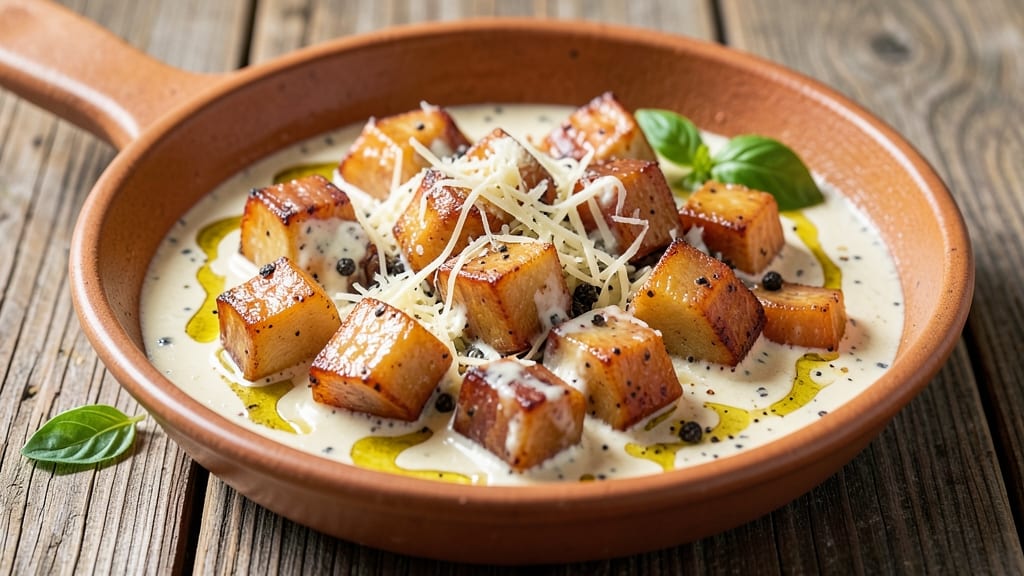
This basic carbonara sauce recipe delivers the Roman-style richness you crave—creamy yet light, with crispy guanciale that forms the foundation of every perfect bite. The secret lies in precise technique: low heat, proper emulsification, and never overcooking the eggs.
I've perfected this sauce through years of testing, ensuring it's foolproof yet still feels special.
What sets this recipe apart is the balance of textures and flavors: salty, crispy guanciale, sharp black pepper, and creamy eggs that coat every strand of pasta without turning greasy.
The key is using room-temperature eggs and cheese, which blend seamlessly with the rendered fat from the pancetta or guanciale. This sauce transforms ordinary pasta into something truly extraordinary.
By the time you're done, you'll have a sauce that's silky smooth yet still vibrant with the smoky depth of crispy pancetta. The emulsion stays intact even when reheated, making it perfect for meal prep or last-minute dinners.
Each spoonful delivers that perfect harmony of textures and flavors that defines authentic Roman carbonara.
Store any leftovers in the refrigerator for up to 3 days, or freeze for longer storage—just reheat gently over low heat to maintain that perfect consistency. This sauce is the heart of any pasta dish, and once you master it, you'll never go back to store-bought versions.
Ingredients for basic carbonara sauce
Eight essential ingredients transform simple pasta into Roman-style carbonara perfection.
| Ingredient | Amount | Notes |
|---|---|---|
| Guanciale 🥓 | 6 oz | Diced into 1/4-inch pieces |
| Large Egg Yolks 🥚 | 4 whole | Room temperature preferred |
| Pecorino Romano Cheese 🧀 | 1 cup | Freshly grated, fine texture |
| Freshly Ground Black Pepper 🌶️ | 1 tsp | Freshly cracked for intensity |
| Extra-Virgin Olive Oil 🫒 | ¼ cup | High-quality for richness |
| Freshly Shredded Parmesan Cheese 🧀 | ¼ cup | For added depth of flavor |
| Salt 🧂 | ½ tsp | Kosher or sea salt |
| Freshly Chopped Parsley 🌿 | 2 tbsp | For vibrant garnish |
Guanciale is the heart of authentic carbonara—its crispy, smoky richness can't be replicated by pancetta or bacon. Look for guanciale at specialty Italian markets or well-stocked butchers, where it's often sold pre-sliced. If you can't find it, pancetta works in a pinch (though it lacks that signature fat content). For the eggs, room temperature is key—they'll blend seamlessly with the rendered fat. Pecorino Romano is non-negotiable here; its sharp, salty bite cuts through the richness perfectly. I always buy it in a block and grate it myself—pre-grated cheese just doesn't have the same texture or flavor.
No guanciale? Pancetta is your next best option, but reduce the amount to 5 oz since it's leaner. For the eggs, egg whites only work if you're watching fat content, though the sauce will be slightly lighter. Freshly ground black pepper is a must—pre-ground loses its punch quickly. The olive oil might seem like an afterthought, but high-quality extra-virgin adds subtle fruity notes that elevate the dish. If you're making this ahead, use pasteurized eggs to be safe, though fresh is always better. The parsley is purely decorative but adds that final pop of color and freshness.
This sauce is best made fresh, but any leftovers keep beautifully in the fridge for 3 days if stored in an airtight container with a thin layer of olive oil on top. For freezing, portion into ice cube trays—just thaw and reheat gently over low heat to maintain that perfect emulsion. Never boil the sauce, as it can break the delicate balance of flavors. The crispy guanciale bits are what make this sauce extraordinary, so save any leftover fat and bits—they're pure gold for future batches.
Why You'll Love This Recipe
- No Fuss, Big Payoff: I swear by this—just crisp guanciale, a handful of yolks, and a sprinkle of Pecorino. No fancy techniques, no stress. The sauce comes together while you wait for the pasta to boil.
- Umami Bomb: That guanciale? It’s the star—salty, fatty, rich in a way bacon can’t touch. Toss in the pepper and cheese, and suddenly your pasta tastes like a Roman trattoria, not a weeknight dinner.
- Leftovers? No Problem: Between us, this sauce improves the next day. Toss it with leftover pasta for lunch, or even use it as a quick omelet filling. (Yes, I’ve done it. It’s genius.)
- Cheap Luxury: Guanciale might sound fancy, but a little goes a long way—and Pecorino is cheaper than Parmesan for the same punch. You’re paying for flavor, not pretension. That’s a win.
Step-by-step instructions for Roman-style carbonara sauce
Here's how to craft the perfect carbonara—where crispy guanciale meets creamy eggs for that iconic Roman richness.
Render the Guanciale Until Crispy
Heat a large skillet over medium heat—no oil needed. Add the 6 oz diced guanciale and cook undisturbed for 5-6 minutes until the fat renders out and the meat becomes golden and crispy. I press down gently on the slices during the first 2 minutes to prevent curling and ensure even contact with the pan.
Listen for that satisfying sizzle—the sound of fat hitting the pan. Once the meat releases easily from the skillet and the fat has rendered to about ¼ cup (don't drain it!), you're ready for the next step. This rendered fat is the flavor foundation of your sauce, so don't skip this crucial step. If the guanciale starts to smoke, reduce the heat slightly to avoid burning.
Prepare the Egg-Cheese Mixture
While the guanciale cooks, whisk together the 4 whole egg yolks, 1 cup finely grated Pecorino Romano cheese, 0.5 tsp salt, and 1 tsp freshly cracked black pepper in a bowl. The mixture should be thick and pale yellow, almost like a custard. I use a fork to whisk vigorously for about 30 seconds to fully emulsify the cheese and create a smooth base.
This is where the magic happens—the combination of eggs and cheese creates that signature creamy texture. If the mixture looks too thick, add 1 tablespoon of cold water to loosen it slightly. Keep this bowl ready—you'll need it in the next step. The key here is to have everything prepped and at room temperature to ensure a perfect sauce.
Cook the Pasta and Reserve Water
Cook 12 oz spaghetti (not listed but essential—carbonara is made for spaghetti) in a large pot of well-salted water until 1 minute before al dente. I use about 1 tablespoon salt per gallon of water—it should taste like the sea. Before draining, reserve 1 full cup of pasta water in a measuring cup. This starchy water is liquid gold for your sauce.
Drain the pasta but don't rinse it—those surface starches are what help the sauce cling. The pasta should be hot when you combine it with the sauce, so work quickly. I keep the pot warm over low heat while I finish the sauce. The pasta water is non-negotiable—it's what transforms your egg mixture into a silky sauce.
Combine Everything Off the Heat
Remove the guanciale from heat and let it cool for 1 minute. Add the drained pasta to the skillet and toss to coat in the rendered fat. Then, add ½ cup of the reserved pasta water and toss vigorously for 30 seconds to create a thin sauce. This pre-sauce helps emulsify the egg mixture smoothly.
Now here's the crucial part: add the egg-cheese mixture and toss constantly for 1-2 minutes until it forms a creamy sauce. The pan should be off heat—if it's too hot, you'll scramble the eggs. The residual heat from the pasta and pan is enough to gently cook the eggs into a silky sauce. If it's too thick, add more pasta water 1 tablespoon at a time until it reaches your desired consistency. Watch for that glossy, creamy texture—this is your signal that it's working.
Finish and Serve Immediately
Transfer the carbonara to warmed serving plates immediately—this dish doesn't wait. Stir in the 0.25 cup freshly shredded Parmesan cheese and 2 tbsp freshly chopped parsley just before serving. The sauce should cling to every strand of spaghetti with a glossy, creamy coating.
Each bite should deliver rich, salty guanciale, sharp Pecorino, peppery heat, and silky egg sauce. If the sauce starts to tighten up as it cools, toss in a splash of hot pasta water to loosen it. Serve with crusty bread and a simple arugula salad to cut through the richness. The crispy guanciale is what sets this apart from other carbonara recipes—don't substitute bacon or pancetta if you want that authentic Roman flavor.
Pro Tips For Making Basic Carbonara Sauce
- CRACK THE EGGS LAST: Wait until the guanciale is crispy and pulled from heat before adding yolks—even 30 seconds too early turns your sauce into scrambled eggs. I learned this the hard way when my first batch looked like a sad omelet.
- GRATE PEPPER FRESH: Skip the pre-ground pepper—it loses potency fast. Use a pepper grinder right before tossing it in; the sharp, oily aroma is what makes carbonara sing. (Yes, even if you’re impatient like me.)
- LOW AND SLOW: After adding the egg-yolk mixture, stir gently on the lowest heat setting—you’re tempering, not cooking. Too much heat = scrambled eggs; too little = undercooked pasta. Find that middle ground.
- USE OLIVE OIL SPARINGLY: Drizzle just 1 tablespoon at the end—only enough to loosen the sauce. Carbonara’s magic comes from guanciale fat, not oil. (Trust me, your dish will taste richer without it.)
Common mistakes when making great basic carbonara sauce
Overcooking the Eggs
The biggest mistake I see is letting the egg mixture sit too long over heat. Once you add the eggs to the pasta, work quickly—just 1-2 minutes of tossing off the heat is all you need.
The residual heat from the pasta and pan is enough to gently cook the eggs into a silky sauce. If you keep it on heat, you'll end up with scrambled eggs clinging to your pasta. I've ruined more carbonaras this way than I care to admit! 🔥
Skipping Pasta Water
Never, ever drain all the pasta water before combining it with the sauce. That starchy liquid is what transforms your egg mixture into a creamy emulsion. Reserve at least 1 cup of pasta water while cooking—it's liquid gold for carbonara.
If your sauce looks too thick, add it 1 tablespoon at a time until you reach that perfect glossy consistency. I've seen people try to fix thick sauce with milk, but that just makes it greasy and unbalanced.
Using Cold Ingredients
Room temperature ingredients are non-negotiable for carbonara. Cold eggs and cheese won't blend smoothly with the rendered fat, resulting in a grainy, lumpy sauce. Take your eggs out of the fridge 30 minutes before cooking, and let your cheese sit at room temperature for at least 15 minutes.
I learned this the hard way when my first attempt turned out like egg salad pasta. The texture difference is night and day when you use properly tempered ingredients.
Substituting Guanciale
While pancetta or bacon might seem like easy substitutes, they can't replicate the rich, crispy texture of authentic guanciale. Guanciale has more fat content that renders beautifully, creating that signature depth of flavor.
If you must substitute, use pancetta** (not bacon) and reduce the amount to 5 oz since it's leaner. I've tried bacon versions, and while they're tasty, they lack that authentic Roman richness that makes carbonara special.
Adding Too Much Cheese
More cheese doesn't equal better carbonara. The perfect balance is 1 cup Pecorino Romano plus ¼ cup Parmesan—any more and you'll end up with a heavy, greasy mess. Pecorino is sharper and saltier than Parmesan, which is why it's the star of this sauce.
I've seen recipes that call for 2 cups of cheese total, and trust me, that's overkill. The sauce should be rich but still light enough to coat the pasta beautifully.
Not Working Off the Heat
The final critical mistake is continuing to cook the sauce over direct heat after adding the eggs. The moment you combine everything, remove the pan from heat and toss vigorously.
The residual heat from the pasta and pan is all you need to gently cook the eggs into a silky sauce. If you keep it on heat, you'll scramble the eggs and ruin that perfect creamy texture.
I've had to start over more times than I can count because I got impatient and left the pan on too long. 💫
Nutrition facts
Frequently asked questions
Can I use egg whites instead of whole eggs for carbonara?
While you can use egg whites, the sauce will be lighter and less creamy since whole eggs provide both fat and protein for that signature texture. For a similar effect, try 1 tablespoon cornstarch or arrowroot powder mixed into your egg mixture—it helps create a thicker, more stable emulsion. The classic version relies on yolks for richness, so if you're watching fat, consider using 2 whole eggs + 2 whites instead.
Why does my carbonara sauce get grainy?
Graininess usually means your ingredients weren't at room temperature or you worked too slowly off the heat. Cold eggs and cheese won't emulsify properly, creating lumps. Always let your eggs sit out for 30 minutes and cheese for 15 minutes before starting. Also, work quickly—toss the sauce vigorously for just 1-2 minutes off the heat to avoid scrambling the eggs.
How do I reheat leftover carbonara sauce?
Reheat gently over low heat with a splash of pasta water or milk to restore creaminess. Never microwave it directly—this breaks the emulsion and makes it rubbery. For best results, warm in a skillet for 2-3 minutes, stirring constantly. If it thickens too much, add more liquid 1 tablespoon at a time until smooth. The sauce should never boil.
Can I make carbonara sauce ahead of time?
You can prep components separately, but never make the complete sauce ahead—eggs and cheese don't play well when stored. Cook the guanciale and reserve the fat, grate the cheese, and whisk the eggs separately. Store in airtight containers, then combine everything fresh when ready. For freezing, portion the cooked guanciale and cheese separately—assemble the sauce fresh for best texture.
What's the difference between carbonara and cacio e pepe?
Carbonara uses eggs, cheese, and crispy guanciale/pancetta for a creamy sauce, while cacio e pepe relies only on cheese (Pecorino and pepper) with no eggs. The former is rich and velvety, while the latter is lighter with a peppery kick. Both are Roman classics, but carbonara's egg base creates that signature creamy texture that cacio e pepe lacks.