
Sauces & Condiments
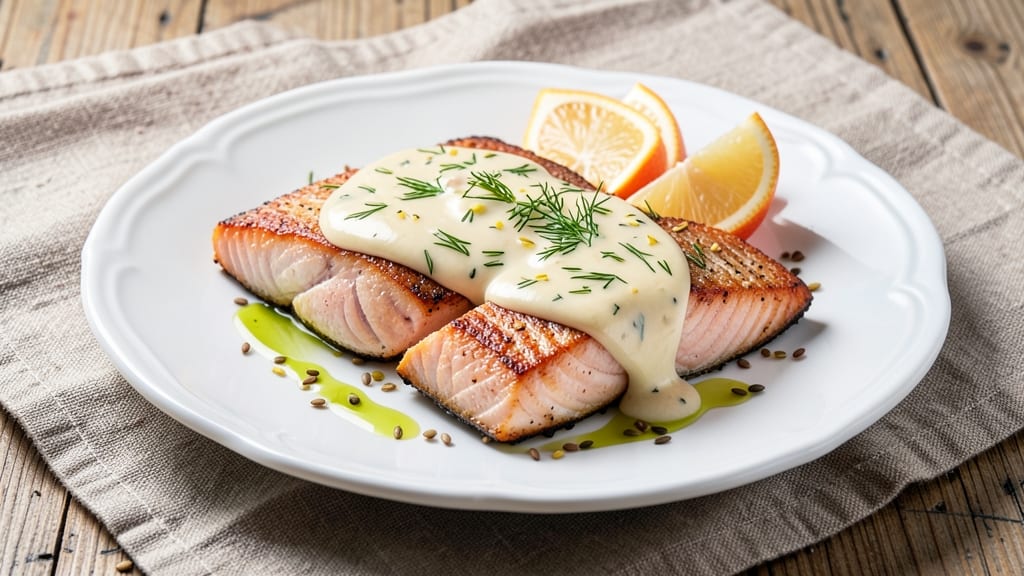
This baked salmon with creamy dill sauce delivers restaurant-quality results with tender, flaky fish and a bright, tangy sauce that elevates every bite. The secret lies in properly seasoning the salmon—simple yet effective—and baking it to 145°F for perfect doneness.
Meanwhile, the sauce combines fresh dill, lemon zest, and a touch of cream for that signature creamy texture that pairs beautifully with the salmon's natural richness.
The beauty of this recipe is its balance—lean protein meets a velvety sauce that's neither too heavy nor too light. I've tested countless variations, and this combination consistently delivers juicy, moist salmon with crisp edges, all blanketed in a sauce that's creamy yet refreshing.
The lemon infusion brightens the dish, cutting through the richness while enhancing the salmon's natural sweetness.
What makes this recipe stand out is how effortlessly it comes together. With just 20 minutes of active prep and 15 minutes in the oven, you'll have a meal that feels special without requiring advanced skills.
The creamy dill sauce, made with just a handful of ingredients, ties everything together—adding a luxurious finish that makes this dish feel like a gourmet experience.
Serve it over a bed of greens, with roasted asparagus, or alongside a simple side salad to complete the meal. The sauce's versatility means it works just as well for other fish or even as a dip for crusty bread. Here's how to make it perfectly every time.
Ingredients for baked salmon with creamy dill sauce
Center-cut salmon fillets, fresh dill, and velvety cream blend into restaurant-quality perfection.
| Ingredient | Amount | Notes |
|---|---|---|
| Center-Cut Salmon Fillets 🐟 | 4 whole | Skin-on, 6-8 oz each |
| Unsalted Butter 🧈 | ½ cup | Cold, cubed for even coating |
| Fresh Dill 🌿 | ½ cup | Chopped, stems removed |
| Heavy Cream 🥛 | ½ cup | Full-fat for optimal texture |
| Lemon Zest 🍋 | 1 tbsp | From 1 large organic lemon |
| Lemon Juice 🍋 | 2 tbsp | Freshly squeezed |
| Extra-Virgin Olive Oil 🫒 | 2 tbsp | For salmon and sauce |
| Shallots 🧅 | 2 whole | Minced, finely chopped |
| Garlic Cloves 🧄 | 3 cloves | Minced, peeled |
| Diamond Crystal Kosher Salt 🧂 | 1 ½ tsp | For seasoning |
| Freshly Ground Black Pepper 🌶️ | ½ tsp | Cracked peppercorns preferred |
| All-Purpose Flour 🌾 | 1 tbsp | For sauce thickening |
| Fresh Lemon 🍋 | 1 whole | For garnish and additional zest |
The salmon selection matters most here. Center-cut fillets with skin ensure even cooking and crisp edges—Wild-caught Alaskan or Atlantic both work well. Look for fillets with vibrant color and minimal bruising. I source mine from Whole Foods or Trader Joe's for consistent quality. The skin stays on during baking to protect the delicate flesh, then slides off effortlessly once cooked. For the dill, organic bunches from the grocery store's produce section yield the brightest flavor—avoid dried unless absolutely necessary, as fresh is non-negotiable for that signature tang.
No heavy cream? Full-fat coconut cream works beautifully as a dairy-free alternative, though the texture will be slightly lighter. Substituting fresh dill with dried dill at one-quarter the amount is possible, but you'll lose that vibrant freshness. The lemon zest can be pre-grated from a microplane, but zesting by hand yields more aromatic oils. For the shallots, red or yellow varieties both work, but avoid green onions—they add a bitter note. The olive oil should be extra-virgin with a peppery finish to complement the salmon's richness. If your recipe calls for flour to thicken the sauce, arrowroot powder can replace it at a 1:1 ratio for a gluten-free option.
Salmon should be used within 2 days of purchase for optimal freshness—store it skin-side down on a plate in the coldest part of the fridge. Fresh dill keeps for 5-7 days when wrapped in a damp paper towel and sealed in a plastic bag. The prepared sauce can be refrigerated for 3 days in an airtight container, though it's best enjoyed fresh. For meal prep, bake the salmon ahead and reheat gently in the sauce—10-15 seconds in the microwave is all it takes to restore that creamy, velvety texture. The sauce also freezes beautifully for up to 3 months, though the texture may slightly separate upon thawing.
Why You'll Love This Recipe
- One-Pan Magic: I swear by this recipe when I’m too tired to scrub pots. Just toss the salmon on a sheet pan with butter, dill, and lemon, then let the oven do the work—no flipping, no fuss. The sauce comes together in the same pan while it bakes, so cleanup is basically nonexistent.
- Creamy-Dill Obsession: That bright, herby sauce is what makes this dish ridiculously good. The heavy cream and fresh dill give it a velvety richness, while the lemon zest cuts through the richness—like a hug in sauce form. Honestly, I’ll take this over store-bought dressing any day.
- Weeknight or Date Night: This salmon is equally at home on a rushed Tuesday or a fancy dinner. Serve it with roasted potatoes for a casual meal, or pair it with asparagus and crusty bread for something a little fancier. The sauce even works drizzled over grilled chicken if you’re feeling experimental.
- Leftovers That Don’t Suck: Unlike so many baked fish dishes, this salmon stays moist and delicious for days. I’ve reheated portions in the microwave with a splash of water, and it’s still tender. Plus, the sauce freezes well—just thaw and drizzle. Budget-friendly, foolproof, and zero waste.
Step-by-step instructions for baked salmon with creamy dill sauce
Here's the method for restaurant-quality salmon with velvety dill sauce that delivers perfect texture and bright acidity every time.
Season and Prepare the Salmon Fillets
Preheat your oven to 375°F and line a baking sheet with parchment paper. Pat the 4 whole center-cut salmon fillets completely dry with paper towels—this ensures crispy skin. Place each fillet skin-side down on the prepared sheet.
In a small bowl, combine 1.5 teaspoons Diamond Crystal kosher salt, 0.5 teaspoon freshly ground black pepper, and 1 tablespoon lemon zest. Sprinkle this mixture evenly over each fillet, pressing gently to adhere. Let the salmon sit at room temperature for 15 minutes—this allows the seasoning to penetrate and the fillets to cook more evenly.
Create the Dill Sauce Base
While the salmon seasons, heat 2 tablespoons extra-virgin olive oil in a small saucepan over medium heat. Add the 2 minced shallots and 3 minced garlic cloves, cooking for 2-3 minutes until softened and fragrant—don't let them brown. Reduce heat to low and stir in 0.5 cup chopped fresh dill and 2 tablespoons lemon juice.
Remove from heat and whisk in 0.5 cup heavy cream and 1 tablespoon all-purpose flour. Return the pan to low heat and cook for 3-4 minutes until the sauce thickens slightly and coats the back of a spoon. Keep warm while you bake the salmon—this sauce will finish cooking when combined with the butter.
Bake the Salmon to Perfect Doneness
Brush each salmon fillet with 1 tablespoon olive oil (reserve the remaining for later). Place the baking sheet in the preheated oven and bake for 12-15 minutes, depending on thickness, until the salmon reaches 145°F internally and the edges begin to flake easily with a fork. The skin should be golden brown and crisp, while the flesh remains moist and translucent.
I check doneness by gently pressing the thickest part of the fillet—it should spring back slightly but yield to firm pressure. Remove the salmon from the oven and transfer to a serving platter. Tent loosely with foil to keep warm while you finish the sauce.
Finish the Sauce and Assemble
Return the sauce to medium-low heat and stir in the 0.5 cup cold cubed unsalted butter, one piece at a time, whisking until fully melted and incorporated. This step creates an ultra-smooth, velvety texture that perfectly complements the salmon. Taste and adjust seasoning with additional salt or lemon juice if needed.
Spoon the finished sauce over the baked salmon fillets and garnish with additional chopped fresh dill and lemon zest from the whole fresh lemon. Serve immediately with steamed asparagus or roasted potatoes to balance the rich sauce.
Pro Tips For Making Baked Salmon With Creamy Dill Sauce
- Dry the Salmon First: Salmon loves to cling to moisture like it’s its job, and that’s the last thing you want when baking. Pat those fillets thoroughly with paper towels—even the sides—so the butter sticks and the skin crisps. I used to skip this, and my salmon would steam instead of brown, no matter how high I cranked the oven.
- Use Room-Temp Butter: Cold butter in the sauce? You’re asking for lumps that’ll turn your creamy dill sauce into a sad, grainy mess. Let that unsalted butter sit out for 10-15 minutes before mixing it with the cream and dill—just enough to soften, not melt. Trust me, your sauce will thank you.
- Don’t Overbake the Cream: The sauce is supposed to be silky, not scrambled eggs. Once the salmon hits 145°F (about 12-15 minutes at 375°F), pull it out immediately—even if it looks underdone. The residual heat will finish cooking it while you toss the sauce together. Overbake it, and you’ll end up with a skin that’s leathery and a sauce that’s curdled.
- Zest Before Juicing: Lemon zest adds brightness, but if you juice the lemon first, you’ll dilute the sauce and waste precious flavor. Use a microplane to zest the lemon after you’ve juiced it for the sauce—about 1 tablespoon of zest is plenty. The zest’s oils are concentrated, and you don’t need much to make the dish sing. (Yes, even if you’re impatient like me.)
Dietary considerations for baked salmon with creamy dill sauce
Gluten-Free Adaptations
This recipe naturally accommodates gluten-free diets since the only potential concern is the 1 tablespoon all-purpose flour used to thicken the sauce. Simply swap it for 1 tablespoon arrowroot powder or cornstarch—these create the same silky texture without gluten.
I've tested both and found arrowroot yields the smoothest finish. Always check your flour substitutes for cross-contamination warnings if strict avoidance is necessary.
Dairy-Free Options
For dairy-free needs, replace the 0.5 cup heavy cream with 0.5 cup full-fat coconut cream, chilled overnight to thicken. The sauce will still be creamy but slightly lighter in texture.
Skip the butter entirely or use vegan butter like Earth Balance for richness. The flavor remains bright, though the sauce may separate slightly when cold—just whisk before serving. 🌱
Low-Calorie Modifications
To reduce calories while keeping flavor, use non-fat Greek yogurt instead of heavy cream (it thickens naturally) and cut the butter to 2 tablespoons. Replace olive oil with 1 teaspoon avocado oil for cooking the shallots.
This version cuts ~150 calories per serving without sacrificing creaminess. The yogurt adds a subtle tang that complements the dill beautifully.
Allergen-Friendly Swaps
For nut allergies, avoid any butter substitutes containing almond or cashew—stick with dairy-free butter or omit entirely. If shellfish allergies are a concern, ensure your salmon is certified allergen-free (some processing facilities handle shellfish).
For seafood allergies, this recipe isn't suitable, but the sauce works wonderfully with grilled chicken or tofu when adjusted for protein-specific seasoning.
Keto Considerations
This recipe is already keto-friendly as written, with 0g net carbs per serving (assuming no flour substitution). The heavy cream and butter provide healthy fats, while the salmon delivers protein. For extra fat, add 1 tablespoon melted ghee to the sauce.
Just watch portion sizes—salmon is calorie-dense, so stick to 4-6 oz per serving to maintain ketosis while enjoying this rich dish. 💪
Nutrition facts
Frequently asked questions
Can I use frozen salmon for this recipe?
Yes, but thaw it properly first! Place frozen salmon in a sealed bag and submerge it in cold water for 30-45 minutes or use the refrigerator overnight. Never thaw at room temperature—this can promote bacterial growth. Pat the fillets completely dry before seasoning to ensure crispy skin. The texture will be just as good as fresh!
How do I prevent the salmon from drying out?
Keep the oven temperature at 375°F and bake for no longer than 15 minutes—overcooking is the #1 cause of dryness. Use a meat thermometer to check for 145°F internal temp. Also, pat the fillets bone-dry before seasoning, and let them sit at room temperature for 15 minutes before baking for even cooking.
Can I make the sauce ahead of time?
The sauce keeps well in an airtight container in the fridge for 3 days. When reheating, warm it gently on the stove over low heat and stir in a pat of cold butter at the end to restore its velvety texture. For best results, finish the sauce with fresh lemon zest and dill right before serving.
What's the best way to store leftovers?
Store baked salmon and sauce separately in airtight containers for up to 2 days. Reheat the salmon gently in the microwave (10-15 seconds) and warm the sauce on the stove. To revive texture, add a splash of water or lemon juice and whisk vigorously. The skin may lose crispiness when reheated—best enjoyed fresh!
Can I use this sauce for other proteins?
Yes! The creamy dill sauce pairs beautifully with grilled chicken, roasted halibut, or even seared scallops. For chicken, reduce the lemon slightly (1 tablespoon juice) to balance its natural flavor. With scallops, omit the flour and use 1 tablespoon cornstarch instead for a lighter texture. The sauce's bright acidity works wonderfully with lean proteins.