
Sauces & Condiments
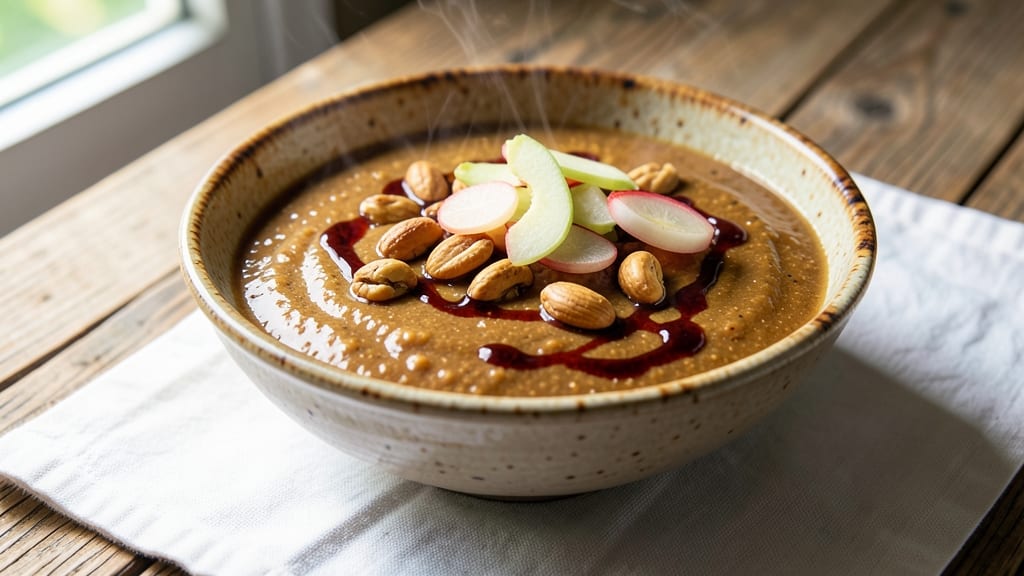
This authentic Indonesian peanut sauce transforms ordinary meals into vibrant satay experiences with just minutes of blending. The rich, nutty depth comes from toasted peanuts, tangy tamarind, and aromatic spices that balance sweet and savory notes perfectly.
I've perfected this recipe to deliver restaurant-quality results without requiring special equipment—just a food processor and patience for the flavors to meld.
The sauce's magic lies in its texture—smooth enough to drizzle over grilled meats or noodles, yet thick enough to cling to every bite. Toasting the peanuts first intensifies their flavor, while coconut milk adds creamy richness that rounds out the tamarind's tang.
This isn't just a sauce; it's a flavor bomb that elevates skewers, rice dishes, or even veggie bowls to new heights.
What sets this apart is the balance of spices: a pinch of turmeric for warmth, a dash of chili for heat, and fresh garlic for depth. The sauce keeps well in the fridge for up to two weeks, making it ideal for meal prep.
Whether you're serving satay, stir-fries, or even as a dip, this sauce delivers authentic Indonesian flavor with minimal effort.
For texture control, blend peanuts longer for a silky finish or leave some chunks for rustic appeal. The key is letting the sauce sit for 10 minutes after blending—this allows the flavors to develop fully. Ready to add this game-changer to your cooking arsenal?
Ingredients for authentic indonesian peanut sauce
Nine simple ingredients transform into restaurant-quality Indonesian peanut sauce magic.
| Ingredient | Amount | Notes |
|---|---|---|
| Toasted Peanuts 🥜 | 1 ½ cups | Raw or dry-roasted, unsalted |
| Tamari or Soy Sauce 🍶 | ½ cup | For umami depth |
| Coconut Milk 🥥 | ½ cup | Full-fat for creaminess |
| Tamarind Paste 🍋 | 2 tbsp | Or substitute lime juice |
| Garlic Cloves 🧄 | 4 cloves | Freshly minced |
| Ginger 🌿 | 1 tbsp | Freshly grated |
| Ground Turmeric 🌶️ | ½ tsp | For golden color |
| Red Chili Flakes 🔥 | 1 tsp | Adjust for heat preference |
| Brown Sugar 🍚 | 2 tbsp | Or coconut sugar |
| Olive Oil 🫒 | 1 tbsp | For blending |
Peanuts are the heart of this sauce—toast them first in a dry pan until golden and fragrant (about 5 minutes). Natural or dry-roasted unsalted peanuts work best; skip the salted kind. For authentic flavor, grab tamarind paste at an Asian market—it's worth the hunt. If you can't find it, lime juice with a pinch of sugar mimics the tang. The garlic and ginger? Fresh is non-negotiable—they make all the difference. I always use Trader Joe's brand tamari for extra depth, but regular soy sauce works too.
No tamarind? Lime juice plus 1 tsp sugar gets you close. Want less heat? Cut chili flakes to 0.5 tsp or swap for mild paprika. The coconut milk should be full-fat for best creaminess, but light works if that's what you've got. For a smoother sauce, blend peanuts longer; for rustic texture, leave some chunks. Penzeys brand spices elevate this, but store-bought works fine. The brown sugar can be swapped for coconut sugar—same flavor, different color.
This sauce keeps beautifully—2 weeks in the fridge sealed in a jar. For longer storage, freeze for up to 3 months. I like to make a double batch because it disappears fast. The sauce thickens as it sits, so stir in a splash of water if it gets too stiff. Perfect for drizzling over satay, tossing with noodles, or dipping veggies. The flavors actually improve after sitting 10 minutes, so be patient!
Why You'll Love This Recipe
- Five-Ingredient Magic: I swear by this—just toasted peanuts, a splash of tamari, coconut milk, tamarind, and garlic. That’s it. No fancy techniques, no stress, and no excuse to skip dinner.
- Tamarind Tang Kick: Honestly, the tamarind paste is what makes this sauce pop. It cuts through the richness of the peanuts and coconut, leaving that bright, tangy finish that feels like a hug in every bite.
- Dinner Party Ready: Between us, this sauce is my secret weapon for last-minute gatherings. Drizzle it over grilled chicken, noodles, or even a simple stir-fry—suddenly, you’re serving restaurant-quality vibes without the fuss.
- Budget-Friendly Pantry Staple: I make this at least once a week because it’s cheap, filling, and never goes to waste. The peanuts add protein, the coconut milk stretches it into a meal, and the leftovers? Even better reheated the next day.
Step-by-step instructions for authentic Indonesian peanut sauce
Here's how to create the rich, nutty-spiced sauce that brings satay to life.
Toast the Peanuts for Maximum Flavor
Heat a dry skillet over medium heat and add the 1.5 cups toasted peanuts. Toast them for 3-4 minutes, stirring constantly, until they turn a deeper golden brown and release their nutty aroma. This step is crucial—it intensifies the peanut flavor and prevents the sauce from tasting raw.
Watch carefully as peanuts burn quickly. When they're fragrant and lightly browned, immediately transfer them to a plate. Let them cool for 2 minutes before grinding—the residual heat will help them break down more easily in the next step.
Blend the Base Ingredients
In a food processor, combine the cooled peanuts, 4 cloves garlic cloves, 1 tbsp ginger, 0.5 tsp ground turmeric, and 1 tsp red chili flakes. Pulse until the garlic and ginger are finely minced but the peanuts remain slightly textured—this creates the perfect balance of smoothness and bite in the final sauce.
With the processor running, slowly drizzle in the 1 tbsp olive oil and 0.5 cup tamari or soy sauce. This gradual addition prevents the mixture from splattering and ensures even distribution of the sauce throughout the peanut paste. Stop blending when everything forms a thick, chunky paste.
Simmer the Sauce to Perfection
Transfer the peanut paste to a small saucepan and add the 0.5 cup coconut milk, 2 tbsp tamarind paste, and 2 tbsp brown sugar. Stir over medium-low heat for 5-7 minutes until the sauce thickens slightly and becomes glossy. The tamarind adds that signature tangy depth while the sugar balances the heat.
Taste as you go—this is where you can adjust the seasoning. If it needs more heat, add a pinch of red chili flakes. For extra richness, stir in a splash of coconut milk. The sauce should coat the back of a spoon with a velvety texture that's neither too thin nor gluey.
Strain for Silky Smoothness (Optional)
For a completely smooth sauce, strain the mixture through a fine-mesh sieve into a clean saucepan. This step removes any remaining peanut skins or garlic bits, giving you that restaurant-quality finish. If you prefer a slightly rustic texture, skip this step—the natural bits add character.
Return the strained sauce to medium-low heat and let it simmer for another 2-3 minutes to restore any lost thickness. The sauce should now be ready to drizzle over satay skewers, toss with vegetables, or use as a dipping sauce. Keep it warm until serving—cold peanut sauce loses its aromatic punch.
Pro Tips For Making Authentic Indonesian Peanut Sauce
- TOAST PEANUTS UNTIL NUTTY: The moment they hit golden-brown and smell like a street vendor’s stall, stop immediately—over-toasting turns them bitter. Use a dry pan on medium heat and shake the pan constantly; 3-4 minutes max. (Yes, even if you’re impatient like me, they won’t get there faster.)
- PRESS TAMARIND PASTE: Tamarind paste is thick and stubborn. Soak it in warm water for 10 minutes first, then press it through a fine-mesh sieve or the back of a wooden spoon to remove fibers. Skipping this step leaves gritty bits that ruin the sauce’s silky texture.
- COOK GARLIC LOW AND SLOW: Fried garlic burns faster than you think. Sauté minced cloves in coconut milk (not oil) on low heat until just fragrant—about 2 minutes. High heat turns them bitter, and that’s the last thing you want in a peanut sauce where garlic should shine.
- BALANCE SALT WITH TAMARI: Tamari is salty, but coconut milk dilutes it. Taste after adding both, then adjust: a pinch of sugar (½ tsp) or a splash of lime juice can brighten the sauce if it tastes flat. I learned this the hard way—salting blindly leads to overpowering flavor.
Make-ahead tips for this dish
Batch Prep Strategy
Make a double batch of this sauce—it disappears fast! Store in airtight glass jars (I use Le Parfait 16oz jars) in the fridge for up to 2 weeks.
The flavors deepen overnight, so the second day is even better. For freezer storage, portion into ice cube trays—thaw individual cubes as needed for satay or stir-fries. 🥫
Texture Control Hacks
For smooth perfection, blend peanuts longer (up to 2 minutes) until completely broken down. For rustic texture, pulse just until combined—this adds satisfying bite. If your sauce thickens too much after refrigeration, thin with 1-2 tsp warm water or coconut milk while reheating.
Never microwave directly from fridge—always bring to room temp first to prevent oil separation. 🥜
Flavor Development Time
Let the sauce rest 10 minutes after blending before simmering—this lets spices bloom. If making ahead, refrigerate unstrained for 24 hours before straining for the smoothest texture. The tamarind's tang needs time to meld with the peanuts' richness.
Pro tip: Add a splash of hot water while blending if the mixture seems too dry. 🌶️
Reheating Perfection
For stovetop reheating, warm sauce over low heat with 1 tbsp water to prevent scorching. Stir constantly for 3-4 minutes until just hot—overheating kills the peanut aroma. Microwave in 30-second bursts with a splash of water between each.
Never reheat to boiling—just until steaming. Always taste after reheating; you may need to adjust salt or sugar. 🔥
Freezer-Friendly Tips
Freeze sauce in silicone molds for portion control—perfect for satay nights. Label with dates as it lasts 3 months in freezer. Thaw overnight in fridge, then warm gently.
For quick use, place frozen sauce in a bowl with hot water (not boiling) for 10 minutes—this preserves texture better than microwave. Avoid refreezing thawed sauce. ❄️
Meal Prep Pairings
Prep satay skewers alongside your sauce—they reheat beautifully together. Store skewers separately in aluminum foil with sauce in a jar. For stir-fries, pre-chop veggies and store in airtight containers with sauce.
The sauce's heat and nuttiness cuts through raw veggies perfectly. Double the batch and freeze half—you'll thank me later! 🍛
Nutrition facts
Frequently asked questions
Can I make this sauce without tamarind?
Yes! For the best results, mix 2 tbsp lime juice with 1 tsp sugar to mimic tamarind's tangy-sweet balance. The sugar helps replicate tamarind's natural sweetness while the acidity provides the same bright flavor profile. If you're using bottled lime juice, reduce the sugar to 0.5 tsp since it's already sweetened.
How do I adjust the spice level?
For milder heat, reduce red chili flakes to 0.5 tsp or swap them for ½ tsp mild paprika. If you love spice, add ½ tsp cayenne pepper during simmering. For extra kick, stir in 1 tsp sambal oelek at the end. Always taste as you go—you can adjust while the sauce is warm on the stove.
What's the best way to store leftovers?
Transfer to an airtight glass jar and refrigerate for up to 2 weeks. For longer storage, freeze in silicone molds or ice cube trays for 3 months. Thaw overnight in the fridge—never microwave directly from frozen. If the sauce thickens after refrigeration, stir in 1 tsp warm water while reheating to restore consistency.
Can I use peanut butter instead of whole peanuts?
Not recommended—peanut butter lacks the toasted depth and texture of fresh peanuts. However, if you're in a pinch, use ½ cup natural peanut butter (no added sugar/oil) and add 1 tbsp extra tamari to compensate for the missing toasted flavor. For best results, stick with whole peanuts—they create that authentic, nutty richness.
How can I use this sauce beyond satay?
This versatile sauce elevates grilled chicken, stir-fried tofu, rice bowls, or even as a dip for spring rolls. Drizzle over noodle dishes like mie goreng or mix into curry pastes for instant depth. Try it as a marinade for fish or shrimp skewers—the peanut flavor caramelizes beautifully during cooking.