
Sauces & Condiments
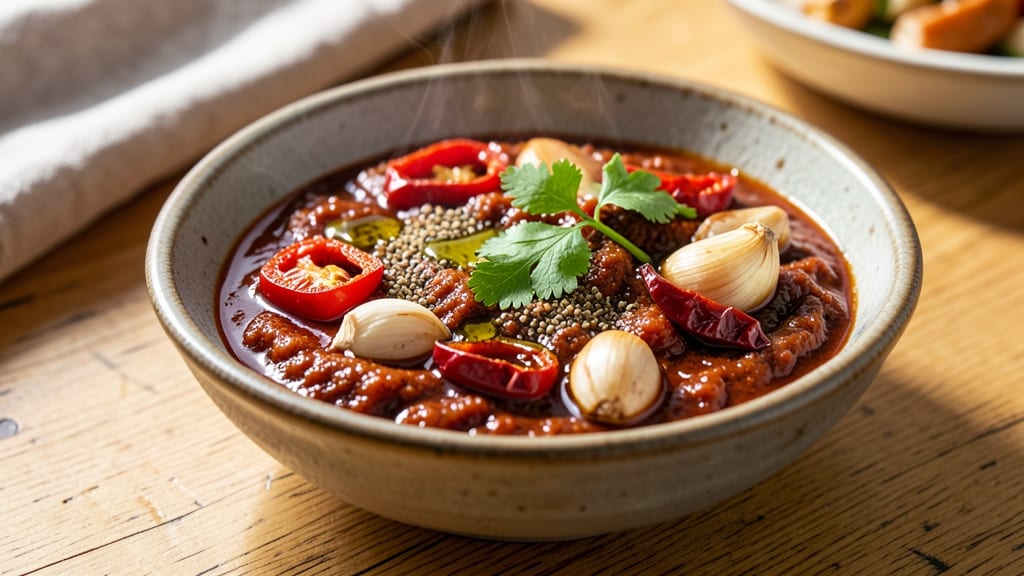
This authentic harissa sauce transforms simple pantry staples into North Africa's most beloved condiment—where smoky roasted peppers and fiery chilis create a complex, versatile paste that elevates everything from grilled meats to roasted vegetables.
The key lies in slow-roasting the peppers to deepen their natural sweetness while preserving the chili's signature heat, then blending them with earthy spices like cumin and coriander for that unmistakable depth.
What sets this recipe apart is the balance—never overpowering, yet undeniably bold. We start with a dry roast of red peppers and chilis to develop their flavors before grinding them into a coarse paste, then infuse it with garlic, olive oil, and a precise blend of spices.
The result is a sauce that's equally at home as a marinade, dip, or finishing touch, with a shelf life of weeks in the fridge or months in the freezer.
The process is straightforward but requires patience: roasting the peppers over an open flame (or under the broiler) until charred in spots, then cooling before blending. This step is non-negotiable—it transforms raw heat into smoky complexity.
The finished harissa should be vibrant red with flecks of chili and a texture that's thick enough to cling but smooth enough to drizzle.
For variations, consider adding smoked paprika for extra depth, a touch of lemon zest for brightness, or even a splash of vinegar for tang. Store in an airtight jar, and you'll have a pantry staple that turns any dish into a taste of North Africa.
Ingredients for authentic harissa sauce
Simple, smoky, and undeniably bold—this harissa brings North African heat to your kitchen.
| Ingredient | Amount | Notes |
|---|---|---|
| Red Bell Peppers 🌶️ | 2 whole | Dried roasted, charred in spots |
| Dried Guajillo Chilies 🌶️ | 4 whole | Stemmed and seeded |
| Dried Arbol Chilies 🔥 | 2 whole | For extra heat |
| Garlic Cloves 🧄 | 5 cloves | Peeled and roughly chopped |
| Extra-Virgin Olive Oil 🫒 | ½ cup | High quality, fruity |
| Ground Cumin 🌿 | 1 tbsp | Toasted for deeper flavor |
| Ground Coriander 🌿 | 1 tbsp | Freshly ground preferred |
| Smoked Paprika 🌶️ | 1 tbsp | For smoky depth |
| Salt 🧂 | 1 tsp | Kosher or sea salt |
| Lemon Juice 🍋 | 1 tbsp | Freshly squeezed |
The peppers and chilies are the heart of this sauce. Dried roasted red peppers add sweetness and depth, while guajillo and arbol chilies bring the signature heat. You can find dried chilies at Latin markets or the international aisle of most grocery stores—La Boqueria or Whole Foods carry great options. If you can't find guajillo, ancho chilies work too. For the roasting, I use a gas flame (or broiler) until they're charred in spots—this step is non-negotiable for that smoky flavor. Toast the spices lightly in a dry pan before grinding for even more depth.
No smoked paprika? Regular paprika plus a pinch of liquid smoke gets you close. Short on lemon juice? White vinegar or apple cider vinegar works in a pinch. The garlic can be roasted with the peppers for a sweeter flavor—just toss it in the same pan. If you're sensitive to heat, reduce the arbol chilies to 1 or skip them entirely. The olive oil matters here—use something fruity and high-quality. California olive oil from Trader Joe's or Whole Foods is my go-to. For a smoother texture, blend the peppers and chilies longer, but leave some flecks for that authentic look.
Harissa keeps beautifully. Store in an airtight jar in the fridge for up to 3 months—the flavors actually deepen over time. For longer storage, freeze in ice cube trays and transfer to a bag. Thaw in the fridge overnight. This sauce is incredibly versatile—drizzle it on grilled meats, mix it into mayo for sandwiches, or use it as a marinade. A little goes a long way, so start with a teaspoon and adjust to taste. The heat builds, so don't be shy with the sauce—it's meant to be bold.
Why You'll Love This Recipe
- This sauce works for everything: slather it on grilled chicken, mix into lentils, or drizzle over toasted bread with feta. I’ve even used it to wake up store-bought hummus. And between us? It’s the only thing that makes my basic weeknight pasta feel like a restaurant dish.
- No-Chop Nightmare: I swear by this recipe because the dried chilies just soak—no knife skills required. Toss them in hot water for 15 minutes, and the peppers roast themselves in the oven while you stir. Honestly, I’ve made this sauce after work when my hands were still sticky from grocery bags.
- Smoky-Sweet Heat: That roasted red bell pepper? It’s the star—sweet, deep, and slightly charred. The guajillo and arbol chilies add layers of smoldering warmth, but the garlic and olive oil soften it into something ridiculously balanced. Not too spicy, not too bland—just perfect.
- Weeknight to Dinner Party: This sauce works for everything: slather it on grilled chicken, mix into lentils, or drizzle over toasted bread with feta. I’ve even used it to wake up store-bought hummus. And between us? It’s the only thing that makes my basic weeknight pasta feel like a restaurant dish.
Step-by-step instructions for authentic harissa sauce
Here's how to make a traditional North African harissa with smoky depth and balanced heat.
Char and Rehydrate the Chilies and Peppers
Heat a dry skillet over medium-high heat and add the 4 whole dried guajillo chilies and 2 whole dried arbol chilies. Toast them for 1-2 minutes per side until they darken and smell fragrant—this deepens their smoky flavor. Remove and set aside. In the same pan, add the 2 whole red bell peppers and char them for 3-4 minutes until blackened in spots with blistered skin.
Transfer the charred peppers and chilies to a heatproof bowl and cover with hot tap water to cover completely. Let them soak for 15-20 minutes until softened enough to mash easily with your fingers. This rehydration step is crucial—it releases their natural oils and intensifies the flavor. Drain well before proceeding.
Blend the Base Ingredients
In a food processor, combine the rehydrated chilies, red bell peppers, 5 cloves garlic cloves, 1 tablespoon ground cumin, 1 tablespoon ground coriander, and 1 tablespoon smoked paprika. Pulse until you get a rough, chunky paste with some texture remaining—this gives harissa its authentic character. Scrape down the sides as needed.
With the processor running, slowly drizzle in the 0.5 cup extra-virgin olive oil until fully incorporated. The oil should emulsify with the spices, creating a thick, vibrant paste. If it's too dry, add 1-2 teaspoons of water to help it blend smoothly. This is where the sauce gets its signature balance of heat and richness.
Simmer and Season
Transfer the paste to a small saucepan and cook over low heat for 10-12 minutes, stirring occasionally. You'll see the mixture darken slightly and develop a deeper, more complex aroma. This slow cooking step mellows the raw heat of the chilies while enhancing their smoky notes.
Stir in the 1 teaspoon salt and 1 tablespoon lemon juice, then taste and adjust the seasoning. Traditional harissa should have a bright, tangy finish that cuts through the heat. For a smoother texture, blend again briefly or press through a fine-mesh sieve. For authentic texture, leave it slightly rustic—this is key to its character.
Cool and Store Properly
Remove from heat and let the sauce cool completely at room temperature. This resting period allows the flavors to meld and the heat to distribute evenly. Transfer to a clean, airtight jar and store in the refrigerator for up to 2 weeks or freeze for up to 3 months—the flavors actually improve with time.
Here's the thing—authentic harissa should be vibrant red with deep purple streaks from the chilies. If it looks too thin, simmer uncovered for 5-10 minutes to reduce. The perfect harissa balances heat, smokiness, and brightness—this method delivers all three. Use it as a condiment, marinade, or sauce for grilled meats and roasted vegetables.
Pro Tips For Making Authentic Harissa Sauce
- STEAM THE CHILIES FIRST: Skip the dry toast—soak guajillo and arbol chilies in hot (not boiling) water for 10 minutes first. This softens them and removes the bitterness that ruins an otherwise balanced sauce. I learned this the hard way after tasting a batch that still had that harsh edge.
- CHAR THE BELL PEPPERS: Blacken those red bell peppers over direct flame or high heat until the skin is actually charred, not just blistered. The smoky depth is what separates homemade harissa from jarred paste. If you’re impatient, wrap them in foil after 5 minutes—just don’t skip the initial char.
- PEEL GARLIC AFTER TOASTING: Toast the garlic cloves in olive oil until golden (about 3-4 minutes), then peel them while still hot. The skins slide off effortlessly, and the garlic’s flavor integrates smoother into the sauce. Cold garlic? You’ll be picking at it for 10 minutes—trust me.
- BLEND IN STAGES: Pulse the soaked chilies and peppers first, then stream in olive oil while blending. This prevents a greasy, clumpy mess. If it’s too thick, add water a tablespoon at a time—harissa should coat the back of a spoon, not cling like glue.
Flavor customization for these flavors
Smoky Depth Boost
For an extra layer of smokiness, add ½ teaspoon liquid smoke when blending the ingredients. I like to mix it with the olive oil before drizzling it into the food processor—this ensures even distribution.
Alternatively, toast 1 teaspoon fennel seeds in the dry pan with the chilies for a subtle anise-like depth that pairs beautifully with the smoky notes. 🌿
Fruity Sweetness Twist
Balance the heat with 1 tablespoon honey or agave syrup during the simmering step. This works especially well if you're using extra spicy chilies like habanero. For a brighter twist, add 1 tablespoon orange zest when blending—it brightens the sauce and adds a citrusy complexity that cuts through the richness.
Trust me, this makes harissa perfect for seafood dishes.
Tangy Fermented Version
Create a fermented harissa by adding 1 tablespoon apple cider vinegar and ½ teaspoon salt to the blended mixture, then letting it sit at room temperature for 24 hours before refrigerating. The fermentation process mellows the heat slightly while adding a tangy depth.
This version is fantastic for sandwiches or as a dip—just be sure to use a clean spoon to avoid contamination.
Creamy Yogurt Blend
For a milder, spreadable version, mix ¼ cup plain Greek yogurt into the finished harissa sauce. This creates a creamy, dip-like consistency that's perfect for grilled meats or as a marinade.
I like to add 1 teaspoon grated ginger for extra zing. Store this version in the fridge for up to 1 week—it's best used fresh.
Spicy Sweet Heat
Add 1 tablespoon date paste or pureed figs during the blending stage for a sweet-spicy balance. This works wonderfully with lamb dishes or as a glaze for roasted vegetables.
For an extra kick, include ½ teaspoon ground cinnamon—it might sound unusual, but it complements the harissa beautifully and adds warmth. 🔥
Herb-Infused Freshness
Finish your harissa with 1 tablespoon fresh cilantro or parsley, pulsed briefly in the food processor. This adds a bright, herbaceous note that refreshes the palate. For a more robust flavor, use 1 teaspoon fresh mint leaves, but be cautious—it can overpower if used too liberally.
This variation is perfect for summer dishes like grilled shrimp or gazpacho.
Nutrition facts
Frequently asked questions about authentic harissa sauce
Can I substitute fresh peppers for dried in this recipe?
Fresh red bell peppers won't work as a direct substitute—they lack the concentrated sweetness and depth of properly charred dried peppers. For a similar effect, roast 4 fresh red bell peppers until blackened in spots, then peel and blend them with 1-2 fresh red chilies (like jalapeños or serranos) for heat. The texture will be smoother but less intense.
How do I adjust the heat level if my harissa is too spicy?
Start by blending in 1 tablespoon extra olive oil to dilute the heat, then add 1-2 teaspoons honey or agave to balance it. For a milder version, mix ¼ cup plain yogurt into the finished sauce. If you prefer to keep it authentic, reduce the number of arbol chilies next time—start with just 1 chili for a milder base.
What's the best way to use harissa on grilled meats?
For grilled chicken or lamb, mix 1 tablespoon harissa with 2 tablespoons olive oil and 1 teaspoon honey, then brush it on during the last 5 minutes of cooking. For beef, marinate chunks in 3 tablespoons harissa plus 1 tablespoon yogurt for 2-4 hours before grilling. Always finish with fresh herbs like parsley or cilantro.
Can I make harissa without a food processor?
Yes! After charring and rehydrating the peppers and chilies, transfer them to a mortar and pestle with garlic, cumin, coriander, and smoked paprika. Grind into a coarse paste, then mix in olive oil and lemon juice by hand. The texture will be rustic but still flavorful—just stir occasionally while simmering to ensure even cooking.
Why does my harissa look too thin or watery?
This happens when excess water from rehydration isn't fully drained or when the sauce isn't reduced enough. Simmer uncovered for 5-10 minutes to thicken, stirring often. For a smoother texture, blend again briefly or press through a fine-mesh sieve. If it's still too thin, stir in 1 teaspoon cornstarch mixed with 1 tablespoon water and cook for 2 more minutes.