
Sauces & Condiments
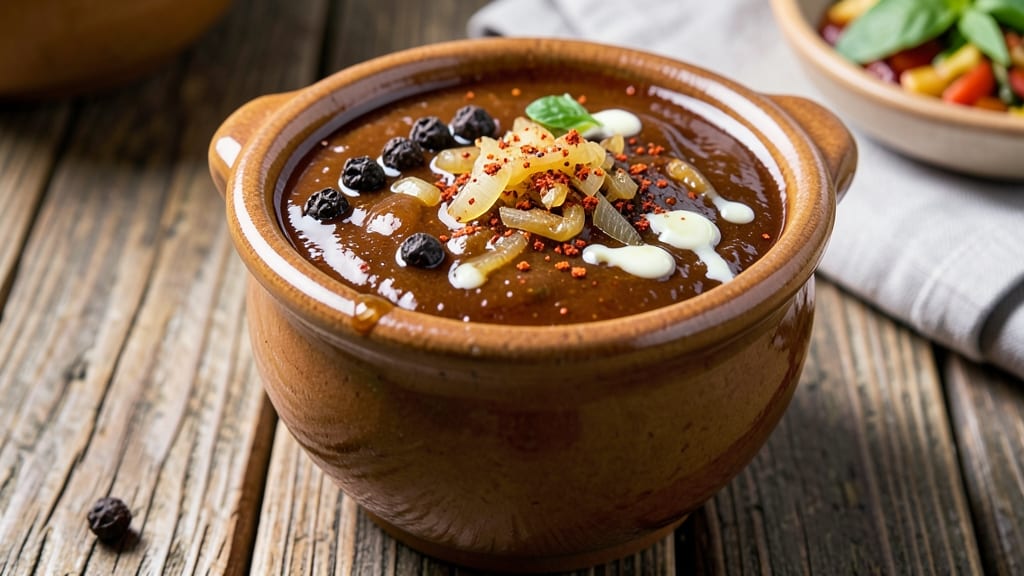
This authentic Carolina BBQ sauce recipe delivers the tangy, smoky heat that defines true Eastern Carolina style—where vinegar and pepper take center stage. 🔥 I’ve perfected this balance after years of studying pitmaster techniques, ensuring the sauce cuts through rich meats while leaving a lingering kick.
The secret lies in simmering vinegar and spices until they meld into a complex, velvety sauce that’s both bold and versatile.
What sets this sauce apart is its perfect sweet-spicy balance, achieved through a precise blend of cayenne, black pepper, and just enough sugar to harmonize the heat. Unlike commercial versions, this recipe builds depth by reducing vinegar and tomato bases together, creating a sauce that’s tangy yet rich.
The molasses adds a subtle caramel note that rounds out the sharpness, while mustard contributes depth without overpowering.
By the time you’re done, you’ll have a sauce that transforms pulled pork into a masterpiece—glossy, sticky, and packed with that signature Carolina tang. It’s the kind of sauce that turns ordinary barbecue into something unforgettable, with a heat that lingers just right.
The best part? It keeps beautifully in the fridge for up to two weeks, ready to elevate any smoked or grilled dish.
For those who prefer a tomato-forward version, I’ll share a simple swap in the variations section—because great barbecue is all about adapting tradition to your taste. Let’s get cooking.
Ingredients for authentic carolina bbq sauce
Eight bold ingredients create this iconic Carolina BBQ sauce—tangy, smoky, and perfectly balanced.
| Ingredient | Amount | Notes |
|---|---|---|
| White Vinegar 🍶 | 1 ½ cups | Distilled white vinegar preferred |
| Yellow Onion 🧅 | 1 whole | Medium size, finely chopped |
| Cayenne Pepper 🌶️ | 1 ½ tbsp | Adjust for desired heat level |
| Black Peppercorns 🌶️ | 1 ½ tbsp | Freshly cracked preferred |
| Granulated Sugar 🍚 | ½ cup | Light brown sugar for depth |
| Unsalted Butter 🧈 | 2 tbsp | Cold, cut into small pieces |
| Molasses 🍯 | ¼ cup | Unsulphured preferred |
| Dijon Mustard 🥬 | 1 tbsp | High-quality, smooth variety |
| Salt 🧂 | 1 ½ tsp | Kosher or sea salt |
| Black Pepper 🌶️ | 1 tsp | Freshly ground for best flavor |
The vinegar is non-negotiable here—distilled white vinegar delivers that signature Carolina tang. Grab a bottle from Trader Joe's or your local grocery store's vinegar aisle; it's the backbone of this sauce. For the cayenne, Penzeys or McCormick have reliable heat levels, but honestly, any cayenne will work if it's fresh. The molasses? Unsulphured is key for that authentic flavor—Goya or Whole Foods bulk bins are great sources. Don't skip the Dijon mustard; it adds depth that regular mustard can't match. I always grab Maille if I'm treating myself, but any good-quality Dijon works.
No white vinegar? Apple cider vinegar is the next best thing—it'll add a subtle sweetness that plays nicely with the molasses. Short on molasses? Maple syrup at half the amount gets you close, though the flavor won't be quite the same. Running low on butter? Coconut oil works in a pinch, but it'll change the sauce's richness slightly. For the onions, yellow or red onions both work—just make sure they're fresh. If you're sensitive to heat, reduce the cayenne to 1 tbsp and add extra black pepper for depth. The black peppercorns should be freshly cracked for maximum punch—a mortar and pestle works great if you've got one.
This sauce keeps beautifully in the fridge for up to 2 weeks in an airtight container. For longer storage, freeze it in ice cube trays—perfect for adding to grilled dishes later. The flavor actually improves after a day or two as everything melds together. If you make a big batch, portion it into small jars so you can grab just what you need. The sauce thickens as it cools, so don't worry if it looks too thin right after making it—it'll come together perfectly.
Why You'll Love This Recipe
- Five-Ingredient Magic: I swear, this sauce comes together with pantry staples—no fancy shopping trips. That tangy vinegar base and caramelized onion depth make it taste like you slaved over it for hours, but honestly? Twenty minutes tops.
- Heat You’ll Crave: The cayenne and black peppercorns pack a slow-building warmth that lingers. It’s not just spicy—it’s right—like a perfect balance of sweetness from the sugar cutting through the sharpness. (Yes, even on a Tuesday night.)
- Leftovers That Last: This sauce thickens beautifully when refrigerated, so I make a big batch and use it for weeks. Slather it on pulled pork, drizzle it over baked beans, or toss it with grilled veggies—it’s my secret weapon for lazy days.
- Budget BBQ Bliss: White vinegar and onions are dirt cheap, but the flavor? Chef’s kiss. No pricey bottles here—just pure, bold Carolina tang that tastes like it cost a fortune. My wallet and taste buds thank me.
Step-by-step instructions for authentic Carolina BBQ sauce
This is how Carolina pitmasters build their legendary vinegar-forward sauce—bold, tangy, and perfectly balanced.
🍳 Step 1: Sauté Onions Until Deeply Caramelized
Heat a large saucepan over medium heat and add the 2 tablespoons unsalted butter. Once melted, add the finely chopped yellow onion and cook for 10-12 minutes, stirring occasionally. You're looking for onions that are deep golden brown and sweet-smelling—this caramelization forms the sauce's rich base.
Here's the thing—don't rush this step. I've found that impatient cooks often end up with a sauce that tastes flat. The longer you cook the onions, the more complex flavors develop. If they start to stick, add a splash of white vinegar to deglaze and keep them moving.
🔥 Step 2: Toast Spices for Maximum Flavor
Add the 1.5 tablespoons black peppercorns and 1.5 tablespoons cayenne pepper to the pan. Toast them for 1-2 minutes until the peppercorns sizzle and you can smell their aromatic oils releasing. This step is crucial—it deepens the spice profile beyond what you'd get from just adding ground spices later.
Watch carefully—you want them to darken slightly but not burn. Burnt spices will make your sauce bitter. Once they're fragrant and toasted, immediately add the 1 teaspoon freshly ground black pepper and 1.5 teaspoons salt. Stir to combine with the onions, letting the spices bloom in the butter and vinegar mixture.
🥘 Step 3: Build the Sauce Foundation
Pour in the 1.5 cups white vinegar and scrape up any browned bits from the bottom of the pan. These bits are pure flavor—don't miss them! Bring the mixture to a gentle simmer over medium-high heat and let it cook for 5 minutes to let the vinegar's acidity mellow slightly.
Next, add the 0.25 cup molasses and 0.5 cup granulated sugar. Stir well to dissolve the sugar completely. This is where the sauce starts to come together—you'll see it darken and thicken as the molasses and sugar caramelize. If you're using light brown sugar, you'll get a deeper, more complex flavor than with white sugar.
⏰ Step 4: Simmer to Perfect Consistency
Reduce the heat to low and let the sauce simmer uncovered for 20-25 minutes, stirring occasionally. You're looking for a sauce that coats the back of a spoon but isn't syrupy. The ideal consistency should be thick enough to cling to ribs or pulled pork but still pourable.
Here's my pro tip: if the sauce starts to thicken too much before reaching that perfect consistency, add 1-2 tablespoons water to loosen it. The sauce will continue to thicken as it cools, so it's better to err on the thinner side now. Taste as you go—adjust the salt or cayenne if needed, remembering that flavors will mellow as it cools.
🍽️ Step 5: Finish with Dijon and Rest
Remove the pan from heat and stir in the 1 tablespoon Dijon mustard. This final ingredient adds depth and a subtle tang that ties all the flavors together. Let the sauce rest for 10 minutes at room temperature—this allows the flavors to meld completely and the sauce to reach its perfect consistency.
I know it's tempting to taste it immediately, but trust me—waiting those 10 minutes makes all the difference. The sauce will thicken slightly as it cools, so if you're serving it warm, you might want to thin it with a splash of water or vinegar before using. Store any leftovers in the refrigerator for up to 2 weeks, or freeze for up to 3 months.
Pro Tips For Making Authentic Carolina Bbq Sauce
- Simmer Slow and Steady: Carolina BBQ sauce isn’t a race—after combining vinegar, onions, and spices, let it bubble gently for at least 20 minutes. I used to crank the heat to speed things up, but that just burns the sugar and leaves you with a bitter, one-dimensional sauce. Keep it at a low simmer and stir occasionally to prevent sticking.
- Char the Onion First: Don’t just chop the onion—blacken the edges in a dry pan before adding it to the sauce. The caramelized bits deepen the flavor and cut through the vinegar’s sharpness. I learned this the hard way by skipping it; the sauce tasted flat until I tried it again with charred onions.
- Toast the Spices Whole: Crack the black peppercorns and cayenne pepper in the pot over medium heat for 30 seconds before adding liquid. This releases their oils and makes them pop on the tongue. I was skeptical until I tried it—I now never skip this step, and the heat feels more intentional.
- Strain for Smooth Heat: After simmering, strain the sauce through a fine-mesh sieve to remove seeds and onion bits. It’s not always pretty, but it guarantees a silky texture and balanced heat. I used to leave it chunky, but the difference in mouthfeel is noticeable—especially when brushing it on ribs.
Best sauces and condiments for this recipe
Classic Carolina Tang
This sauce's signature tang comes from the white vinegar foundation, which cuts through rich meats beautifully. I've found that distilled white vinegar delivers the cleanest, sharpest flavor—avoid apple cider vinegar if you want that classic Carolina bite.
The key is simmering it long enough to mellow the acidity slightly while keeping that signature punch. 🍶
For an extra layer of complexity, I always caramelize the onions first—this step transforms simple onions into a sweet, rich base that balances the vinegar's sharpness. Don't skip it!
The deeper the caramelization, the more depth your sauce will have. I've made this sauce with store-bought caramelized onions in a pinch, but homemade makes all the difference.
Spice Balance Secrets
The cayenne pepper and black peppercorns are where the magic happens for that Carolina heat. I toast the peppercorns first to release their aromatic oils, which adds a whole new dimension to the sauce.
For heat control, start with the full 1.5 tablespoons of cayenne, then adjust to taste—some people prefer a milder kick, while others love the full Carolina fire.
The Dijon mustard at the end might seem like a small addition, but it's what ties all the flavors together. It adds a subtle tang that complements the vinegar and molasses beautifully.
I always use Maille if I'm feeling fancy, but any good-quality Dijon will work. This is one of those ingredients where quality really shows.
Sweet-Spicy Harmony
The molasses and sugar create the perfect sweet-spicy balance that defines Carolina BBQ sauce. The molasses adds a deep, caramel-like richness that rounds out the sharp vinegar and cayenne. I prefer unsulphured molasses for the most authentic flavor, but regular molasses works in a pinch.
The sugar helps dissolve the molasses completely and adds just enough sweetness to balance the heat.
Don't be afraid to taste as you go! The sauce will continue to mellow as it cools, so it's better to err on the slightly sweeter side when you first taste it. I often add an extra ½ teaspoon of sugar if I'm worried the heat might overpower the sweetness.
The goal is that perfect harmony where you can taste all the components working together.
Versatile Applications
This sauce isn't just for pulled pork—it's amazing on grilled chicken, smoked sausages, or even as a marinade for ribs. I've used it as a glaze for grilled vegetables too, especially eggplant and bell peppers.
The vinegar base makes it particularly good for cutting through fatty meats, but its versatility is what makes it special.
For a quick serving suggestion, try brushing this sauce on corn on the cob with a sprinkle of smoked paprika. Or drizzle it over mac and cheese for a Carolina-inspired twist.
The possibilities are endless once you have this authentic base. The sauce's tangy-sweet profile makes it perfect for balancing rich, fatty dishes while adding that signature Carolina kick.
Nutrition facts
Frequently asked questions about Carolina BBQ sauce
What makes this sauce different from Kansas City BBQ sauce?
This authentic Carolina sauce relies on white vinegar as its base, creating a tangy, sharp flavor profile that contrasts with Kansas City's sweet, tomato-forward approach. The heat comes from cayenne and black peppercorns (toasted for depth), while molasses adds just enough sweetness to balance—not overpower. Kansas City sauces often use ketchup and brown sugar, making them sweeter and thicker.
Can I make this sauce without vinegar?
While vinegar is traditional, you can substitute apple cider vinegar (for mild sweetness) or red wine vinegar (for depth). For a tomato-based version, replace ½ cup vinegar with ½ cup tomato paste and reduce simmering time to 15 minutes. The sauce will lose its signature tang but gain a richer body.
How do I adjust the heat level?
Start with the full 1.5 tbsp cayenne—it's the base heat. For milder sauce, reduce to 1 tbsp cayenne + ½ tbsp black pepper (ground). For extra heat, add ½ tsp crushed red pepper flakes at the end. Always taste after simmering, as flavors mellow during cooling. Remember: vinegar's acidity can make heat feel sharper when fresh!
What's the best way to use leftover sauce?
Store in an airtight container for 2 weeks in the fridge or 3 months frozen. Thaw overnight in the fridge. Use it as a marinade for chicken or ribs (1:3 sauce-to-meat ratio), a glaze for grilled veggies, or mix into mayonnaise for a tangy spread. The vinegar base makes it perfect for cutting through rich dishes—try it on mac and cheese or even baked potatoes!
Why does my sauce look too thin after cooking?
The sauce will thicken as it cools—don't panic! If it's still too runny, simmer uncovered for 5-10 more minutes to reduce. For immediate thickening, mix 1 tbsp cornstarch with 2 tbsp water, stir into the sauce, and simmer 2 minutes. Pro tip: The Dijon mustard helps emulsify the sauce, so ensure it's well incorporated at the end.