
Sauces & Condiments
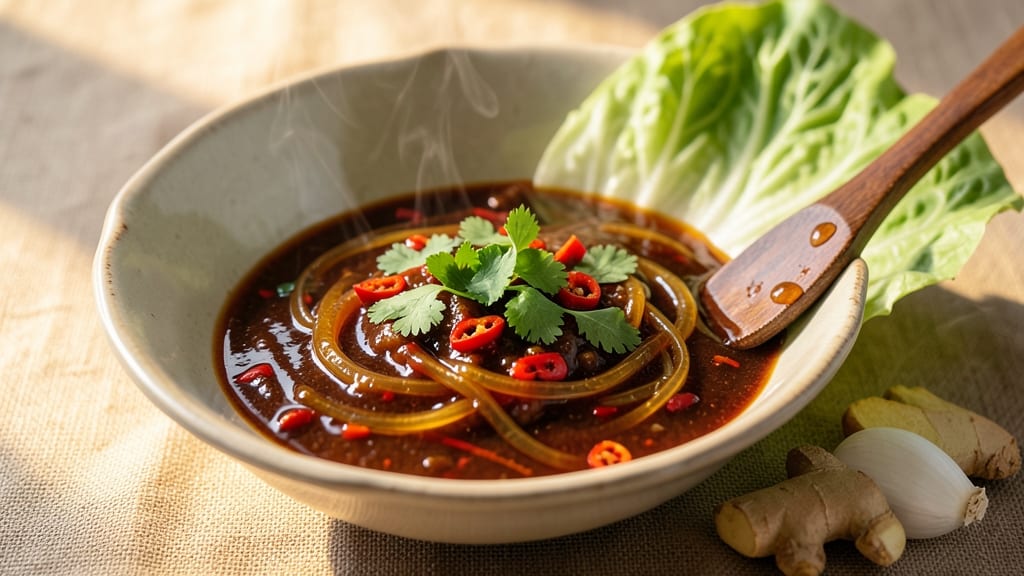
This Asian lettuce wrap sauce delivers the perfect balance of tangy tamarind, spicy chili, and umami depth—transforming simple lettuce cups into restaurant-quality bites. The secret lies in blending fresh aromatics with fermented flavors, creating a sauce that clings to proteins while enhancing crisp vegetables.
I developed this recipe after years of testing different ratios to achieve that signature harmony of sweet, sour, and heat without overpowering delicate lettuce leaves.
The foundation starts with a simple blend of soy sauce, tamarind paste, and rice vinegar, which builds the tangy backbone. Fresh garlic, ginger, and chili paste infuse the sauce with aromatic depth, while a touch of sesame oil adds nutty richness.
The sauce comes together in minutes but develops even more complexity when allowed to marinate proteins for just 10 minutes—enough time for flavors to meld without overcooking.
What makes this sauce truly versatile is its ability to elevate any lettuce wrap filling—grilled chicken stays juicy, tofu absorbs flavor beautifully, and even shredded vegetables gain complexity.
The sauce maintains its vibrant color and bold taste for up to 5 days in the refrigerator, making it perfect for meal prep or entertaining. Each spoonful delivers that perfect balance that turns a simple lunch into a memorable dining experience.
For those who prefer milder flavors, simply reduce the chili paste by half, but don't skip the tamarind—it's what gives this sauce its signature tang. The result is a sauce that's equal parts restaurant-worthy and home-cook friendly, ready to transform your next lettuce wrap into something extraordinary.
Ingredients for asian lettuce wrap sauce
Nine bold ingredients blending tangy tamarind and fiery chili for lettuce wraps that taste like a restaurant secret.
| Ingredient | Amount | Notes |
|---|---|---|
| Soy Sauce 🥢 | ⅓ cup | High-quality, preferably Japanese |
| Tamarind Paste 🍈 | ¼ cup | Thick, unsweetened variety |
| Rice Vinegar 💧 | ¼ cup | Seasoned preferred for depth |
| Red Chili Paste 🌶️ | 2 tbsp | Adjust for heat preference |
| Fresh Garlic Cloves 🧄 | 4 cloves | Minced for aromatic punch |
| Fresh Ginger 🌿 | 1 tbsp | Grated, finely for smooth texture |
| Sesame Oil 🫒 | 1 tbsp | Toasted for nutty aroma |
| Honey 🍯 | 1 tbsp | Or maple syrup for vegan option |
| Brown Sugar 🍚 | 1 tbsp | Light or dark preferred |
| Water 💧 | ½ cup | Adjust for desired consistency |
The tamarind paste is non-negotiable here—Trader Joe's or Asian markets carry the best thick, unsweetened varieties. Look for vibrant, sticky paste that hasn't crystallized. Japanese soy sauce like Kikkoman elevates this beyond basic soy, while seasoned rice vinegar adds that subtle umami kick. Fresh ginger and garlic? Buy them whole—they keep longer, and you can grate/mince exactly what you need. The chili paste can vary wildly in heat, so taste before measuring—Maesri or Thai Kitchen brands are my go-tos for consistent spice levels.
No tamarind? Lime juice plus 1 tsp sugar mimics the tang, though it won't be identical. Swap honey for maple syrup or agave if needed. Sesame oil is optional but adds that signature nutty aroma—skip it if you're allergic to sesame. For milder heat, reduce chili paste to 1 tbsp and add 1 tsp sugar to balance. The sauce thickens as it sits, so start with slightly more water if you prefer a dippable consistency. Pro tip: Toast the sesame seeds separately for garnish—they add crunch and visual appeal without overpowering.
This sauce keeps beautifully—5 days in the fridge sealed in a jar, or 3 months frozen in ice cube trays for single-use portions. The flavors actually deepen over time, making it perfect for meal prep. Shake well before using—it tends to separate. Double the batch if you're entertaining; it disappears fast. For lettuce wraps, use iceberg or butter lettuce—their sturdy leaves hold up best to saucy fillings. The sauce also works wonders on grilled shrimp, tofu, or even as a marinade for chicken.
Why You'll Love This Recipe
- Five-Ingredient Magic: This sauce comes together with just five ingredients—no fancy prep, no measuring madness. I swear, I’ve made it on a whim when I forgot to grocery shop, and it still worked.
- Tangy-Sweet Kick: That tamarind paste and rice vinegar combo? It’s the secret weapon—bright, tangy, with just enough heat from the chili paste to make your taste buds dance. Honestly, I’ve never met a lettuce wrap that didn’t improve with this sauce.
- Weeknight Workhorse: Use it for wraps, dipping, marinating, or even a quick stir-fry sauce. I keep a jar in the fridge for lazy nights when I’m too tired to think, and it never lets me down.
- Budget-Friendly Staple: Soy sauce, vinegar, and chili paste are all pantry basics that won’t break the bank. I’ve made gallons of this for potlucks, and it’s always the first to disappear—without costing me an arm and a leg.
Step-by-step instructions for tangy tamarind lettuce wrap sauce
This vibrant sauce comes together in minutes with bold flavors that balance sweet, tangy, and spicy notes perfectly.
Bloom the Tamarind and Chili Paste
In a small saucepan, combine the 0.25 cup tamarind paste, 2 tablespoons red chili paste, and 0.5 cup water. Bring to a gentle simmer over medium heat, stirring constantly to dissolve the tamarind completely. You'll notice the mixture thicken slightly as the tamarind releases its signature tangy depth. Simmer for 3-4 minutes until the paste fully incorporates and the aroma becomes intense—this is where the sauce's complex flavor profile begins to develop.
I like to taste at this stage to gauge the balance. The tamarind should be dominant but not overpowering. If you prefer more heat, add a pinch of extra chili paste now. Keep the heat at medium-low to prevent scorching, as tamarind can burn quickly when overheated. This step builds the sauce's backbone, so don't rush it.
Incorporate Aromatics and Sweetener
Reduce heat to low and add the 4 minced garlic cloves, 1 tablespoon grated ginger, 1 tablespoon brown sugar, and 1 tablespoon honey. Stir continuously for 2 minutes until the garlic turns fragrant and the ginger loses its raw bite. The brown sugar and honey will begin to caramelize slightly, adding a subtle depth that rounds out the sauce's sharpness.
This is where the magic happens—the aromatics infuse their essence while the sweetener balances the tamarind's acidity. You'll see tiny bubbles form as the mixture comes together. If you notice the sauce thickening too much, add 1 tablespoon water to maintain the right consistency for dipping. The goal is a glossy, velvety sauce that coats the back of a spoon.
Build Depth with Soy and Vinegar
Pour in the 0.33 cup soy sauce and 0.25 cup rice vinegar, stirring vigorously to combine. The sauce will darken slightly as the soy sauce integrates, deepening its umami richness. Let the mixture simmer for 1-2 minutes until the vinegar's sharpness mellows and the flavors meld. Taste again—you should detect layers of sweet, sour, spicy, and savory in perfect harmony.
Here's the thing—this is the moment that matters: the sauce should be balanced but still vibrant. If it tastes too sharp, add a pinch more brown sugar. If it's too mild, a splash of rice vinegar brightens it up. The soy sauce adds saltiness that ties everything together, while the vinegar ensures the tang remains lively. Stir in the 1 tablespoon sesame oil now—it adds a nutty aroma that elevates the sauce from good to extraordinary.
Simmer and Finish
Return the sauce to a gentle simmer and cook for 3-4 minutes until it thickens slightly but remains pourable. You're aiming for a consistency that clings beautifully to lettuce leaves without being syrupy. The sauce should coat the back of a spoon smoothly—this ensures it works perfectly for both dipping and as a glaze.
Taste one final time and adjust seasoning if needed. I often add a pinch of salt to enhance the umami, but trust your palate. Let the sauce cool slightly before using—this allows the flavors to settle and deepen. The sauce will keep in the refrigerator for up to 5 days, making it perfect for meal prep. Serve it warm or at room temperature for the best experience.
Pro Tips For Making Asian Lettuce Wrap Sauce
- Bloom the Tamarind: Mix the tamarind paste with 2-3 tablespoons of warm water first—it’s thick stuff and won’t dissolve if you just toss it in cold. I learned this the hard way when my sauce ended up grainy and clumpy. Stir until it’s smooth, then add the rest.
- Toast the Garlic: Sauté the minced garlic in oil for 30 seconds until it’s golden, not browned. Overdoing it turns it bitter, and you’ll taste it in every bite. Keep the heat medium-low—this isn’t a sear, just a gentle warm-up.
- Balance the Chili: Start with half the red chili paste and taste before adding the rest. Some brands are way hotter than others, and you don’t want to ruin the whole batch. A splash of rice vinegar can always mellow it out if needed.
- Simmer, Don’t Boil: Bring the sauce to a gentle simmer, then reduce to the lowest heat possible. Boiling burns the rice vinegar and makes the tamarind taste sharp. A slow simmer for 5 minutes lets the flavors meld without overpowering each other.
Serving suggestions for asian lettuce wrap sauce
Lettuce Wrap Pairings
This sauce transforms simple lettuce cups into restaurant-quality bites. For classic Vietnamese-style wraps, pair with grilled lemongrass chicken or crispy tofu, shredded carrots, cucumber, and fresh cilantro. The sauce's tangy depth clings beautifully to proteins while enhancing the crunch of fresh vegetables.
I love using iceberg or butter lettuce—their sturdy leaves hold up perfectly to saucy fillings. 🥗
Protein Pairings
Grilled shrimp absorbs the sauce's flavors like a dream, making it perfect for summer lettuce wraps. For a heartier option, try seared beef strips or crispy pork belly, both of which benefit from the sauce's umami richness.
I often marinate proteins in a little extra sauce for 10 minutes before assembling wraps—this ensures maximum flavor infusion without overcooking. 🍤
Vegetable Additions
Fresh, crisp vegetables balance the sauce's bold flavors. My go-to additions include shredded purple cabbage for color, thinly sliced jalapeños for heat, and quick-pickled daikon radish for tangy crunch.
For extra texture, toss in toasted sesame seeds or crushed peanuts. These elements create a perfect contrast to the sauce's velvety consistency. 🥬
Dipping Variations
Use this sauce as a dipping sauce for spring rolls or dumplings—its sticky-sweet profile makes it ideal for fresh spring rolls or steamed pork buns. I also love drizzling it over grilled calamari or crispy wontons for an Asian-inspired appetizer.
The sauce's balance of sweet, sour, and spicy makes it incredibly versatile beyond lettuce wraps. 🍢
Garnish Ideas
Elevate your lettuce wraps with simple garnishes. A sprinkle of toasted sesame seeds adds nutty crunch, while thinly sliced scallions provide freshness. For extra flair, add a few cilantro leaves or a drizzle of chili oil for a smoky kick.
These finishing touches make your wraps look as good as they taste. ✨
Meal Prep Tips
Prep your lettuce wraps ahead of time by storing the sauce separately in an airtight container in the fridge for up to 5 days. Assemble wraps just before serving to keep the lettuce crisp.
I like to store proteins and vegetables separately in ziplock bags to maintain freshness. When ready to eat, simply assemble and drizzle with sauce for maximum flavor. 📅
Nutrition facts
Frequently asked questions
Can I make this sauce without tamarind paste?
Yes! For a quick substitute, mix 2 tablespoons lime juice with 1 teaspoon sugar to mimic tamarind's tang. The sauce won't be identical but will still deliver bright, zesty flavor. For deeper complexity, try 1 tablespoon date paste or 1/4 cup pineapple juice reduced by half.
How spicy should the sauce be for lettuce wraps?
The recipe starts with 2 tablespoons chili paste for balanced heat. For mild wraps, reduce to 1 tablespoon and add 1/2 teaspoon sugar to soften the spice. For extra kick, increase to 3 tablespoons and add 1/2 teaspoon fish sauce to deepen the umami. Always taste before serving!
What's the best way to store and reheat this sauce?
Store in an airtight container in the fridge for up to 5 days or freeze in ice cube trays for 3 months. To reheat, warm in a small saucepan over low heat for 2-3 minutes, stirring constantly. Avoid microwaving—it can make the sauce watery. For best texture, use at room temperature.
Can I use this sauce on other dishes besides lettuce wraps?
This versatile sauce works perfectly as a dipping sauce for spring rolls or fresh dumplings. Drizzle over grilled shrimp or seared beef strips for extra flavor. It also makes an excellent marinade for chicken skewers—just marinate for 15-20 minutes before cooking. The sticky-sweet profile enhances many Asian-inspired dishes.
Why did my sauce turn out too thin?
This usually happens if you didn't simmer long enough or used too much water. To fix it, simmer the sauce uncovered for an extra 3-5 minutes on medium-low heat, stirring occasionally. For immediate thickening, mix 1 teaspoon cornstarch with 1 tablespoon water, then stir into the sauce until it reaches your desired consistency. The sauce should coat the back of a spoon smoothly.