
Sauces & Condiments
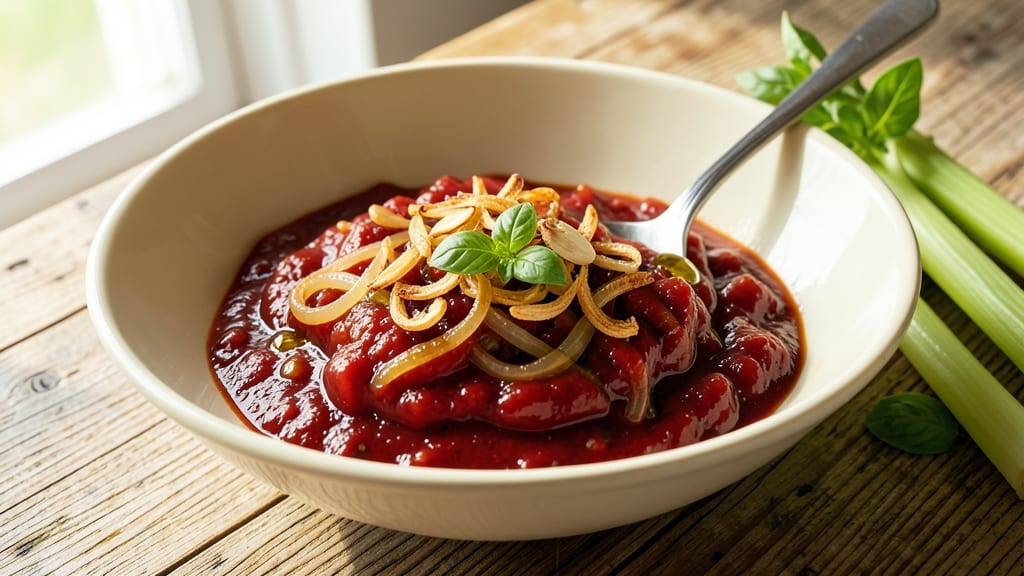
This all-natural spaghetti sauce recipe transforms simple ingredients into a deeply flavorful, restaurant-quality sauce with just 10 minutes of prep and 2 hours of slow simmering.
The secret lies in building umami through caramelized onions, garlic, and fresh herbs that infuse the sauce while it develops into a velvety, aromatic base. No processed additives here—just whole-food ingredients that create layers of complexity without any shortcuts.
The foundation starts with a sofrito—slow-cooked onions, garlic, and celery—that forms the sauce's backbone. Fresh basil, oregano, and thyme are added at the end to preserve their bright, vibrant flavors, while a splash of red wine and a bay leaf deepen the sauce's richness.
The result is a sauce that's naturally sweet, tangy, and herbaceous, with a texture that clings perfectly to every strand of pasta.
What makes this sauce truly special is its versatility—use it immediately over spaghetti or freeze it for up to 3 months, where the flavors continue to meld and intensify.
The slow simmer reduces the sauce to a concentrated, intensely flavorful consistency that elevates any Italian meal, whether it's a weeknight dinner or a weekend feast.
Perfect for meal prepping, gifting, or simply enjoying the process of creating something from scratch that tastes better than anything store-bought. Let's get started with a sauce that delivers on every promise of natural, authentic flavor.
Ingredients for all natural spaghetti sauce
Twelve whole-food ingredients craft this restaurant-quality sauce—no additives, just pure umami development.
| Ingredient | Amount | Notes |
|---|---|---|
| Yellow Onions 🧅 | 2 whole | Thinly sliced for even cooking |
| Celery Stalks 🥬 | 3 whole | Diced into small pieces |
| Garlic Cloves 🧄 | 6 cloves | Minced for aromatic depth |
| Extra-Virgin Olive Oil 🫒 | ½ cup | High-quality, fruity variety |
| Canned San Marzano Tomatoes 🍅 | 28 oz | Whole, peeled tomatoes |
| Dry Red Wine 🍷 | ½ cup | Bold Cabernet Sauvignon |
| Fresh Basil Leaves 🌿 | ½ cup | Packed, stems removed |
| Fresh Oregano Leaves 🍃 | ¼ cup | Chopped finely for intensity |
| Fresh Thyme Sprigs 🌿 | 4 whole | Leaves only, stems discarded |
| Bay Leaves 🌿 | 2 whole | Dried, for subtle earthiness |
| Sea Salt 🧂 | 1 ½ tsp | Diamond Crystal preferred |
| Ground Black Pepper 🌶️ | ½ tsp | Freshly cracked for heat |
| Granulated Sugar 🍚 | 1 tbsp | Balances acidity naturally |
The sofrito trio—yellow onions, celery, and garlic—demands quality. Whole Foods or local markets often carry the freshest produce, but even standard grocery stores work if you select firm, vibrant vegetables. San Marzano tomatoes are non-negotiable for their natural sweetness and low acidity—Trader Joe's and Whole Foods stock reliable brands. For the red wine, Cabernet Sauvignon provides the boldest flavor profile without overpowering. Fresh herbs should be bright green and fragrant—if basil smells musty, skip it. The olive oil should be extra-virgin with noticeable peppery notes—California avocado or Italian olive oils excel here. Bay leaves should be dried and whole, not crushed, to prevent bitterness.
No San Marzano tomatoes? Crushed tomatoes in a high-quality jar work in a pinch—Muir Glen or Rao's are solid choices. Substituting wine? Dry sherry or extra tomato paste mimics the acidity, though wine adds depth. Fresh herbs unavailable? Dried oregano at one-third the amount suffices, but fresh basil and thyme are irreplaceable for that bright finish. For the sofrito, charred onions and garlic (lightly torched in a dry pan) add smoky complexity. The sugar can be swapped for honey or maple syrup, though sugar dissolves more cleanly. Diamond Crystal salt measures differently than other brands—use 1.5 tsp for accurate seasoning.
This sauce peaks after 3 months frozen—flavors deepen like a fine wine. Store in glass jars for long-term keeping, leaving 1-inch headspace to prevent ice crystals. For immediate use, refrigerate in airtight containers for up to 5 days, though it's best enjoyed fresh. Portion into ice cube trays for single-serving convenience. The sauce thickens as it cools—add a splash of water if needed before reheating. Always simmer gently to preserve texture; never boil vigorously, which breaks down the tomatoes and herbs.
Why You'll Love This Recipe
- No-Chop Night Made Real: I swear by that one-pan soffritto of onions, celery, and garlic—just three ingredients to soften in olive oil while you toss a salad or set the table. The San Marzano tomatoes handle the rest, so you’re not stuck dicing or peeling when you’re already exhausted.
- Tomato Love Bomb: That first taste of sweet, juicy San Marzano with just a whisper of garlic? It’s the kind of sauce that makes you pause mid-bite, like, wait, is this really homemade? No sugar or additives—just pure, bright tomato flavor that builds as it simmers.
- Leftover Hero: This sauce actually improves the next day. I freeze half for lazy nights, and it’s still rich and balanced—no sad, watery leftovers here. Plus, it stretches over pasta, eggs, or even toast like a dream.
- Budget That Works: A single can of San Marzano tomatoes and a bag of celery lasts me weeks. Honestly, I’ve made this sauce for under $3 per batch, and it’s the kind of thing that turns grocery-store ingredients into something restaurant-worthy without breaking the bank.
Step-by-step instructions for slow-simmered all natural spaghetti sauce
Here's the method for building deep umami flavor through careful layering and patience.
Develop the Aromatic Base
Heat the 0.5 cup extra-virgin olive oil in a heavy Dutch oven over medium-low heat. Add the 2 whole yellow onions and 3 whole celery stalks, both prepped as specified, and cook for 10-12 minutes until the onions are translucent and the celery begins to soften. This slow cooking prevents burning and allows the vegetables to release their natural sweetness.
Add the 6 cloves minced garlic and cook for an additional 1 minute until fragrant but not browned. Here's the thing—garlic burns quickly, so keep your eye on the pan. If it starts to darken, remove it temporarily while you reduce the heat slightly. This aromatic base forms the flavor foundation for the entire sauce.
Deglaze and Incorporate Tomatoes
Pour in the 0.5 cup dry red wine and scrape the bottom of the pot vigorously with a wooden spoon to release all the browned bits. These caramelized particles contain concentrated flavor that will dissolve into the sauce. Let the wine simmer for 3-4 minutes until it reduces by half and the alcohol aroma dissipates.
Add the 28 oz canned San Marzano tomatoes, breaking them up with your hands as you add them. Stir in the 1.5 tsp sea salt, 0.5 tsp ground black pepper, and 1 tbsp granulated sugar. The sugar helps balance the acidity of the tomatoes while enhancing their natural sweetness. Bring the mixture to a gentle simmer and let it cook uncovered for 20 minutes to allow excess moisture to evaporate.
Add Herbs and Simmer Slowly
Add the 2 whole bay leaves, 4 whole fresh thyme sprigs (leaves only), and let the sauce simmer gently for 15 minutes. Then stir in the 0.5 cup fresh basil leaves and 0.25 cup chopped fresh oregano leaves. These herbs should be added toward the end of cooking to preserve their bright, fresh flavors rather than letting them become bitter from overcooking.
Continue simmering the sauce uncovered for an additional 30-45 minutes until it reaches your desired consistency. You're aiming for a thick, velvety texture that coats the back of a spoon. The sauce should reduce enough that it clings to spaghetti without being gluey. Taste periodically and adjust seasoning if needed—this is where you can fine-tune the balance between sweet, salty, and acidic elements.
Rest and Finish
Once the sauce reaches the perfect consistency, remove it from heat and let it rest for 10 minutes. This resting period allows the flavors to meld and the sauce to thicken slightly as it cools. Skim off any excess fat that has risen to the surface if desired, though the olive oil adds richness to the final product.
Before serving, give the sauce one final taste and adjust seasoning if necessary. The sauce should be vibrant with deep tomato flavor, subtle sweetness from the sugar, and bright herbal notes. The slow simmering process has transformed simple ingredients into a complex, umami-rich sauce that will elevate any pasta dish. Serve immediately over freshly cooked spaghetti, reserving some of the starchy pasta water to adjust the sauce consistency if needed.
Pro Tips For Making All Natural Spaghetti Sauce
- Sweat, Don’t Burn: Your onions and celery need to soften, not turn to ash. Cook them on medium-low heat with a splash of water (yes, really) covered for 8-10 minutes—this keeps them tender without browning. I learned this the hard way after charring three batches and ending up with bitter, overcooked veggies.
- Crush Those Tomatoes: Dump those San Marzano tomatoes straight from the can? Skip it. Give them a rough crush with your hands or a wooden spoon first—this breaks down the skins and releases more juice, making your sauce richer and smoother. It takes 30 seconds but makes a real difference in texture.
- Salt the Garlic: Toss your minced garlic into the oil with a pinch of salt before it hits the pan. The salt draws out moisture, preventing splattering and helping the garlic cook evenly without burning. Sounds weird, but it works—my grandmother swore by this, and I finally believed her.
- Simmer Long, Skip the Boil: Your sauce will taste flat if you rush it. After adding tomatoes, reduce heat to a bare simmer (tiny bubbles, occasional swirls) and let it cook uncovered for at least 45 minutes. This lets the flavors meld and the acidity mellow—no shortcut here, but it’s the thing that matters most for depth.
Essential equipment for perfect results
Heavy-Duty Dutch Oven
A 5-7 quart heavy Dutch oven is my non-negotiable choice for this sauce—it distributes heat evenly and prevents scorching. I use a Le Creuset Signature or All-Clad Stainless Steel because their thick bottoms maintain steady temperatures during the long simmer.
A 5-quart size works perfectly for this recipe, giving you enough room without overcrowding. The tight-fitting lid helps trap steam, which concentrates flavors faster than an open pot. 🔥
Wooden Spoon
Never use metal utensils when stirring this sauce—wooden spoons prevent scratching the pot and won't react with acidic ingredients. I prefer a long-handled one (like Oxo Good Grips) to avoid burns from the simmering liquid.
The natural wood absorbs flavors over time, adding subtle depth to future batches. Keep it handy for scraping up those delicious browned bits from the bottom of the pot.
Fine-Mesh Strainer
A fine-mesh strainer (like OXO Good Grips) becomes useful if you want ultra-smooth sauce without visible herbs or seeds. I use it to strain the finished sauce before serving, especially when making it for company.
For a more rustic texture, skip this step—those tiny seeds and herb bits add complexity. The strainer also helps if you accidentally burn any garlic or onion bits during cooking.
Kitchen Timer
This sauce requires precise timing—too little simmering leaves it watery, too much makes it bitter. A digital kitchen timer (like Kitchenaid 30-Minute) ensures you don't overcook the herbs or reduce the sauce too aggressively.
Set it for 15-minute intervals to check consistency without staring at the stove all day. Pro tip: Place it where you can see it while stirring to avoid distractions. 💡
Cheesecloth (Optional)
For an extra-smooth finish, I sometimes use cheesecloth to strain the sauce before serving. Fold a double layer over a bowl and pour the warm sauce through—it catches any remaining herb bits while letting the liquid pass through.
This step is optional but creates a silky texture perfect for special occasions. Store-bought cheesecloth works, but I've also used clean, unbleached coffee filters in a pinch.
Glass Jars for Storage
For long-term storage, glass mason jars (like Ball or Le Parfait) are ideal—they preserve flavors better than plastic and won't absorb odors. Use pint or quart sizes depending on your needs, leaving 1 inch of headspace to prevent ice crystals from breaking the jars when frozen.
Label each jar with the date and contents—this sauce tastes even better after 3 months frozen! For reheating, I transfer portions to a pot and add a splash of water to restore texture. ❄️
Nutrition facts
Frequently asked questions
Can I make this sauce without red wine?
Replace the 0.5 cup red wine with either 0.5 cup tomato paste (stirred into the tomatoes) or 0.5 cup dry sherry for similar acidity. For a non-alcoholic option, use 0.5 cup extra tomato juice—just reduce the sauce by 5 minutes longer to compensate for the extra liquid. The wine adds depth, but these substitutes work beautifully.
How do I adjust the thickness of the sauce?
If your sauce is too thin, simmer uncovered for 10-15 minutes longer to evaporate excess moisture. For a quicker fix, mix 1 tbsp cornstarch with 2 tbsp cold water, stir into the sauce, and simmer for 2 minutes until thickened. If it's too thick, thin with 1-2 tbsp pasta water or warm water while stirring. The ideal consistency coats the back of a spoon but remains silky, not gluey.
Can I use fresh tomatoes instead of canned?
Fresh tomatoes work, but you'll need 4-5 large Roma tomatoes (about 28 oz total weight) and a longer cooking time. Peel, seed, and chop them finely, then simmer for an extra 20-30 minutes to break down the texture. For best results, roast the tomatoes first: Halve them, place cut-side down on a baking sheet, and roast at 400°F for 20 minutes before adding to the sauce. This intensifies their sweetness and reduces cooking time.
Why does my sauce taste bitter?
Bitterness usually comes from overcooking the herbs (especially basil) or burning the garlic/onions. Add herbs 15 minutes before the end of cooking, and never let the sauce boil vigorously. If it's already bitter, balance it with 1 tsp sugar or a pinch of salt, or stir in 1 tbsp balsamic vinegar to mellow the flavor. For future batches, reduce heat to low-medium and skim any browned bits that form.
Can I make this sauce in a slow cooker?
Yes! Follow the same steps, but transfer everything to a 6-quart slow cooker after deglazing. Cook on LOW for 6-8 hours or HIGH for 3-4 hours, stirring occasionally. The slow cooker's gentle heat prevents burning and enhances the umami development. Add fresh herbs in the last 30 minutes of cooking to preserve their brightness. The sauce may need 10-15 minutes of stovetop reduction afterward to thicken.