
Sauces & Condiments
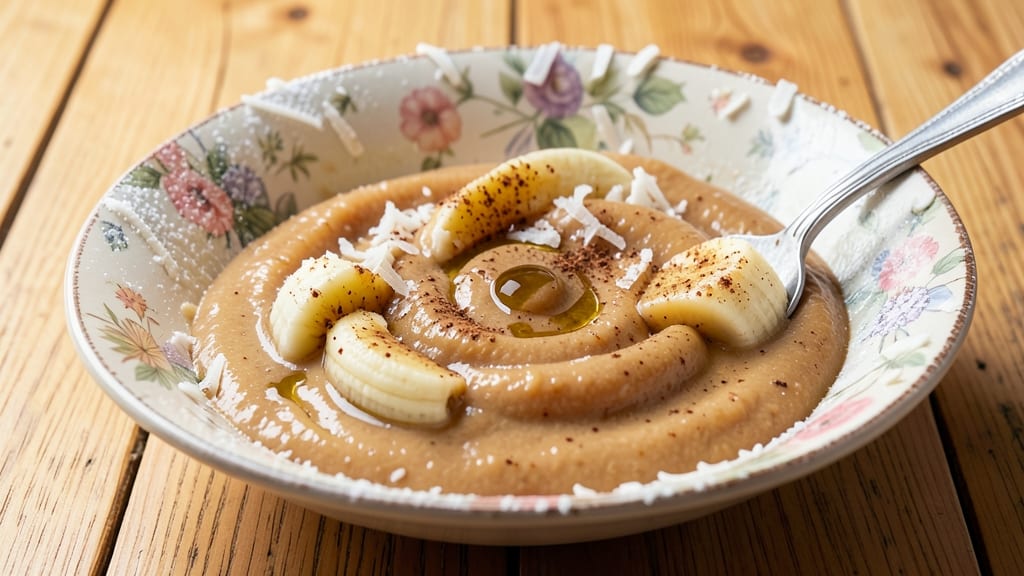
This apple banana sauce recipe transforms simple fruit into a velvety, spiced condiment that elevates everything from pancakes to yogurt. The secret lies in blending ripe bananas with tart apples, then simmering with warm spices until thick and fragrant.
I developed this sauce after craving something naturally sweet yet sophisticated—no refined sugar needed.
What makes this sauce special is its versatility—it works as a breakfast drizzle, dessert topping, or even a smoothie booster. The cinnamon and nutmeg deepen the flavor while keeping it light, and the texture becomes perfectly spreadable after simmering.
With just 5 ingredients, it’s foolproof for beginners but impressive enough for guests.
By the end, you’ll have a smooth, aromatic sauce with a balance of sweetness and spice, ready to drizzle over toast, swirl into oatmeal, or pair with vegan ice cream.
The best part? It keeps for 5 days in the fridge, making it a perfect make-ahead condiment for busy mornings.
For extra richness, stir in a spoon of nut butter before blending, or add a pinch of cardamom for a Middle Eastern twist. Let’s make this sauce!
Ingredients for apple banana sauce
Five simple ingredients transform into a velvety, aromatic sauce perfect for breakfast or dessert.
| Ingredient | Amount | Notes |
|---|---|---|
| Ripe Bananas 🍌 | 2 large | Peeled, slightly overripe preferred |
| Tart Apples 🍎 | 2 medium | Peeled, cored, grated or finely chopped |
| Ground Cinnamon 🌿 | 1 ½ tsp | Freshly ground for optimal aroma |
| Ground Nutmeg 🌿 | ½ tsp | Freshly grated preferred |
| Extra-Virgin Olive Oil 🫒 | 1 tbsp | For richness and smooth texture |
| Vanilla Extract 🍯 | ½ tsp | Pure vanilla for authentic flavor |
| Pure Maple Syrup 🍁 | 1 tbsp | Optional for added sweetness |
| Water 💧 | ¼ cup | For blending consistency |
The bananas and apples form the sauce's base, so choose ripe bananas with brown spots for natural sweetness and creaminess. Granny Smith apples work best for tartness, but any crisp variety will do. I always grab organic when possible, but conventional is fine if you peel and rinse thoroughly. For convenience, Trader Joe's pre-peeled apples save time, though fresh grating yields better texture. The cinnamon and nutmeg should be freshly ground—pre-ground spices lose potency quickly, especially nutmeg, which can turn bitter over time. Penzeys bulk section is ideal for sourcing whole spices you can grind yourself.
No vanilla extract? Vanilla bean paste or even a scraped vanilla bean work beautifully. Short on maple syrup? Date syrup or agave nectar at the same amount keeps it vegan. The olive oil is non-negotiable for that velvety finish—extra-virgin adds subtle fruity notes. For a smoother sauce, blend the grated apples first, then add bananas. The water helps with blending consistency, but if you prefer a thicker sauce, reduce it to 2 tablespoons. If using pre-grated apples from a bag, drain excess moisture first to avoid a watery sauce.
This sauce thickens as it cools, so plan to reheat gently if serving warm. Store in an airtight container in the fridge for up to 5 days. For longer storage, freeze in ice cube trays—perfect for single servings. Reheat in the microwave for 20 seconds with a splash of water to restore smoothness. The sauce pairs exceptionally well with vegan yogurt or oatmeal, and its natural sweetness makes it a great ice cream topping. If the sauce separates slightly upon reheating, simply stir vigorously to re-emulsify.
Why You'll Love This Recipe
- No-Burn Risk: I swear by this sauce because it’s one of those rare recipes where you can’t mess it up. Simmering bananas and apples in olive oil until they break down? It’s foolproof—no peeling, no dicing, just a quick chop and stir. (Yes, even on a Tuesday night when I’m too tired to think.)
- Spice Magic: That first spoonful of warm, caramelized apples and bananas with cinnamon and nutmeg? It’s like autumn in your mouth. The tart apples cut through the sweetness while the spices add depth—honestly, it’s the kind of flavor that makes you pause mid-bite.
- Breakfast to Dessert: This sauce is my secret weapon for toast, pancakes, yogurt, or even drizzled over vanilla ice cream. I keep a jar in the fridge because it’s the one thing that turns a boring morning into something special—or saves dessert when I’m craving something sweet but don’t want to bake.
- Zero-Waste Winner: Ripe bananas and slightly soft apples? Perfect. No more tossing them—they get transformed into something delicious instead. Plus, the sauce keeps for days, so I make a big batch and use it all week. Budget-friendly, practical, and guilt-free.
Step-by-step instructions for apple banana sauce
Here's how to transform simple fruit into a velvety, fragrant sauce perfect for breakfast or dessert.
Prepare the Fruit Base
Start by peeling the 2 large ripe bananas and 2 medium tart apples. I prefer slightly overripe bananas—this ensures natural sweetness and a smoother texture. Cut the bananas into ½-inch chunks and grate the apples using a box grater or food processor. The finer you grate, the smoother your sauce will become. Place both in a medium saucepan over medium heat—no need for oil yet.
Let the mixture cook undisturbed for 5-7 minutes, stirring occasionally. You'll notice the bananas begin to break down and the apples release their juice. This is when the natural pectin starts to activate, which will later help thicken the sauce. The moment the mixture smells sweetly fruity and begins to bubble gently, it's ready for the next step.
Add Spices and Liquid
Reduce the heat to low and stir in the 1.5 teaspoons ground cinnamon and 0.5 teaspoon ground nutmeg. These spices will infuse warmth and depth—don't skip freshly ground spices if possible. Add the 1 tablespoon extra-virgin olive oil and 0.25 cup water, then bring the mixture to a gentle simmer. The olive oil adds richness while the water helps emulsify the sauce for a silky texture.
Let it cook for another 5 minutes, stirring frequently. You're looking for a smooth, thick consistency where the fruit has completely broken down. If it's too thick, add 1 tablespoon water at a time until it reaches a pourable yet spoonable texture. The sauce should coat the back of a spoon without being gluey.
Finish with Sweetness and Flavor
Remove the saucepan from heat and stir in the 0.5 teaspoon vanilla extract and 1 tablespoon pure maple syrup. The vanilla enhances the fruit's natural sweetness, while the maple syrup adds a subtle caramel note. Let the mixture sit for 2 minutes to allow the flavors to meld completely. Taste and adjust sweetness—if needed, add more maple syrup, but the ripe bananas and tart apples should balance perfectly.
For a smoother finish, transfer the sauce to a blender or food processor and pulse until completely smooth. If you prefer a rustic texture, skip blending. The sauce will thicken as it cools, so don't worry if it looks slightly runny while warm. Store in an airtight container in the refrigerator for up to 5 days, or freeze for 3 months—it reheats beautifully with a splash of water.
Pro Tips For Making Apple Banana Sauce
- CHOP APPLES SMALL: I learned this the hard way—big chunks of apple turn mushy and clingy while cooking. Dice them into ¼-inch pieces so they soften evenly and blend into a smooth, velvety sauce instead of a chunky mash.
- STIR CONSTANTLY LOW: This sauce burns faster than you’d think. Keep the heat at medium-low and stir every 30 seconds once the apples release their juice—your future self will thank you for avoiding a charred disaster.
- USE BROWNED BUTTER: Skip the olive oil if you want depth. Melt 1 tablespoon of butter first, let it brown slightly, then add the apples and bananas—it adds a nutty richness that cuts through the sweetness.
- PEEL BANanas FIRST: Ripe bananas bruise easily under heat. Peel them before cooking so they break down smoothly into the sauce, rather than releasing bitter starch from their skins and making the texture grainy.
Essential equipment for this dish
Blender Essentials
Your best friend for this sauce is a high-speed blender—I swear by my Ninja BN601 for its powerful motor that handles fruit fibers effortlessly.
If you're blending the grated apples and bananas separately, a standard kitchen blender (like Hamilton Beach) works fine, but avoid those with weak motors—they struggle with thicker fruit purees. For a smoother finish, pulse in 1-second bursts rather than continuous blending to prevent overheating. 💫
Saucepan Must-Haves
A medium-sized stainless steel saucepan (like All-Clad Stainless) is ideal for simmering—it distributes heat evenly and prevents scorching. Avoid nonstick pans for this recipe; they can't handle the gentle simmering required for proper texture development.
I like to use a 2-quart pan for this recipe, which gives enough room for stirring without overflow. For extra flavor infusion, I sometimes use a copper-bottomed pan—the copper conducts heat beautifully and adds subtle depth to the spices.
Grating Tools
For the apples, a box grater with medium holes (like OXO Good Grips) is a game-changer—it creates fine, even shreds that blend seamlessly. If you prefer speed, a food processor (like Cuisinart DLC-7) with a grating attachment works wonders, but hand-grating gives you more control over texture.
For bananas, I simply chop them into chunks with a sharp chef's knife—no fancy tools needed here. Pro tip: If using pre-shredded apples from a bag, drain excess moisture first to avoid a watery sauce.
Measuring Precisely
Accurate measurements are key for this sauce's balance. A stainless steel measuring spoon set (like OXO Good Grips) ensures precise spice amounts, while a liquid measuring cup (like Pyrex) helps with the water.
For the olive oil, I recommend using a small squeeze bottle to measure the 1 tablespoon—it's less messy than a spoon.
A digital kitchen scale (like Escali Primo) comes in handy if you prefer weighing your bananas and apples for consistency, especially if you're scaling the recipe up or down.
Storage Containers
For fridge storage, I use glass Pyrex containers with airtight lids—they keep the sauce fresh for up to 5 days and allow me to see the vibrant color. For freezing, silicone ice cube trays are perfect for portion control—just pop out a cube whenever you need a single serving.
If you prefer jars, Kenton mason jars with snap-on lids work well, but leave ½-inch headspace to prevent expansion cracks when frozen. Always label containers with the date to track freshness.
Nutrition facts
Frequently asked questions
Can I make this sauce without a blender?
If you don't have a blender, simply mash the cooked fruit with a fork until smooth. For a more rustic texture, leave it slightly chunky. The sauce will still be delicious—just stir in the spices and olive oil as directed. A potato masher works well too for a middle-ground texture between smooth and chunky.
How do I adjust the sweetness if my bananas aren't ripe?
Use 1 extra tablespoon of maple syrup and add ½ teaspoon of lemon juice to balance the tartness. Ripe bananas are key for natural sweetness, but this combo works well. For extra richness, stir in 1 teaspoon of almond butter after blending—it adds creaminess and depth without overpowering the fruit flavors.
What are the best ways to use this sauce beyond breakfast?
Try it as a glaze for roasted chicken, a topping for vegan pancakes, or a swirl in chia pudding. It also pairs beautifully with toasted coconut flakes for a tropical dessert, or drizzled over warm spiced oatmeal. For savory applications, reduce the sweetness by half and use it as a marinade for tofu or tempeh.
Why did my sauce turn out too thin?
This usually happens if you added too much water or didn't simmer long enough. For a quick fix, transfer to a saucepan and simmer uncovered for 3-5 minutes—the moisture will evaporate. If it's still too thin, stir in 1 teaspoon of cornstarch mixed with 1 tablespoon water and cook until thickened. Always taste as you go!
Can I substitute other fruits?
Yes! Try pear or mango for a tropical twist, or peach for a summery flavor. For a spicier sauce, add ½ teaspoon of ginger—**it complements the cinnamon beautifully. Just adjust sweetness to taste, as different fruits have varying natural sugar levels. The key is balancing tartness with sweetness for that perfect harmony.