
Sauces & Condiments
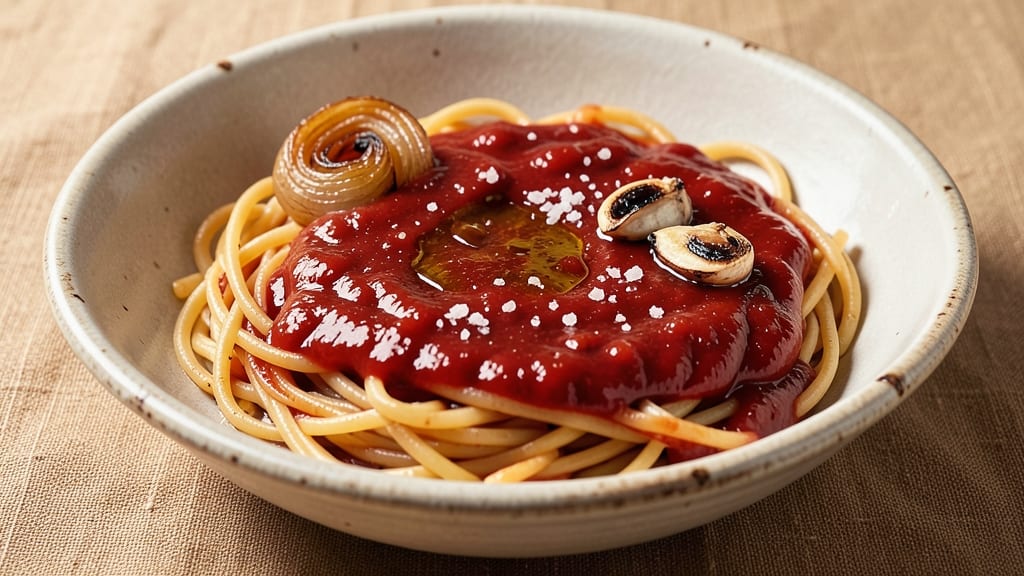
Anthony’s spaghetti sauce delivers that deep, slow-simmered umami you crave—richer with every bite and even better the next day. 💛 The secret lies in caramelizing garlic and onions until golden, then letting a blend of crushed tomatoes, herbs, and spices meld into a velvety, flavor-packed sauce.
This isn’t your basic jarred sauce; it’s a restaurant-quality foundation built on patience and simple ingredients.
What sets this sauce apart is the two-stage cooking process: first, a deep, aromatic base developed over 30 minutes on the stove, then a final simmer that intensifies flavors while keeping the texture smooth.
No blender required—just a wooden spoon and time. The result? A sauce so complex and balanced it feels like a hug in every forkful, with just the right mix of sweetness, acidity, and savory depth.
Perfect for batch cooking, freezing, or serving immediately, this sauce transforms simple pasta into a weeknight masterpiece. Whether you’re feeding a crowd or meal prepping for the week, the flavors only get better with time. The key is letting it work its magic—no shortcuts, just unmatched satisfaction.
Ready to elevate your spaghetti nights? This sauce is your new go-to, and once you try it, you’ll never go back to store-bought. Let’s get started—your taste buds will thank you.
Ingredients for anthony's spaghetti sauce
Twelve ingredients transform into restaurant-quality sauce—deep, complex, and better tomorrow.
| Ingredient | Amount | Notes |
|---|---|---|
| Extra-Virgin Olive Oil 🫒 | ½ cup | High-quality, fruity variety |
| Yellow Onion 🧅 | 2 whole | Thinly sliced, caramelized slow |
| Garlic Cloves 🧄 | 6 cloves | Minced, toasted until golden |
| Crushed Tomatoes 🍅 | 28 oz | San Marzano preferred, no sugar added |
| Tomato Paste 🍅 | 2 tbsp | Smooth, no additives |
| Dry Red Wine 🍷 | ½ cup | Bold, like Chianti or Merlot |
| Fresh Basil Leaves 🌿 | ½ cup | Packed, stems removed |
| Fresh Oregano Leaves 🍃 | ¼ cup | Or 1 tbsp dried oregano |
| Bay Leaves 🌿 | 2 whole | Fresh preferred, remove before serving |
| Ground Black Pepper 🌶️ | 1 tsp | Freshly cracked |
| Kosher Salt 🧂 | 1 ½ tsp | Diamond Crystal preferred |
| Sugar 🍬 | 1 tsp | Balances acidity |
| Balsamic Vinegar 🍶 | 1 tbsp | Aged 12+ months |
The tomatoes make or break this sauce. San Marzano is non-negotiable—they’re sweeter, meatier, and less acidic than standard crushed tomatoes. Whole Foods or Trader Joe’s carry them year-round, or order online if your local store doesn’t stock them. The olive oil should be extra-virgin—cheap oil will make the sauce taste flat. For the garlic, toast it until golden before adding to the onions; that’s where the deep umami starts. I always grab a whole head of garlic and peel it myself—pre-minced garlic lacks the same depth.
No red wine? Substitute with extra tomato paste plus a splash of balsamic—it’ll still develop that same rich, caramelized flavor. Fresh herbs are ideal, but dried oregano at one-third the amount works in a pinch. The bay leaves add subtle earthiness, but remove them before serving—they’re not meant to be eaten. For a smokier profile, add ½ tsp smoked paprika with the spices. The sugar isn’t for sweetness—it’s to balance the acidity of the tomatoes and wine, letting the umami shine through. If your tomatoes are particularly tart, bump it to 1.5 tsp.
This sauce tastes even better the next day—plan ahead. Store in airtight glass jars in the fridge for up to 5 days or freeze for 6 months. I double the batch and freeze half; it’s perfect for lazy weeknights. For serving, reheat gently on the stove with a splash of water or pasta water—never boil, or it’ll break. The sauce thickens as it cools, so thin with water or broth if needed. Leftovers? Toss with pasta and a sprinkle of fresh basil—instant restaurant-quality meal.
Why You'll Love This Recipe
- One-Pot Magic: I swear by this sauce because it’s all in one pot—no extra bowls, no messy cleanup. Just chop the onion and garlic, let them caramelize in the olive oil, then toss in the tomatoes and paste. Twenty minutes later, you’re done. (Yes, even on a Tuesday night.)
- Deep Umami Bomb: That tomato paste? It’s the secret weapon. When you cook it down with the onions, it builds this rich, savory base that makes the sauce taste like it simmered all day. The crushed tomatoes add brightness, but the paste? Pure flavor gold.
- Freezer-Friendly Hero: Make a double batch—this sauce actually tastes better the next day. I freeze half for lazy nights when I don’t feel like cooking. Thaw it in the fridge, reheat, and boom: instant dinner. My go-to for when I’m too tired to think.
- Budget Meal Stretch: Olive oil, onions, garlic, and canned tomatoes? This is the kind of recipe that won’t break the bank. A single jar of paste and a can of tomatoes stretch into multiple meals, and you’ll still feel like you’re eating restaurant-quality. No guilt, just flavor.
Step-by-step instructions for anthony's slow-simmered spaghetti sauce
Here's how to build rich, layered flavor that only gets better with time.
🍳 Step 1: Sauté Onions Until Deeply Caramelized
Heat the 0.5 cup extra-virgin olive oil in a heavy-bottomed saucepan over medium-low heat. Add the 2 whole yellow onions sliced into thin half-moons. Cook them undisturbed for 15 minutes, stirring occasionally, until they transform from pale to deep amber with crisp edges.
This slow caramelization develops complex sweetness that forms the sauce's foundation. If the onions brown too quickly, reduce heat to medium-low—patience here prevents bitterness. You'll know they're ready when they smell irresistibly sweet and the edges curl slightly at the edges.
🍳 Step 2: Toast Garlic and Build the Base
Push the onions to one side of the pan and add the 6 cloves minced garlic to the empty space. Cook for 1-2 minutes until fragrant and just beginning to turn golden—don't let it burn. Stir to combine with the onions, then add the 2 tbsp tomato paste and cook for another 2 minutes until it darkens slightly.
This step creates the sauce's umami backbone. The tomato paste deepens the flavor while preventing the sauce from separating later. Here's the thing—if you smell garlic burning, immediately remove the pan from heat and let it cool for 30 seconds before continuing.
🍳 Step 3: Deglaze with Wine and Tomatoes
Pour in the 0.5 cup dry red wine and scrape up all the browned bits from the bottom of the pan. Let it simmer for 3-4 minutes until reduced by half. Add the 28 oz crushed tomatoes, 1.5 tsp kosher salt, 1 tsp sugar, and 1 tsp ground black pepper. Stir well to combine.
The wine's acidity brightens the tomatoes while the sugar balances their natural tartness. Add the 2 whole bay leaves now—they'll infuse subtle earthy notes as the sauce simmers. This is where the magic starts happening, but don't rush it. Let the tomatoes break down naturally over time.
⏰ Step 4: Simmer Low and Slow for Deep Flavor
Bring the sauce to a gentle simmer over low heat. Partially cover the pan and let it cook for 1.5 to 2 hours, stirring occasionally. The sauce should reduce by about one-third, becoming thicker and more concentrated with each passing minute.
This long simmer develops the sauce's signature depth. I check it every 20 minutes, stirring gently to prevent skin formation. If it gets too thick, add 1-2 tablespoons of water to maintain proper consistency. The sauce should coat the back of a spoon smoothly by the end.
🥘 Step 5: Finish with Herbs and Balsamic
Remove the 2 bay leaves and stir in the 0.5 cup fresh basil leaves and 0.25 cup fresh oregano leaves. Add the 1 tbsp aged balsamic vinegar and simmer uncovered for 5-7 minutes until the herbs are wilted and the sauce has thickened slightly.
The balsamic adds a sophisticated tang that cuts through the richness. Here's where it gets fun—taste and adjust seasoning. You might need a pinch more salt or a splash of water to reach your ideal consistency. Serve immediately over al dente spaghetti with extra fresh basil sprinkled on top.
Pro Tips For Making Anthony'S Spaghetti Sauce
- Sweat the Onion Slow: I learned this the hard way—when you rush the onion, it burns before the garlic even gets a chance to sing. Instead of chopping it small (which releases too much water), cut it into ¼-inch slices and cook them on medium-low heat until they’re translucent but not browned. That’s when you know the garlic’s about to hit its stride.
- Bloom the Garlic Right: After burning three batches of garlic in olive oil, I finally figured out the rhythm: add the minced cloves to the pot after the onions are fully translucent, then turn the heat down to the lowest setting you can tolerate. Let them sizzle gently for 30 seconds—just until they’re fragrant, not golden. No need to rush; this is where the flavor builds.
- Stir the Tomato Paste: This isn’t the prettiest method, but it’s the tastiest: once you add the tomato paste, immediately stir it into the oil with a wooden spoon, breaking up every clump. If you let it sit, it’ll burn before the crushed tomatoes even go in. A few seconds of extra effort here means no bitter aftertaste later.
- Simmer, Don’t Boil: Sounds weird, but it works: once the crushed tomatoes and paste are combined, lower the heat to a bare simmer—just enough to keep tiny bubbles breaking the surface. I know, I know, you’re impatient like me, but boiling turns the sauce watery and dull. Let it bubble gently for at least 20 minutes, and you’ll end up with a sauce that coats the back of a spoon.
Regional styles of this recipe
Italian-American Classic
This sauce is the heart of Italian-American comfort food, born from the traditions of New York's Little Italy. The key difference from classic Italian ragù is the sweetness from caramelized onions and a touch of sugar, balancing the acidity of crushed tomatoes.
I grew up with this version—my nonna always said the secret was "slow love," meaning patience in cooking. The wine adds depth that separates it from simpler marinara styles. 🍝
Southern Italian Twist
For a more authentic Southern Italian approach, swap the red wine for ½ cup dry white wine or tomato paste with 1 tbsp lemon juice. Add 1 tsp fennel seeds toasted in the olive oil with the onions—they add an anise-like warmth.
This version leans more toward Neapolitan-style sauces, where herbs like basil take center stage. The sauce will have a brighter acidity that pairs beautifully with orecchiette pasta or bucatini.
New England Clam Sauce Fusion
This regional mashup is perfect for coastal areas like Boston or Maine. After simmering the base, stir in 1 cup chopped fresh clams (or ½ cup canned chopped clams with juice) and 1 tbsp minced shallot.
Add ½ tsp red pepper flakes and simmer for 10 minutes until the clams open. Finish with 1 tbsp chopped parsley instead of basil. The briny clams add an unexpected depth that works beautifully with linguine or rigatoni.
Texas BBQ-Inspired Version
For a bold twist, add 1 tbsp smoked paprika with the tomato paste and ½ cup beef broth instead of wine. After the initial simmer, stir in ½ cup cooked ground beef (or Italian sausage) and 1 tbsp brown sugar.
This creates a meatier, slightly sweet sauce that pairs perfectly with spaghetti and meatballs or as a marinara for grilled chicken. The smoky notes bridge Italian and Tex-Mex flavors beautifully. 🔥
Vegetarian Adaptation
For a meat-free version, replace the wine with ½ cup vegetable broth and add 1 cup diced mushrooms with the onions. Stir in ½ cup cooked lentils after the initial simmer for protein. The mushrooms add an earthy depth that mimics meaty textures.
This works perfectly with whole wheat spaghetti or gluten-free pasta. Don’t skip the umami boost—add 1 tsp soy sauce or ½ tsp miso paste with the herbs for that savory punch.
Freezer-Friendly Regional Tips
Each regional style freezes differently. The Italian-American version keeps best for 6 months in airtight containers. The clam sauce should be frozen in single-serving portions—thaw overnight in the fridge to preserve texture. For the Texas version, add 1 extra tbsp tomato paste before freezing to prevent separation.
Always leave 1 inch headspace in containers. When reheating, add 1-2 tbsp water** per serving to restore proper consistency. 💫
Nutrition facts
Frequently asked questions
Can I make this sauce without red wine?
Swap the 0.5 cup dry red wine for ½ cup beef or vegetable broth plus 1 extra tbsp tomato paste to maintain depth. The sauce will still develop rich flavors—just add 1 extra pinch of salt since broth is saltier than wine. For extra umami, stir in 1 tsp soy sauce with the herbs.
Why does the recipe call for such a long simmer time?
The 1.5-2 hour simmer is key to building complex flavors through the Maillard reaction. This slow cook transforms simple ingredients into a sauce with deep caramelized notes and concentrated umami. Skipping this step results in a flat, one-dimensional flavor—think of it as the difference between instant coffee and a rich espresso.
What's the best way to store leftovers?
Let the sauce cool completely, then transfer to airtight glass jars. It keeps in the fridge for 5 days and freezes beautifully for 6 months. For reheating, warm gently on low heat with a splash of water or pasta water—never boil, or it'll break. The sauce actually improves overnight as flavors meld further.
Can I make this sauce in a slow cooker?
Yes! Follow the same steps up to the tomato addition, then transfer everything to a 3-4 quart slow cooker. Cook on low for 6-8 hours or high for 3-4 hours. The texture will be slightly thicker—thin with water or broth as needed. The slow cooker enhances the caramelization naturally, creating even deeper flavors.
What if my sauce tastes too acidic?
Add ½ tsp sugar or 1 tsp balsamic vinegar to balance the acidity. If it's still too sharp, stir in 1 tbsp tomato paste and simmer for 5 minutes to mellow the flavors. For future batches, reduce the tomatoes to 24 oz or add 1 extra pinch of salt to help round out the taste.