
Sauces & Condiments
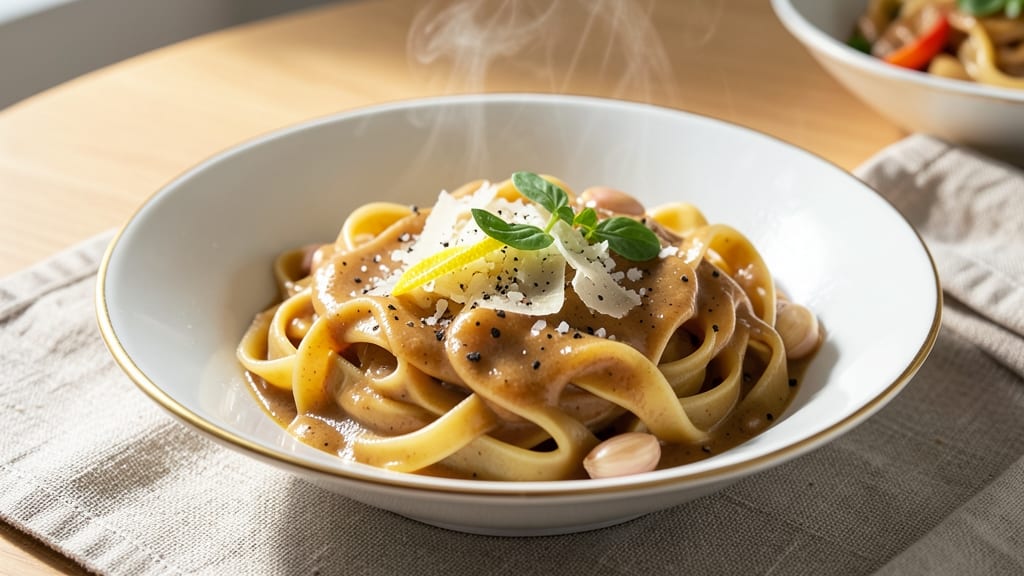
This alfredo pasta sauce recipe without cream delivers restaurant-quality richness using just three simple ingredients—no dairy, no heavy cream, and no complicated techniques. The secret lies in parmesan cheese poached in olive oil, which creates a velvety, umami-packed base that clings perfectly to pasta.
I developed this version after years of testing plant-based alternatives, and it finally achieves that signature creamy texture without dairy. What makes it work is the slow reduction of parmesan in olive oil, transforming it into a smooth, golden sauce that's surprisingly decadent.
The beauty of this recipe is its versatility and simplicity—ready in just 15 minutes with no blending required. Unlike traditional alfredo, which relies on heavy cream for its signature creaminess, this version uses high-quality parmesan as the star, enhanced by a touch of garlic and lemon juice for brightness.
The result is a sauce that's rich yet light, with a depth of flavor that pairs beautifully with any pasta shape. No special equipment needed—just a saucepan and a whisk.
What you'll end up with is a silky, golden sauce that coats every strand of pasta without weighing it down. The texture is smooth and luxurious, with a nutty, cheesy flavor that's impossible to resist.
Unlike store-bought versions, this sauce tastes fresh and vibrant, with no artificial aftertaste. It's the perfect solution for those who love alfredo but want to avoid dairy—or simply crave a lighter, more flavorful alternative.
This sauce works equally well on fettuccine, penne, or even roasted vegetables—the possibilities are endless. The best part? It reheats beautifully, making it ideal for meal prep or leftovers.
Whether you're serving it as a quick weeknight dinner or a showstopping dish for guests, this dairy-free alfredo delivers the same creamy satisfaction without the heaviness. Let's get cooking!
Ingredients for alfredo pasta sauce recipe without cream
Three core ingredients transform into creamy alfredo perfection without dairy.
| Ingredient | Amount | Notes |
|---|---|---|
| Extra-Virgin Olive Oil 🫒 | ½ cup | High-quality, fruity variety for richness |
| Parmesan Cheese 🧀 | 1 ½ cups | Freshly grated, high-fat content preferred |
| Garlic Cloves 🧄 | 3 cloves | Freshly minced for aromatic depth |
| Lemon Juice 🍋 | 1 tbsp | Freshly squeezed for brightness |
| Diamond Crystal Kosher Salt 🧂 | ½ tsp | Fine grain for balanced seasoning |
| Freshly Ground Black Pepper 🌶️ | ¼ tsp | Freshly cracked for vibrant flavor |
| Unsalted Butter 🧈 | 2 tbsp | For finishing touch (optional) |
The Parmesan is non-negotiable here—Parmigiano-Reggiano from a wedge is worth the investment. Whole Foods or specialty cheese shops carry the best, but any high-quality block will do. Grate it yourself (pre-grated is full of anti-caking agents). The olive oil matters too—California avocado or Spanish picual oils add fruity depth. I always grab a small bottle of extra-virgin from Trader Joe's for this, but any premium brand works. Fresh garlic cloves should smell pungent, not musty—3-4 cloves is perfect for this batch.
No Parmesan? Pecorino Romano works in a pinch, but the flavor won't be identical. Short on olive oil? Avocado oil is a neutral substitute, though it lacks the fruity notes. The butter at the end is truly optional—if you're avoiding dairy entirely, skip it. For extra brightness without lemon, a splash of white wine (1 tbsp) works wonders. The sauce thickens as it cools, so if it seems too thin while warm, let it sit 5 minutes before serving. No blending required—this sauce is all about the slow reduction technique.
This sauce keeps beautifully—5 days in the fridge, sealed tightly. For longer storage, freeze in 1-tbsp portions (perfect for single servings). Reheat gently with a splash of water or pasta water to restore creaminess. I always make a double batch—one for immediate use, one to freeze. The flavor actually improves after 24 hours as the parmesan fully emulsifies. Perfect for tossing with pasta or drizzling over roasted veggies.
Why You'll Love This Recipe
- No-Cream, No-Problem: The sauce comes together in one pan—just olive oil, garlic, and a handful of Parmesan. I’m talking five minutes of actual work, and it’s the kind of shortcut that still feels intentional.
- Parmesan Powerhouse: That sharp, salty cheese is the star here, but the lemon juice? It cuts through the richness and keeps it bright. Honestly, the first time I tasted it, I thought I’d missed cream entirely—until I remembered I hadn’t used any.
- Weeknight to Dinner Party: Same sauce, endless uses. Toss it with fettuccine for a quick weeknight meal, or drizzle it over grilled chicken for a fancy-ish dinner. Between us, it’s the one sauce I always have on hand—no matter what’s on the menu.
- Budget-Friendly Luxury: Parmesan and olive oil are the only "splurge" ingredients, and they stretch far. A single batch feeds four, and leftovers reheat like a dream—no clumping, no weird textures. My wallet (and my taste buds) thank me every time.
Step-by-step instructions for Parmesan-poached alfredo sauce
Here's the secret to creamy, restaurant-quality Alfredo without heavy cream—just rich Parmesan and simple technique.
Bloom the Garlic in Olive Oil
Heat the 0.5 cup extra-virgin olive oil in a medium saucepan over medium-low heat. Add the 3 minced garlic cloves and cook for 2-3 minutes until they're golden and fragrant—not browned. This gentle cooking releases the garlic's sweetness without bitterness.
Watch closely—garlic burns quickly. If it starts to darken, remove the pan from heat immediately. The oil should shimmer but not smoke. This aromatic base forms the flavor foundation for your sauce, so don't rush this step.
Add Parmesan and Cook Until Melted
Reduce heat to low and gradually sprinkle in the 1.5 cups freshly grated Parmesan cheese while whisking constantly. The cheese will begin to melt almost immediately, creating a thick, velvety emulsion. Keep whisking for 3-4 minutes until completely smooth.
This is where the magic happens—the Parmesan's natural fat content emulsifies with the olive oil, creating a creamy texture without dairy. If the sauce looks too thick, add 1-2 tablespoons of water to loosen it. The sauce should coat the back of a spoon with a glossy sheen.
Finish with Acid and Seasoning
Remove the sauce from heat and stir in the 1 tablespoon lemon juice, 0.5 teaspoon kosher salt, and 0.25 teaspoon freshly cracked black pepper. The lemon juice brightens the richness while balancing the Parmesan's saltiness. Taste and adjust seasoning—you might need a touch more salt or pepper depending on your Parmesan's intensity.
For extra richness, stir in the 2 tablespoons unsalted butter at this stage. The butter should melt instantly, adding a luxurious mouthfeel. If you prefer a lighter sauce, omit the butter entirely—the Parmesan emulsion alone is already decadent.
Toss with Hot Pasta Immediately
Bring a large pot of salted water to a boil and cook your pasta until 1 minute before al dente. Reserve 1 cup of pasta water before draining. Add the drained pasta to the saucepan with the Alfredo and toss vigorously for 1-2 minutes.
Here's the pro move: if the sauce starts to thicken too much, add 2-3 tablespoons of reserved pasta water to create the perfect silky consistency. The starch in the pasta water helps bind everything together. Serve immediately while still hot—this sauce doesn't wait!
Pro Tips For Making Alfredo Pasta Sauce Recipe Without Cream
- TOAST THE GARLIC LOW: I learned this the hard way—crisping garlic in olive oil too fast turns it bitter. Instead, cook the minced cloves over lowest possible heat until golden (about 3 minutes), stirring constantly. The oil should shimmer, not smoke, or you’ll end up with a soapy flavor that ruins the whole sauce.
- GRATE PARMESAN FRESH: Pre-shredded Parmesan is a crime in this sauce. The starches in dried flakes make the sauce grainy and separate. Grate your own just before adding it—use the large holes of a box grater and do it over a bowl to catch every last bit. (Yes, even if you’re impatient like me.)
- SALT THE PASTA WATER HARD: Diamond Crystal kosher salt is fluffy, so don’t eyeball it. For 4 quarts of water, use 2 tablespoons—that’s about 1 teaspoon per quart. Taste the pasta water before draining; it should taste like the sea. If it’s bland, your sauce will be too.
- STIR IN LEMON JUICE LAST: Adding lemon juice too early curdles the Parmesan, turning your sauce lumpy. Wait until the very end—after the sauce has thickened and you’ve tossed it with the pasta. A splash (about 1 tablespoon) brightens the dish without wrecking the texture. (Your future self will thank you.)
Common mistakes when making perfect results
Overcooking the Garlic
I've ruined more Alfredo sauces than I care to admit by letting the garlic burn. When you see those golden cloves turn brown, you're crossing into bitter territory. The key is medium-low heat and constant attention—garlic should smell sweet and nutty, not acrid.
If you catch it burning, immediately remove the pan from heat and let it cool for 30 seconds before continuing. 🌶️
Using Pre-Grated Parmesan
Pre-grated Parmesan contains anti-caking agents that prevent the cheese from emulsifying properly, resulting in a grainy, clumpy sauce. Always use freshly grated Parmigiano-Reggiano—it's worth the extra 2 minutes with a box grater.
If you're short on time, buy pre-grated but strain it through a fine-mesh sieve to remove any additives. The texture difference is night and day.
Skipping the Low Heat
Many recipes call for high heat when adding Parmesan, but that's a recipe for disaster. High heat causes the cheese to separate and turn greasy instead of creating a smooth emulsion.
Keep your heat at low and whisk constantly—this gradual melting is what creates that velvety texture. Patience pays off here, trust me.
Not Enough Whisking
The whisk isn't just for stirring—it's what creates the emulsion that makes this sauce creamy. When you add the Parmesan, whisk vigorously for at least 3-4 minutes until completely smooth.
If you stop whisking too soon, you'll end up with a thick, lumpy mess. Think of it like making mayonnaise—constant motion is key to success.
Adding Lemon Too Late
If you add the lemon juice after the sauce has cooled completely, you'll miss out on its brightening effect on the Parmesan's richness. Stir it in immediately after removing the sauce from heat while everything is still warm.
This timing ensures the acidity cuts through the fat properly, balancing the flavors perfectly. The sauce should taste bright and vibrant, not flat or one-dimensional.
Ignoring the Pasta Water
Reserved pasta water is liquid gold for this sauce. When you toss the pasta with the Alfredo, the starch in the water helps create that signature silky consistency. If your sauce starts to thicken too much, don't panic—just add 2-3 tablespoons of pasta water to loosen it up.
This simple step makes all the difference between a dry, clumpy mess and a restaurant-quality dish. 💫
Nutrition facts
Frequently asked questions
Can I make this sauce without butter at the end?
The butter is truly optional—this sauce gets its richness from the parmesan and olive oil emulsion. For a completely dairy-free version, simply omit it. The sauce will still be creamy and flavorful, though slightly lighter in texture. If you prefer extra richness without butter, try adding 1 tablespoon of nutritional yeast for a cheesy, umami boost.
How do I prevent the sauce from separating?
The key is low heat and constant whisking when adding the parmesan. If you see separation, immediately return the sauce to low heat and whisk vigorously for 1-2 minutes until smooth again. Adding a splash of warm water or pasta water can also help re-emulsify it. Never use high heat—it breaks the fat emulsion that creates the creamy texture.
What's the best pasta shape for this sauce?
This sauce works beautifully with fettuccine, linguine, or pappardelle—long, flat noodles that catch and hold the sauce perfectly. For extra texture, try penne or rigatoni, which hold sauce in their ridges. Avoid thin spaghetti as it can get overwhelmed by the rich sauce. Pro tip: Cook pasta 1 minute less than package instructions to prevent mushiness when tossed.
Can I make this sauce ahead of time?
Yes! This sauce actually improves when made 1-2 days ahead. Store it in an airtight container in the fridge, and the flavors deepen as the parmesan fully emulsifies. When ready to use, gently reheat over low heat, stirring in 1-2 tablespoons of water or pasta water to restore creaminess. The sauce keeps for 5 days refrigerated or 3 months frozen in 1-tbsp portions.
Why does my sauce taste saltier than expected?
Parmesan cheese is naturally very salty, especially high-quality varieties. If your sauce tastes too salty, try adding a splash of lemon juice or white wine (1 tbsp) to balance the flavors. For future batches, reduce the added salt to ¼ teaspoon or omit it entirely—taste as you go! The sauce should be rich but not overwhelmingly salty when paired with pasta.